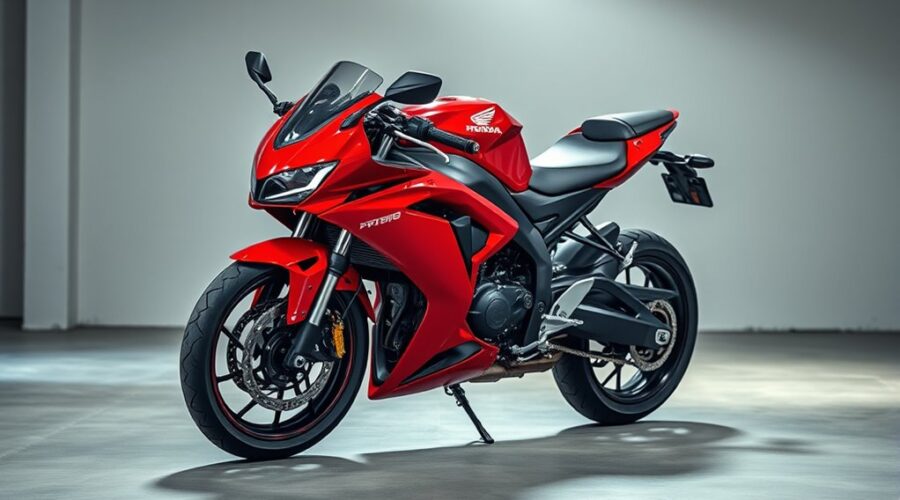
Honda specifications quickly reveal the basics that matter most: engine layout, transmission type, drive system, power output, fuel economy, cabin space, and safety hardware. Across cars and motorcycles, Honda balances efficiency with usable performance, including hybrid and conventional powertrains. Dimensions and cargo figures show how each model fits daily use, while Honda Sensing adds another layer of driver assistance. The numbers are straightforward, but they point to a few important tradeoffs.
What Honda Specs Tell You First
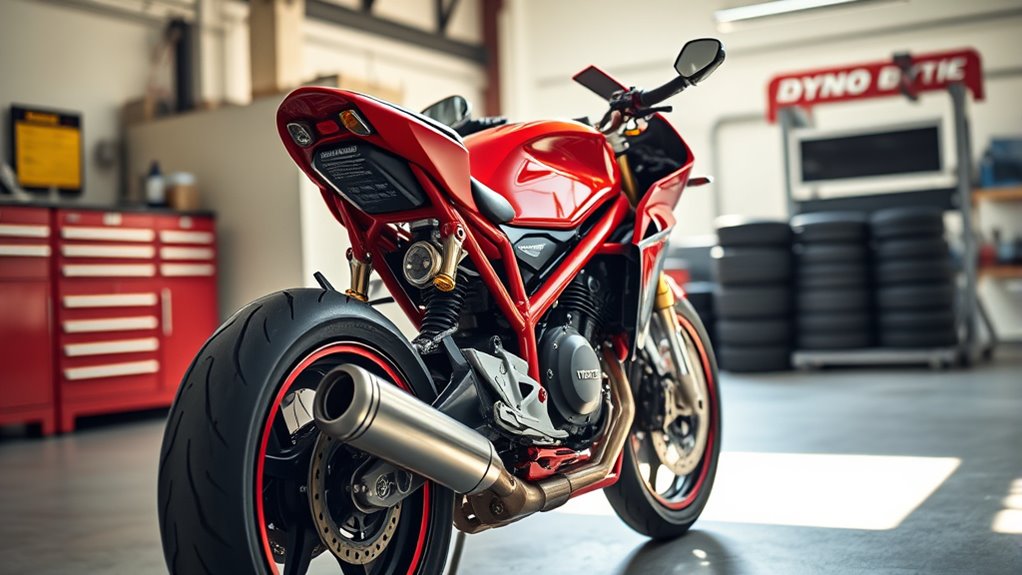
Honda specs first reveal the core mechanical and practical profile of a model, beginning with powertrain details such as engine type and horsepower, which directly shape performance and drivability.
From there, fuel economy figures, usually EPA estimates, indicate how efficiently the machine uses energy in mixed use, helping riders and drivers compare options without guesswork. These numbers matter because lower operating costs support practical independence.
Fuel economy figures show how efficiently a Honda uses energy, helping buyers compare options and manage operating costs.
Specifications also identify interior dimensions, including headroom, legroom, and cargo capacity, which determine whether the vehicle accommodates passengers and gear with adequate space.
In parallel, safety technologies such as Honda Sensing list driver-assistance functions that can reduce workload and increase confidence in demanding traffic.
Taken together, these data points provide a concise technical map of the vehicle’s purpose, efficiency, and protection. They help users assess whether a model aligns with daily needs, long-distance travel, and the desire for mobility with fewer compromises.
Honda Powertrain Basics: Engine, Transmission, Drive
At the core of Honda powertrain specs are three linked elements: engine, transmission, and drive layout. Honda uses naturally aspirated engine designs for linear, efficient operation, while turbocharged variants increase output and improve fuel economy across select models.
The Two-Motor Hybrid System pairs an Atkinson-cycle gasoline engine with electric motors, targeting low emissions and thermal efficiency near 40 percent. Transmission tuning emphasizes smooth gear changes, and performance models may add rev-match control to preserve stability during downshifts.
Drive modes let the driver select response levels suited to road conditions, supporting a more liberated and adaptable driving experience.
- Engine choices range from efficient naturally aspirated units to turbocharged powertrains.
- Transmission systems prioritize refinement, with performance calibration available where needed.
- The drive system is usually FWD, with AWD offered on select models for added traction.
How Horsepower and Torque Shape Performance
Horsepower and torque are the two primary figures used to describe how a Honda powertrain delivers performance, with horsepower indicating the rate at which the engine can do work and torque describing the rotational force available at the crankshaft.
In practice, horsepower supports acceleration at higher speeds and determines much of a machine’s top-end performance, as seen in the 649cc CBR650R, rated at 91 hp. Torque, measured in lb-ft, governs launch response and pulling strength; the same model produces 47 lb-ft, giving immediate drive away from rest.
The balance between the two figures shapes riding character. A machine with strong horsepower and sufficient torque can feel liberated under hard throttle while remaining controllable in daily use, as illustrated by the CBR500R’s versatile behavior.
Honda’s two-motor hybrid systems also show how output, reaching 212 hp in some applications, can be organized for broad performance without sacrificing responsiveness or efficiency.
What Honda Fuel Economy Ratings Mean
Honda fuel economy ratings are based on EPA estimates, providing a standardized benchmark for comparing efficiency across models under controlled test conditions.
Hybrid models, including the Accord and CR-V, can achieve remarkably high ratings, while the Two-Motor Hybrid System contributes by balancing gasoline and electric power delivery for improved thermal efficiency.
Actual fuel use often differs from the label because driving style, terrain, load, and route type affect performance, so the ratings should be read as reference values rather than fixed outcomes.
EPA Ratings Explained
EPA fuel economy ratings provide standardized estimates of how many miles a vehicle can travel per gallon of fuel, giving a consistent basis for comparing Honda models by efficiency.
These EPA ratings quantify fuel use in controlled tests, allowing buyers to evaluate efficiency without compromising technical clarity. Honda hybrids and electrics often post higher figures because advanced powertrains reduce consumption and emissions.
- Accord Hybrid: up to 49 mpg city, 47 mpg highway
- Two-Motor Hybrid System: engineered for high fuel economy
- Comparison tool: supports budget planning and model selection
Such data function as a guideline, not a guarantee, yet they help match vehicle choice to lifestyle demands and fuel costs.
For audiences seeking liberation through informed mobility, the numbers clarify tradeoffs between performance, economy, and range.
Real-World Efficiency Factors
Measured efficiency is only a baseline in Honda fuel economy ratings, since EPA estimates provide standardized comparisons while real-world mileage can shift greatly with driving conditions and driver behavior.
Load, terrain, temperature, and throttle input alter consumption, and systems such as fuel injection respond continuously to demand.
Honda’s Two-Motor Hybrid System illustrates the gap between test figures and operational use, with thermal efficiency near 40%, exceeding many 25-30% combustion engines.
The 2018-2022 Accord Hybrid is rated at 48 mpg city and 47 mpg highway, yet actual results may vary.
Real-time AWD can add traction but also marginal parasitic loss.
For drivers seeking liberated mobility, the driving experience depends on how efficiently hardware and habits align.
Honda’s 2040 zero-emission sales goal signals a broader efficiency change.
Honda Dimensions: Cabin Space and Cargo Room
Honda models are engineered with generous cabin dimensions, including substantial headroom and legroom to support occupant comfort on short commutes and extended travel.
Cargo volume varies by model, from the Civic’s roughly 14.8 cubic feet of trunk space to the CR-V’s 75.8 cubic feet with the rear seats folded. Smaller vehicles such as the Fit also maximize usable storage.
Cabin layouts further improve practicality through features such as under-seat compartments, adjustable cargo floors, and flexible seating arrangements that increase accessibility and storage efficiency.
Cabin Headroom and Legroom
Cabin space in Honda models is generally engineered for comfort, with many vehicles offering roughly 39 to 40 inches of headroom to accommodate taller passengers. This cabin headroom supports a more open posture, while legroom is calibrated for freedom of movement rather than confinement.
The Honda Accord stands out with approximately 40.4 inches in both front and rear legroom, giving occupants balanced reach and seating neutrality. Honda’s interior packaging emphasizes usable space through efficient seat placement and floor design, meeting or exceeding class norms.
- Front headroom commonly stays near 39.3 inches in compact models.
- Rear headroom can remain above 37 inches, preserving clearance.
- Legroom figures vary by body style, but remain class-competitive.
Cargo Space Measurements
Cargo capacity across Honda models spans a wide range, reflecting differences in body style and intended use. The CR-V delivers up to 75.8 cubic feet of cargo space with the rear seats folded, supporting transport of larger loads with minimal constraint.
The Accord’s 16.7 cubic-foot trunk suits routine baggage and daily errands, while the Civic’s 14.8 cubic-foot trunk remains practical despite its compact footprint. Access is improved by a power liftgate on the CR-V, reducing effort during loading and unloading.
Dimensions are engineered to preserve usable volume without compromising the front seats or driver environment. In this framework, headroom, legroom, and cargo packaging work together to maintain function, while power steering contributes to manageable maneuvering in confined urban spaces.
Seating and Storage Layout
When designed for everyday usability, Honda seating layouts prioritize passenger comfort through generous headroom and legroom while preserving practical storage capacity across the lineup.
Cabin geometry supports liberated movement, with seating arrangements that adapt to occupants and luggage without sacrificing structural efficiency.
- The CR-V demonstrates strong cargo capacity, reaching 75.8 cubic feet with rear seats folded.
- The Civic sedan uses space efficiently, providing up to 15.1 cubic feet of trunk volume.
- Configurable rear seats enable mixed passenger and cargo configurations in many models.
Honda Sensing hardware is integrated into the cabin architecture without intruding on usable space, maintaining an open environment.
This layout strategy balances comfort, utility, and security, giving drivers and passengers flexible room for travel, errands, and transport needs.
Honda Safety Tech Worth Knowing
Honda safety technology typically centers on systems designed to improve situational awareness, reduce collision risk, and support vehicle control under changing conditions.
Honda Sensing integrates Collision Mitigation Braking System, Road Departure Mitigation, and Adaptive Cruise Control to monitor traffic, lane position, and closing distance, helping the driver respond before hazards escalate.
Blind Spot Information adds lane-change awareness by warning of vehicles in adjacent lanes, while the Rearview Camera with dynamic guidelines supplies three selectable viewing angles for more precise backing maneuvers.
ACE body structure further supports occupant protection by distributing frontal crash energy through a wider load path.
In practice, these systems reduce reliance on guesswork and improve confidence in dense traffic, tight parking, and abrupt road alterations.
Steering wheel-mounted paddles for regenerative braking may also let drivers tailor deceleration feel while recovering energy, adding another layer of control without compromising efficiency or composure.
Honda Hybrid Powertrains Explained
Introduced in the U.S. with the 2014 Accord Hybrid, the Honda Two-Motor Hybrid System was designed to pair low emissions with high fuel efficiency, and it has since surpassed one million units sold within 12 years.
Its fourth generation, used in the 2023 CR-V and Accord, refines engine power through a 2.0-liter Atkinson-cycle engine rated from 145 to 212 hp, depending on calibration. The hybrid system operates mainly in series mode, letting the electric propulsion motor drive the wheels while the gasoline engine serves as a generator.
- Electric Generator Motor supports energy production.
- Electric Propulsion Motor delivers direct drive power.
- Compact IPU is 32% smaller, improving trunk space.
Regenerative braking recovers kinetic energy for battery recharge, sustaining efficiency in varied conditions.
The result is a technical balance of power, restraint, and usable performance.
How to Compare Honda Models at a Dealer
Dealer comparisons become most useful once the underlying powertrain architecture is understood, because a showroom evaluation should connect mechanical specifications to real-world use. Shoppers should compare powertrain specifications, including engine type, horsepower, and fuel efficiency, against commuting, towing, or spirited riding demands. Interior dimensions also matter; headroom, legroom, and cargo capacity determine whether a model supports passengers and cargo without compromise. Dealers often provide EPA fuel economy estimates, which help quantify likely operating costs under specific driving patterns.
| Criterion | Check |
|---|---|
| Powertrain | Engine, horsepower, mpg |
| Space | Headroom, legroom, cargo |
| Safety | Honda Sensing features |
| Dynamics | Side-by-side test drive |
A side-by-side test drive reveals differences in steering, braking, suspension control, and cabin refinement that brochures cannot capture. Asking about advanced safety technologies, especially Honda Sensing suite availability, clarifies the level of driver assistance. This method supports informed selection and preserves freedom of choice.
Frequently Asked Questions
What Is Honda’s Strongest Engine?
Honda’s strongest engine is the 2.0L VTEC Turbo in the Civic Type R, producing 315 horsepower. In engine comparison, its performance tuning, turbocharging, and high horsepower ratings make it Honda’s most potent production powerplant.
What Is the 12 Second Rule on a Motorcycle?
A medieval safeguard, the 12-second rule requires a motorcyclist to trail traffic by twelve seconds, improving riding techniques, engine tuning awareness, and safety gear readiness; this objective buffer increases reaction time, visibility, and liberation under adverse conditions.
Which Automatic Motorcycle Is the Best?
The Honda CBR650R E-Clutch is judged best, offering advanced automatic transmission features, stronger performance, and refined riding comfort comparison. Its fuel efficiency ratings remain competitive, though the CBR500R suits budget-conscious riders seeking liberation.
What Are Common Honda Motorcycle Problems?
Like a machine under strain, Honda motorcycles commonly suffer electrical faults, fuel-system clogging, chain wear, oil leaks, and suspension degradation. These troubleshooting issues often require common repairs and disciplined engine maintenance tips for reliable, liberated riding.
Conclusion
Honda’s specifications reveal a clear balance of power, practicality, and protection. From efficient engines and responsive transmissions to roomy cabins and robust cargo volumes, each metric matters. Horsepower, torque, and fuel-economy figures help quantify capability, while Honda Sensing adds a reassuring layer of safety. Hybrid systems further refine performance and efficiency. In comparison, careful calibration and compact construction combine to create a consistent, capable, and confidence-inspiring lineup across sedan, SUV, and motorcycle applications.