Overdriving happens when a driver asks more from the car than the tires and chassis can deliver. The result is not speed, but loss of balance, excess wheelspin, and repeated corrections. It often shows up as tire smoke, traction control intervention, or abrupt RPM spikes. The issue is usually control, not intent, and the more serious question is how to recognize the limit before the car starts giving it away.
Key Takeaways
- Overdriving happens when driver inputs exceed the vehicle’s available grip or balance.
- It is a control issue, not a moral failing, caused by mismatch between intent and traction.
- Common signs include tire smoke, traction control activation, brake lockups, and sharp RPM spikes.
- Smooth, gradual inputs help preserve grip, stabilize the car, and improve lap consistency.
- Recovery starts with easing inputs, checking car behavior, and reviewing what caused the instability.
What Is Overdriving in Driving?

Overdriving in driving occurs when a driver asks more of a vehicle than its available grip, balance, or mechanical capability can support. It is a mismatch between intent and physics, where throttle, steering, or braking inputs exceed the car’s present capacity. The result may be tire spin, stability intervention, or the need for repeated corrections to keep the vehicle on course.
A new account of overdriving should treat it as a control problem, not a moral failing: the driver simply outruns the machine’s envelope. Smooth inputs, measured exploration of limits, and disciplined feedback help prevent it from happening.
Data analysis, peer review, and engineer-driver collaboration refine understanding of car dynamics and improve tuning choices. For those seeking freedom behind the wheel, the goal is not restraint for its own sake, but precision that reveals speed with control.
What Are the Signs You’re Overdriving?
The signs of overdriving appear when the car begins to show strain from inputs that exceed available grip or balance. Excessive tire smoke, traction control activation, and lockups during braking indicate the chassis is being asked to do more than it can deliver. Poor braking techniques often show up first, then cornering performance degrades as grip is lost.
| Indicator | Meaning |
|---|---|
| Tire smoke / traction control | Grip limit exceeded |
| Braking lockup | Loss of control risk |
| RPM spike on exit | Too much throttle too soon |
| Steering corrections | Stability is being fought |
Sharp RPM spikes during corner exit usually point to weak throttle control, while repeated steering corrections reveal reduced steering precision and a driver compensating for instability. Telemetry can confirm these patterns by exposing lap-time inconsistency and erratic car behavior. Together, these signals define overdriving clearly: the driver is pushing past the available margin, and the vehicle is answering with visible distress.
Why Do Smooth Inputs Beat Aggression?
Smooth inputs generally outperform aggressive ones because they preserve grip and keep the chassis within its controllable range. In practice, smooth shifts in throttle control and steering finesse reduce the chance of tire lock-up, oversteer, or sudden balance shifts that trigger overdriving.
Each gradual correction lets the contact patch work efficiently, so the driver can maintain traction instead of fighting the car. Data from racing sessions often shows that smoother laps are faster because they require fewer mid-corner corrections and less wasted motion. The result is cleaner energy transfer, more stable cornering, and better consistency over a stint.
Teammates comparing logs and on-track behavior typically find that refined inputs produce repeatable performance gains. This approach favors precision over force, giving the driver a more strategic, liberated method of controlling speed, line, and rhythm.
In high-pressure conditions, calm execution preserves options and supports confident decision-making.
How to Find Grip Without Overdriving
Finding grip without overdriving starts with repeatable reference points that let the driver judge how the car responds at each phase of the lap. These markers support grip techniques by making tiny gains measurable and preventing guesswork.
From there, the search for pace should proceed through gradual exploration: small steps in throttle modulation and steering finesse reveal the limit without provoking abrupt slips. Smooth inputs reduce correction demand and expose the tire’s true operating window with greater precision.
Data analysis then confirms whether wheel inputs and tire behavior align with the intended balance, allowing informed calibration rather than reckless commitment.
In offline exercises, extra runoff provides a controlled space to test sharper methods while keeping errors contained. The result is a liberated approach to speed: disciplined, observable, and free from needless tension, with grip discovered through methodical adjustment instead of force.
How to Recover From Overdriving
Recovering from overdriving begins with an immediate assessment of the car’s condition, using visible and sensory cues to identify lock-ups, excessive RPM spikes, or abrupt balance changes that confirm the problem and establish a baseline for correction. Afterward, structured analysis should trace the cause and guide recovery techniques with minimal delay.
| Check | Purpose |
|---|---|
| Tire and RPM response | Detect instability fast |
| Brake bias and inputs | Identify needed driving adjustments |
| Sound and feel | Sharpen early warning skills |
The driver then applies measured driving adjustments: easing throttle, releasing excessive brake pressure, and restoring smoother steering inputs. In the next sessions, car behavior should be monitored to validate each change and expose recurring overdriving tendencies. Post-incident review must evaluate whether the chosen recovery techniques reduced error and improved control. This disciplined loop supports more liberated driving, since precision replaces panic and the car becomes readable before failure escalates.
Frequently Asked Questions
What Is Overdriving in a Car?
Overdriving is when a driver exceeds a car’s speed limits or grip, causing loss of control during steering or braking. Brake response can worsen, traction control may engage, and tires may spin or slide.
What Does It Mean if You Are Overdriving Your Headlights?
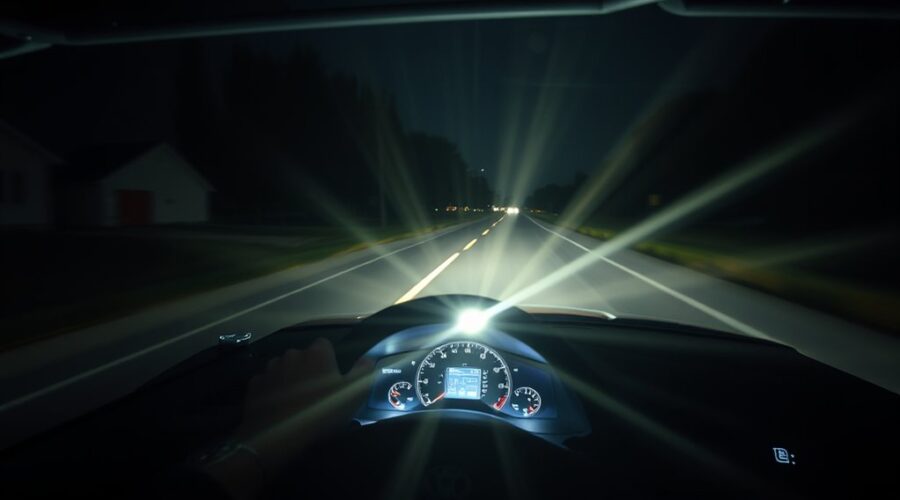
Overdriving headlights means the vehicle is moving faster than headlight performance can reveal hazards ahead, reducing driving visibility and creating serious safety implications. The driver cannot stop within the illuminated distance, especially at night or in fog.
What Does It Mean When a Person Is in Overdrive?
A person in overdrive is operating with excessive energy and effort, often under strain. It signals mounting stress, mental fatigue signs, and needs stress management techniques, while productivity tips can preserve liberation and balance.
Should I Drive With Overdrive on or Off?
Drive with overdrive on for normal highway travel; it maximizes Overdrive efficiency and reduces engine load. Turn it off for towing, steep grades, or heavy acceleration. Overdrive benefits are real; Overdrive myths often overstate downsides.
Conclusion
Overdriving is the moment when intent outruns grip, and the car begins to speak in smoke, slip, and correction. The tires scrub, the revs flare, and the chassis loses its calm rhythm. Smooth inputs restore order, letting balance return like a steady hand on a moving edge. In that narrow band between traction and excess, control is found. The fastest path is rarely the hardest push, but the cleanest, most measured one.