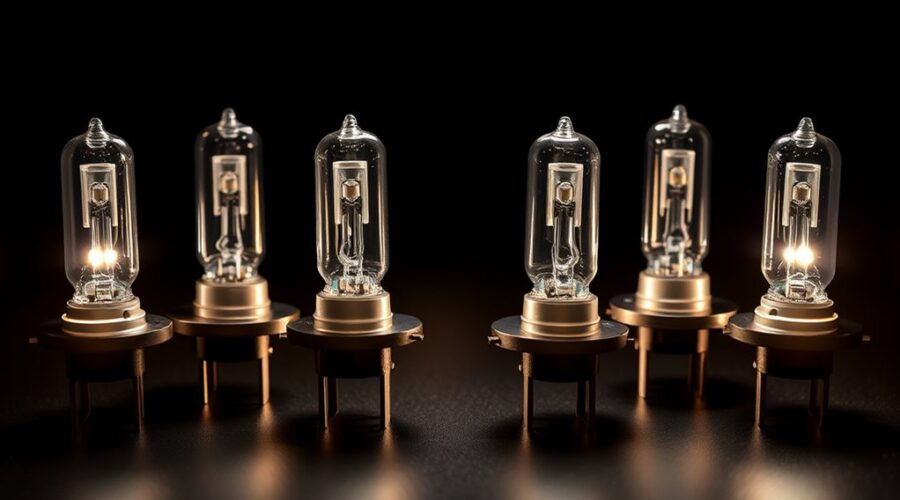
Choosing the right halogen headlight bulb can make a noticeable difference in night driving. In 2027, four options stand out for drivers who want better visibility without changing to LED or HID systems. The Philips H11 CrystalVision Ultra, HELLA H7TB, Osram H1 Night Breaker Unlimited, and Philips CrystalVision Platinum 9006 each promise a different balance of brightness, color, and reliability. The real question is which one best fits the road ahead.
Philips H11 CrystalVision Ultra Bright White Headlight Bulb (2-Pack)
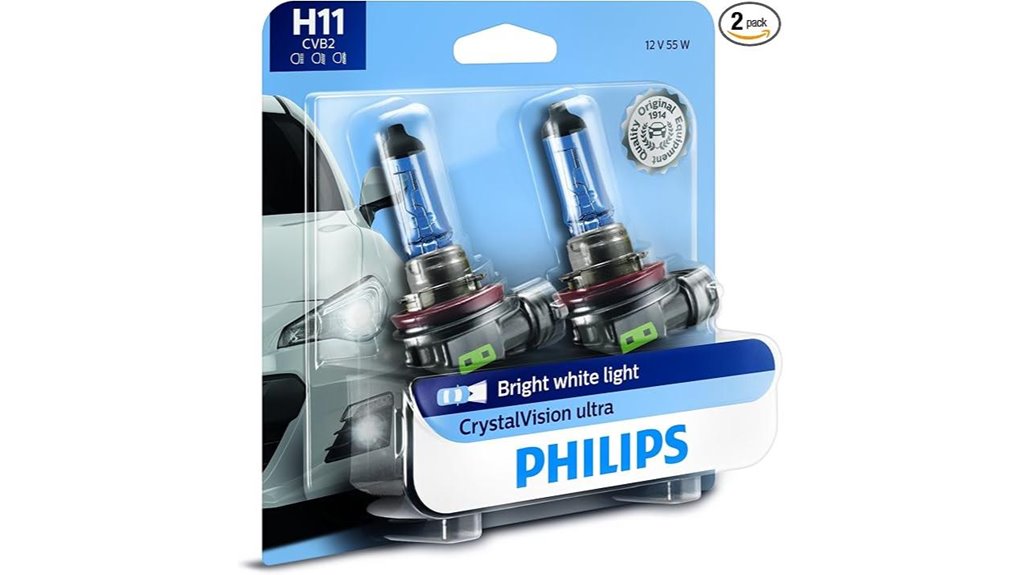
The Philips H11 CrystalVision Ultra is a strong choice for drivers who want a whiter, HID-like look from a halogen bulb without giving up road-legal performance. Its bright white output and blue cap create a cooler appearance in reflector housings, while maintaining DOT-compliant operation for road safety. Built to original equipment standards, it aims for dependable performance and improved visibility in night driving. Sold as a 2-pack, it suits drivers replacing both bulbs at once. Compatibility should be confirmed through Amazon part finder by position and notes, since fit may vary across fog, low, or high beam applications.
Best For: Drivers who want a whiter, HID-like look from a road-legal halogen headlight bulb and are replacing both bulbs at once.
Pros:
- Bright white output creates a cooler, more modern appearance
- DOT compliant and built to original equipment standards for reliable performance
- Sold in a 2-pack, making it convenient for paired replacement
Cons:
- Fitment can vary, so compatibility must be checked carefully by position and notes
- Not as bright as true HID or LED upgrade systems
- Blue-capped design may prioritize appearance over maximum light output
HELLA H7TB Standard Halogen Bulbs, 12 V, 55W
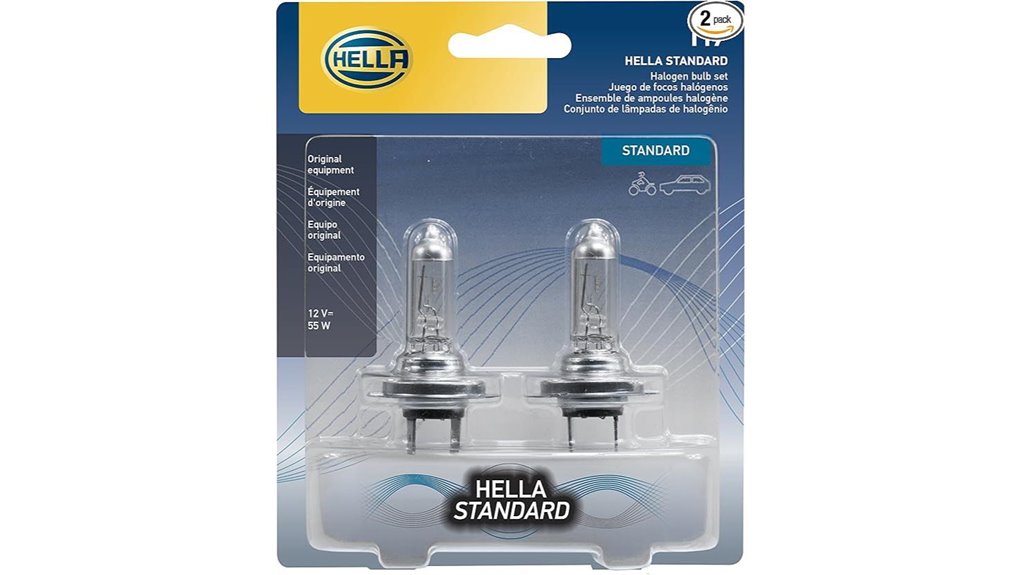
HELLA H7TB Standard Halogen Bulbs suit drivers wanting dependable OEM-style lighting with easy replacement. These 12 V, 55W bulbs deliver enhanced lighting performance, improving visibility and comfort on the road without straying from original equipment standards. Built by a long-standing automotive lighting brand, they emphasize fit, functionality, and durability. DOT, ECE, and INMETRO certifications support their credibility. Each twin blister pack includes two bulbs, and replacing them in pairs helps preserve a symmetric beam. Installation should avoid bare glass contact, using gloves or paper towels.
Best For: Drivers who want dependable OEM-style halogen headlight bulbs with standard 12 V, 55W performance and easy replacement.
Pros:
- OEM-style lighting from a trusted automotive brand with over 100 years of experience
- Improved visibility and comfort while maintaining original equipment standards
- Comes as a pair in twin blister packaging, with DOT, ECE, and INMETRO certifications
Cons:
- Halogen bulbs are less efficient than newer LED or HID options
- Best performance requires replacing bulbs in pairs, which adds cost
- Installation needs care to avoid touching the glass, which may be inconvenient
Osram H1 Night Breaker Unlimited Halogen Bulbs 55W (Pair)
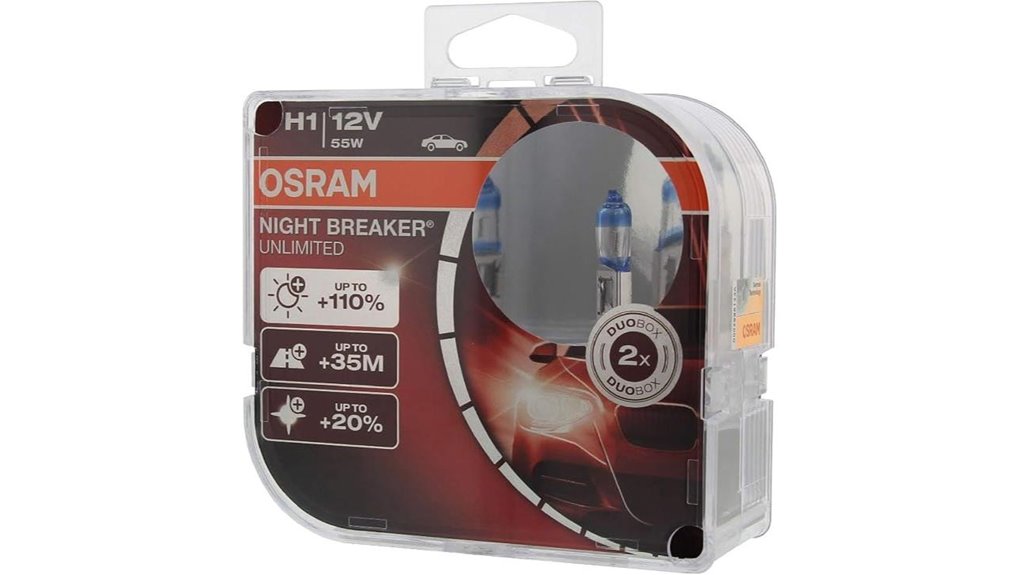
Osram H1 Night Breaker Unlimited bulbs suit drivers wanting brighter, farther-reaching halogen light. This 55W, 12V pair is designed to deliver up to 110% more light than standard bulbs, with a beam reaching up to 35 meters farther. Their 3400K output and cobalt coating produce a whiter, clearer pattern that can reduce fatigue on long night drives. A patented blue ring coating also helps limit back glare. The partial blue coating and silver cap give the bulbs a distinctive look. Care should be taken not to touch the glass during installation.
Best For: Drivers who want brighter, farther-reaching halogen headlight bulbs with a whiter beam for improved night visibility and reduced fatigue.
Pros:
- Up to 110% more light than standard bulbs for better illumination
- Beam reaches up to 35 meters farther to improve reaction time
- Cobalt coating and blue ring help create whiter light and reduce back glare
Cons:
- Halogen bulbs generally don’t last as long as many LED alternatives
- Must avoid touching the glass during installation to prevent reduced lifespan
- Blue-coated styling may not appeal to drivers wanting a fully standard look
Philips CrystalVision Platinum 9006 Headlight Bulb (2-Pack)
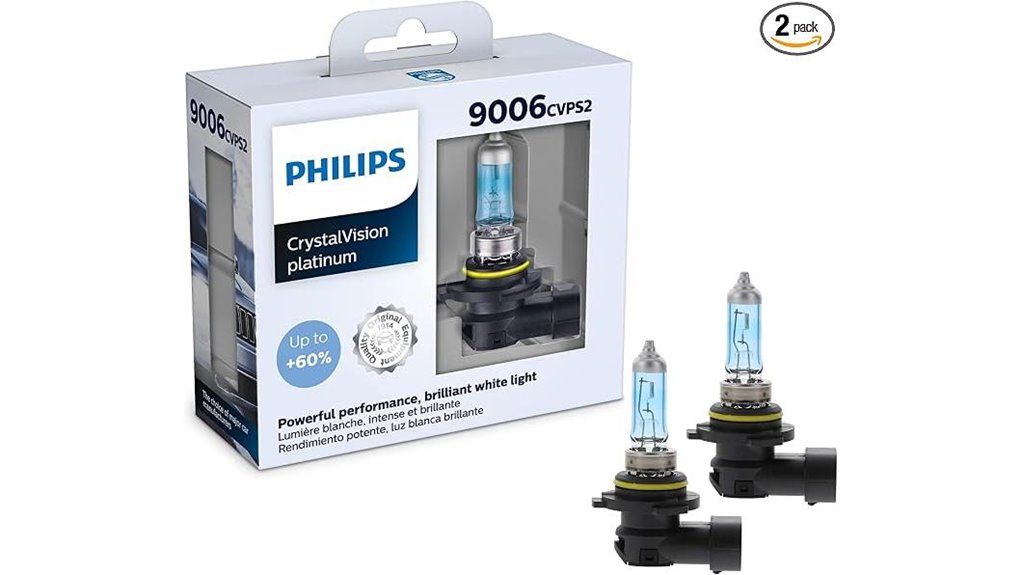
Philips CrystalVision Platinum 9006 bulbs suit drivers wanting whiter light without sacrificing OEM-grade reliability. This two-pack replacement option fits high beam, low beam, and fog applications, depending on vehicle compatibility. Its 4000K output delivers a clean white beam, with up to 60% more visibility than standard halogen bulbs, supporting safer nighttime travel. The bulbs meet Department of Transportation requirements, reinforcing confidence in quality and longevity. Fitment should be confirmed through a part finder, and replacement in pairs helps preserve balanced light output. Careful installation matters; the glass should not be touched directly.
Best For: Drivers who want a brighter, whiter OEM-style halogen upgrade for compatible high beam, low beam, or fog light applications.
Pros:
- Up to 4000K white light gives a cleaner, more modern look.
- Offers up to 60% more visibility than standard bulbs.
- DOT-compliant and designed for reliable OEM-grade performance.
Cons:
- Fitment must be checked carefully, as compatibility varies by vehicle and light position.
- Halogen bulbs require careful handling and should not be touched directly on the glass.
- Whiter light is an upgrade, but not as bright as many LED or HID alternatives.
Factors to Consider When Choosing Halogen Headlight Bulbs 2026: Brighter Night Vision
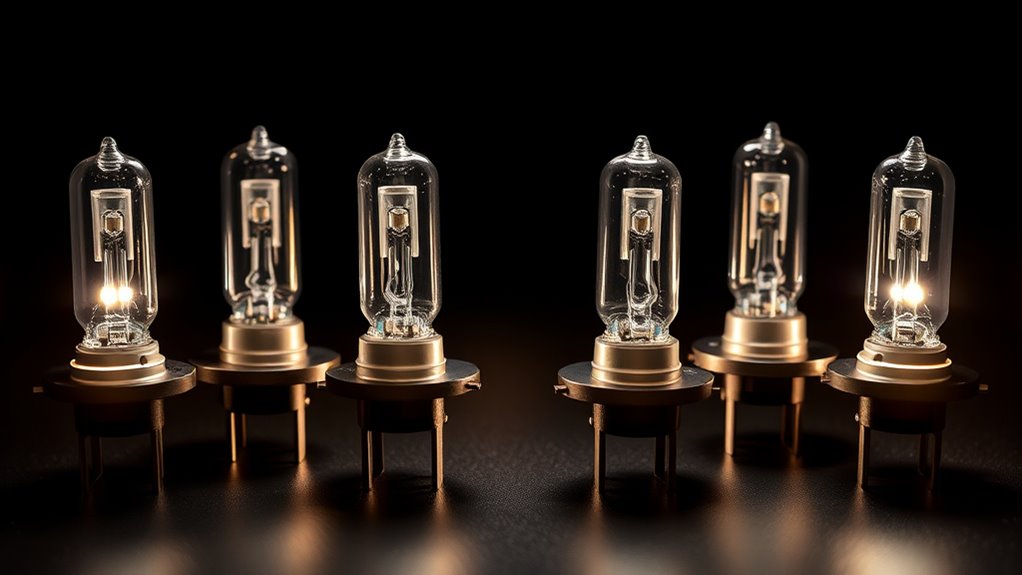
Selecting halogen headlight bulbs for brighter night vision begins with evaluating brightness output, beam distance, and color temperature. Proper bulb fitment guarantees compatibility with the vehicle, while the wattage rating helps confirm safe, reliable performance. These factors together shape visibility, road coverage, and overall driving confidence after dark.
Brightness Output
Brightness output is one of the most important factors when choosing halogen headlight bulbs, since it directly affects how far and how clearly the road can be seen at night. It is usually measured in lumens, and higher lumen ratings generally indicate stronger illumination. Some halogen bulbs deliver up to 110% more light than standard models, helping improve road visibility and driver response in low-light conditions. Perceived brightness is also influenced by color temperature, with bulbs around 4000K often appearing brighter and more useful in mixed weather. Designs with blue rings or cobalt coatings can further increase light output and produce a whiter beam. Stronger brightness may also reduce fatigue by easing eye strain during nighttime driving.
Beam Distance
Beam distance is another key factor to weigh after brightness output, because a headlight’s usefulness depends not only on how intense the light appears but also on how far it reaches. It describes the maximum range at which the road ahead can be effectively lit, making it central to nighttime visibility and safety. Halogen bulbs with special coatings or optimized filament designs often project light farther than standard versions, improving confidence on dark roads. Some high-performance models extend beam distance by up to 35 meters, which can give drivers more time to notice hazards and respond smoothly. Better reach may also ease fatigue during long night drives. At the same time, a well-controlled beam can limit glare for oncoming traffic, supporting safer conditions for everyone.
Color Temperature
Color temperature is a key factor in halogen headlight performance, since it determines whether the light appears warm yellow or cool white, with measurements expressed in Kelvin (K). Lower values, around 3000K, produce a warm yellow output, while higher values, up to 6000K, shift toward a cooler bluish tone. Most halogen bulbs sit between 3200K and 4000K, which balances usable brightness with familiar warmth for night driving. A rating of 4000K or above can deliver a whiter, daylight-like beam that may improve contrast, make road signs easier to read, and reduce eye strain. However, very high color temperatures can create glare, so local regulations should be checked before choosing a bulb.
Bulb Fitment
Proper bulb fitment is essential for safe, effective halogen headlight performance, since the wrong bulb can reduce visibility and create hazards on the road. Correct selection begins with confirming the exact bulb type and location needed, whether for a fog light, low beam, or high beam. Retailer part finder tools can help match the vehicle’s requirements, but they should be checked against the owner’s manual for full specifications and compatibility details. Some halogen bulbs can serve more than one position, so intended use must be verified before installation. Replacing bulbs in pairs is also recommended, because aging bulbs often lose brightness and produce uneven light. Accurate fitment supports reliable operation, consistent illumination, and compliance with the vehicle’s design.
Wattage Rating
Wattage rating is a key measure when choosing halogen headlight bulbs, since it affects both brightness and compatibility. Most vehicles are designed for 55W bulbs, which align with standard electrical systems and offer reliable performance. Higher ratings, sometimes reaching 100W, can increase light output and improve nighttime visibility. However, added power also brings more heat, which may reduce bulb life and strain the headlight housing. Using a wattage above the specified range can overload wiring, blow fuses, or create other electrical problems. For that reason, the correct rating should be matched to the vehicle’s design. When considering an upgrade, the balance between illumination and system safety matters most, and professional guidance can help confirm whether the electrical load is acceptable.
Road Legality
Road legality should be checked just as carefully as wattage when selecting halogen headlight bulbs, because brighter light only helps if the bulbs are approved for public roads. Bulbs should meet Department of Transportation standards in markets that require DOT compliance, and many countries also expect ECE certification. These approvals indicate that the lamps have been tested for safe use, proper output, and suitable beam performance. Noncertified bulbs may trigger fines and can increase accident risk by casting poor or excessive light. Local vehicle rules also matter, since some regions limit brightness and color temperature. When legal bulbs are installed correctly and maintained well, they can improve visibility, reduce glare, and support safer night driving without violating regulations.
Build Quality
Build quality plays a major role in how well halogen headlight bulbs perform over time. Original equipment quality is often the best benchmark, since it supports dependable operation and longer service life. DOT-compliant bulbs also signal that the product meets safety standards and has undergone quality checks. For brighter output, many higher-end bulbs use advanced coatings or internal designs that improve light projection and visibility. Material heat resistance is another key factor, because strong components tolerate high temperatures better and help reduce premature failure. Efficient construction matters as well, since good optics can distribute light more evenly, limit glare, and improve night driving confidence. Taken together, these features help identify bulbs built for consistent performance rather than short-term brightness alone.
Pair Replacement
Beyond build quality, pair replacement is an important consideration when choosing halogen headlight bulbs for 2026. Replacing bulbs in pairs helps preserve symmetrical light output, which improves nighttime visibility and supports safer driving. Because halogen bulbs dim gradually, installing only one new bulb can leave one side noticeably brighter than the other, creating uneven lighting and reducing overall performance. Manufacturers often recommend changing both bulbs together to avoid this mismatch. Pair replacement can also make the job simpler, since the technician or driver can complete the installation in one session. Matched bulbs are more likely to share the same color temperature and operating characteristics, resulting in consistent illumination, better driving comfort, and less eye strain on dark roads.
Frequently Asked Questions
How Long Do Halogen Headlight Bulbs Usually Last?
Halogen headlight bulbs usually last about 450 to 1,000 hours, though lifespan varies by bulb quality, vehicle electrical load, driving conditions, and vibration. City driving, frequent on-off use, and overvoltage can shorten life, while steady highway use may help them last longer. A bulb dimming before failure is common. Because both bulbs often age similarly, replacing them in pairs is often considered practical for balanced light output.
Can Halogen Bulbs Be Installed Without Professional Help?
Yes, halogen bulbs can often be installed without professional help if the vehicle offers easy headlight access and the owner follows the manual. The process usually involves opening the hood, removing the cover, unplugging the old bulb, and fitting the new one without touching the glass. However, some cars require bumper removal or have tight spaces, making professional installation safer, faster, and less frustrating for inexperienced owners.
Do Brighter Halogen Bulbs Reduce Battery Life?
Indeed, more luminous halogen bulbs can gently draw a little extra from the vehicle’s electrical reserves, so battery life may be modestly shortened if the charging system is tired or the bulbs are overdriven. In normal conditions, though, the effect is usually slight. The alternator typically supplies the needed power while the engine runs, making battery strain uncommon unless frequent short trips or electrical faults are present.
Are Halogen Bulbs Legal for All Vehicles?
No, halogen bulbs are not legal for all vehicles. Their legality depends on the vehicle’s headlamp design, local traffic laws, and whether the bulb meets required standards for beam pattern, wattage, and color. A bulb can be technically compatible yet still illegal if it causes glare or lacks certification. Compliance should be checked against the vehicle manual and regional regulations before installation.
How Often Should Headlight Bulbs Be Replaced?
As rare as a black swan, headlight bulbs should be replaced whenever they dim, flicker, or fail, typically every 1,000 to 2,000 hours for halogen types. A vehicle owner may also choose preventive replacement in pairs after about two to three years, even if only one burns out. This keeps light output balanced and reduces the chance of sudden nighttime failure, especially under demanding driving conditions.
Conclusion
Ultimately, the Philips H11 CrystalVision Ultra offers whiter light, the HELLA H7TB delivers dependable OEM-style performance, the Osram H1 Night Breaker Unlimited boosts output dramatically, and the Philips CrystalVision Platinum 9006 enhances contrast with a 4000K glow. Together, they represent different strengths, different driving needs, and different levels of brightness. For drivers seeking safer night travel, clearer road visibility, and greater confidence after dark, these four halogen bulbs stand out as strong choices.