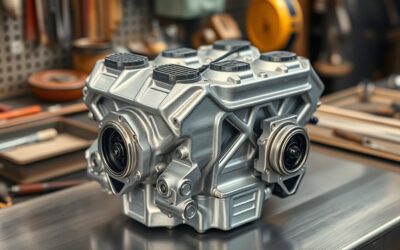
Old Japanese cars began as modest domestic efforts in the early 20th century, shaped by imported technology and wartime industry. Over time, manufacturers refined small engines, compact chassis, and practical layouts that favored reliability over excess. Models from Toyota, Nissan, and Honda later defined this approach. Their rise was not accidental, and the technical choices behind it reveal a larger story still unfolding.
Key Takeaways
- Japan’s automotive industry began in the early 1900s, with the first domestic cars appearing in 1902 and technical independence emerging by 1907.
- Key early models include the Mitsubishi Model A, Toyoda AA, Toyota Crown, and Honda T360, marking major production milestones.
- Classic Japanese cars became famous for reliability, fuel efficiency, durability, and disciplined engineering with strict quality control.
- Innovations like lightweight construction, rotary engines, hybrids, and lean manufacturing shaped Japanese automotive engineering worldwide.
- Models such as the Toyota 2000GT, Datsun 240Z, Honda Civic, Subaru 360, and Nissan Skyline remain highly valued by collectors and enthusiasts.
How Old Japanese Cars Began
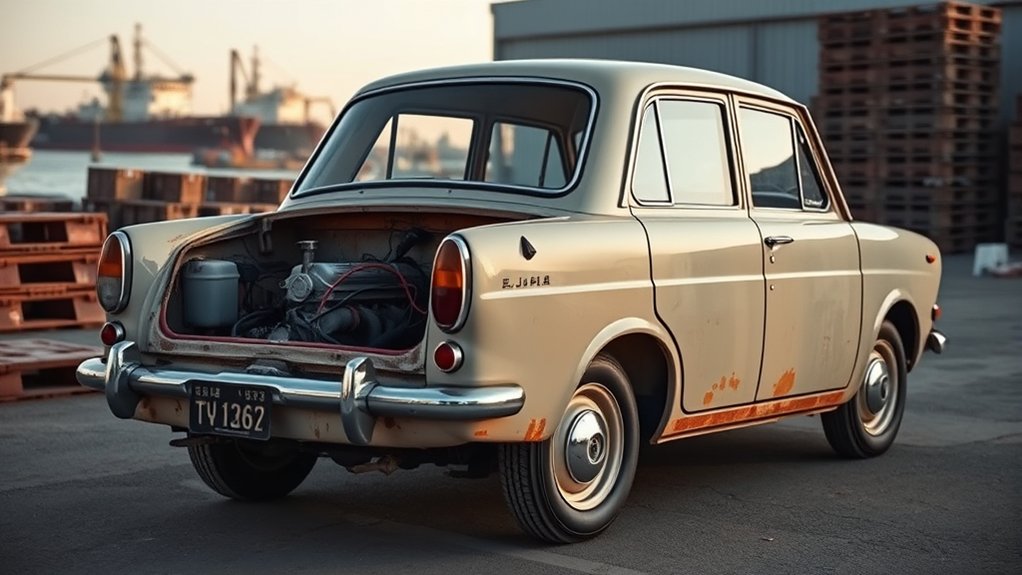
Although Japan’s automotive history began with an imported automobile in 1898, the shift toward domestic production had already started by 1902, when the first locally made cars emerged as the country began developing its own industry.
In this early phase, Japanese inventors and manufacturers pursued technical independence, and Uchiyama Komanosuke’s gasoline-powered vehicle of 1907 signaled a deeper break from dependence.
By the 1910s, production under various brands showed that the automotive industry was becoming organized, though still modest in scale.
By the 1910s, various brands signaled an emerging industry, still small but increasingly organized.
The Automobile Manufacturing Industry Law of 1936 further encouraged domestic automotive capacity and standardization, tightening state support around local makers.
After the war, the sector expanded rapidly: trucks led recovery, then passenger cars became central as production surged by the 1960s.
This trajectory reflected more than industrial growth. It marked a national assertion of mobility, a practical path for Japanese cars to move from imitation toward self-directed manufacture and broader social access.
The First Homegrown Japanese Models
The first homegrown Japanese automobiles emerged as experimental but significant steps toward domestic production, with Uchiyama Komanosuke’s 1907 gasoline-powered vehicle often cited as the earliest example.
These early prototypes reflected both local ingenuity and the influence of foreign engineering, establishing a practical foundation for Japan’s developing car industry.
Subsequent domestic models, including the first mass-produced efforts, signaled that Japanese manufacturing was beginning to move from imitation toward independent automotive design.
Early Japanese Prototypes
Japan’s first homegrown automobiles emerged in the early 20th century, when scattered experiments began to move the country from imported machines toward domestic production. The Tachikawa, built in 1904, signaled that Japanese hands could shape an automobile on local terms.
In 1907, Komanosuke Uchiyama advanced the field with Japan’s first gasoline-powered vehicle, a technical break from dependence. The Mitsubishi Model A, introduced in 1917, became the first series-production car and demonstrated improving automotive engineering.
First Domestic Production Models
By 1936, Japanese automobile production had moved from experimentation to genuine domestic manufacture with the Toyoda AA, widely regarded as the first homegrown production model and a milestone in the nation’s industrial maturity. Its arrival confirmed that Japanese cars could be designed, assembled, and refined within Japan.
Earlier, Komanosuke Uchiyama’s 1907 gasoline vehicle and the Nissan Datsun 11 in 1931 prepared the ground for domestic production, giving the market affordable scale.
Afterward, the Toyota Crown in 1955 carried this achievement abroad, while the Honda T360 in 1963 displayed advancing automotive engineering through its dual overhead cam engine.
The Japan Automobile Manufacturers Association later recognized this progression as foundational. Together, these models hold historical significance as instruments of technical independence and broader economic liberation.
Why Classic Japanese Cars Were Reliable
Classic Japanese cars earned their reputation for reliability through a combination of disciplined engineering, strict quality control, and manufacturing methods that reduced error at every stage.
Classic Japanese cars built trust through disciplined engineering, exacting quality control, and manufacturing that minimized error at every step.
In models such as the Toyota Corolla and Honda Civic, classic Japanese cars paired robust engineering with careful inspection, giving owners confidence in daily use. Lean manufacturing and just-in-time inventory systems limited waste and helped guarantee that only high-grade parts entered assembly.
Durable materials and simple layouts strengthened longevity in machines like the Datsun 240Z and Subaru Legacy, where restraint supported endurance.
The later Toyota Prius, introduced in 1997, reflected the same commitment to fuel efficiency and reliability in automotive engineering. Over subsequent decades, regular updates added ABS and ESC, improving dependability without sacrificing practicality.
For drivers seeking autonomy from constant repair, these vehicles offered a dependable path, shaped by method, discipline, and technical refinement rather than excess.
What Made Their Engineering Stand Out
What set these automobiles apart was not simply reliability, but an engineering philosophy built around efficiency, restraint, and purposeful innovation. Japanese automakers refined lean manufacturing and just-in-time inventory systems, turning production into a disciplined art that cut waste and sharpened quality.
That same precision appeared on the road, where fuel efficiency and durability served drivers seeking practical freedom rather than excess.
- A Prius-like hybrid vehicle signaled a new era of measured progress.
- Rotary engine technology in the RX-7 showed daring compactness and speed.
- ABS and ESC advanced safety features without sacrificing control.
- Land Cruiser and Accord models carried high resale value through longevity.
- Clean assembly lines reflected lean manufacturing at its most exacting.
This engineering culture joined economy with resilience, allowing machines to age slowly and retain worth. It offered liberation through dependable mobility, where motion was not wasteful spectacle but carefully designed endurance, carried forward by thoughtful design, disciplined production, and a refusal to overbuild.
Iconic Old Japanese Cars From Major Brands
The early era of Japanese motoring produced several brand-defining classics that established reputations still recognized decades later.
Toyota’s 2000GT, Datsun’s 240Z, Honda’s S600, Mazda’s RX-7, and Subaru’s 360 each reflected distinct engineering priorities, from supercar ambition to compact practicality.
Taken together, they marked the shift of major Japanese brands from domestic manufacturers to global contenders.
Early Era Icons
Among the earliest icons of old Japanese motoring, several models established reputations that extended far beyond domestic roads.
In post-war Japan, Japanese automotive progress moved from necessity to confidence through mass production and export ambition. The Toyota Crown, launched in 1955, proved that a sedan could cross oceans.
The Subaru 360, the “ladybug,” embodied compact freedom. The Honda S600 brought a light, high-revving sports car spirit to small-scale engineering.
The Datsun 240Z later fused performance with accessibility, widening Nissan’s reach. The Mazda RX-7 added rotary ingenuity and reduced weight.
- chrome lifting dawn light
- small bodies threading city lanes
- revs climbing through open air
- export decks stacked with promise
- drivers tasting mobility without restraint
Brand-Defining Classics
If the early icons showed how Japanese cars gained confidence, the brand-defining classics revealed which marques could turn that confidence into identity.
In the Japanese automobile industry, the Toyota 2000GT, with its 2.0L inline-six and 150 hp, became a national statement of technical ambition.
The Datsun 240Z then opened the sports car market, pairing a 2.4L inline-six with global affordability.
Honda’s S600, light and high-revving, proved that precision could feel liberating.
Mazda RX-7 advanced the argument with a rotary engine and disciplined weight.
Even the Subaru 360, among the key kei cars, widened mobility for ordinary drivers.
Together, these brand-defining classics show how Japanese makers converted engineering into identity, and identity into freedom, across roads once ruled by imported prestige.
Why Classic Japanese Cars Still Matter
Classic Japanese cars continue to matter because they combine historical significance with lasting technical and cultural influence. In the 1960s and 1970s, classic Japanese cars such as the Toyota 2000GT, Datsun 240Z, and Honda Civic demonstrated innovative engineering, fuel efficiency, and compact design. Their lightweight frames and performance capabilities reshaped automotive practices, while later the mass-produced hybrid logic of efficiency spread worldwide.
- A 2000GT glinting under showroom lights
- A 240Z carving a mountain road
- A Civic beside fuel pumps in 1972
- A Skyline echoing through motorsport history
- A Supra rising in the collector’s market
These machines also helped establish Lean Production and Just-In-Time methods, changing industrial discipline far beyond Japan.
These machines helped shape lean production and Just-In-Time methods, transforming industrial discipline far beyond Japan.
Today, Nissan Skyline and Mazda RX-7 models retain cult status because they represent mechanical freedom, accessible speed, and disciplined craftsmanship. Rising auction values show that historical memory and driving passion remain inseparable.
Frequently Asked Questions
What Is the Crappiest Car of All Time?
The Yugo GV is often judged the worst car, plagued by design flaws, reliability issues, and consumer complaints. Its low production numbers, poor sales performance, and lasting legacy impact make it a notorious automotive failure historically.
What Is the 3 Year Rule for Cars in Japan?
Like a tightening vise, Japan’s 3 year rule requires a shaken vehicle inspection process every three years, enforcing Japanese car regulations, automotive safety standards, and environmental impact measures, shaping used car market, depreciation factors, consumer preferences trends.
What Is the Oldest Japanese Car Brand?
Nissan is the oldest Japanese car brand. Its Nissan heritage predates Toyota origins, Honda evolution, Mazda innovations, Subaru legacy, Isuzu history, Mitsubishi milestones, Suzuki timeline, and Daihatsu significance, reflecting Japan’s early industrial liberation.
What Are Some of the Best Japanese Cars Ever Built?
Steel lanterns of freedom answer clearly: Toyota Corolla, Nissan Skyline GT-R, Mazda RX-7, Honda NSX, and Subaru Impreza WRX rank among Japanese Muscle, Iconic Sports, Classic Sedans, Innovative Technology, Eco Friendly Models, Legendary Tuners, Vintage Collectibles, Futuristic Designs, Performance Enhancements.
Conclusion
Old Japanese cars began as modest sparks and grew into a bright industrial dawn, their early engines marking the nation’s first steady steps toward automotive independence. Through disciplined engineering, careful efficiency, and a relentless pursuit of durability, they carved a lasting road through history. Icons from Toyota, Nissan, and others now stand like polished monuments, reminding observers that these machines were not merely transport, but enduring symbols of innovation, resilience, and cultural memory.