TDI stands for Turbocharged Direct Injection, a diesel engine setup used by Volkswagen and related brands. It combines a turbocharger with direct fuel injection to improve efficiency, low-end torque, and emissions control. The label appears often, yet its meaning is only part of the story. Its operation, differences from TSI, and vehicle applications reveal why it remains significant in modern diesel engineering.
What Does TDI Stand For?
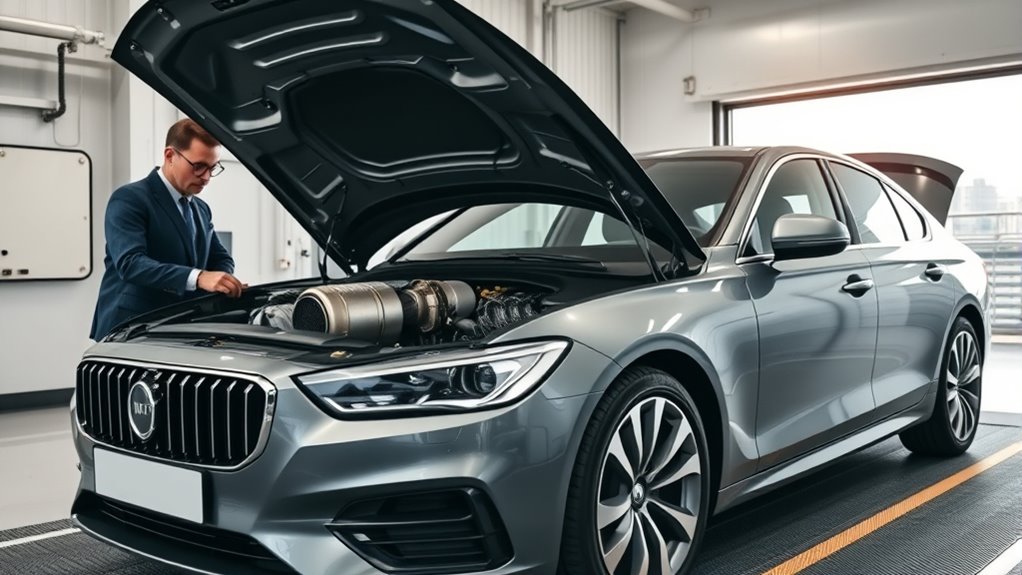
TDI stands for Turbocharged Direct Injection, a diesel engine technology closely associated with Volkswagen. The term identifies a system used in diesel engines to improve fuel economy and lower emissions while preserving strong performance.
In this design, diesel fuel is injected directly into the combustion chamber, allowing more controlled combustion than older indirect systems. Volkswagen introduced TDI in the 1990s to make diesel engines more efficient and more appealing to drivers seeking greater range and reduced fuel costs.
TDI models have often delivered about 20% more distance per gallon than conventional gasoline engines, a practical gain for users who value independence from frequent refueling.
The label thus refers not only to an acronym, but also to a specific engineering approach centered on efficiency, clean operation, and restrained fuel use.
How Do TDI Engines Work?
At its core, a TDI engine works through a four-stroke diesel cycle in which incoming air is compressed until it becomes hot enough for fuel to ignite without spark plugs.
In TDI engines, Turbocharged exhaust flow forces more air into the cylinders, raising charge density and supporting cleaner, stronger combustion.
Direct fuel injection then delivers diesel fuel at very high pressure, atomizing it finely inside the combustion chambers for rapid mixing and controlled burn.
An intercooler cools the compressed air before entry, improving density and combustion efficiency.
Advanced computer controls adjust fuel injection timing and quantity with precision, helping the engine release torque on demand while limiting waste.
This measured process supports better fuel economy and reduces emissions, including nitrogen oxides, by improving combustion quality.
The result is a compact, efficient powertrain that uses pressure, heat, and electronic control to extract more work from each drop of fuel.
What’s the Difference Between TDI and TSI?
While both are Volkswagen engine families, TDI and TSI differ primarily in fuel type and tuning: TDI stands for Turbocharged Direct Injection and denotes diesel engines, whereas TSI stands for Turbocharged Stratified Injection and refers to petrol engines.
Within the Volkswagen Group, TDI engines are calibrated for efficiency and low-end torque, while TSI engines are tuned for responsive horsepower and quicker revving. The diesel layout typically delivers stronger torque at lower RPM, which benefits steady-load operation and long-distance travel.
In contrast, gasoline TSI units favor lighter, more flexible performance and are often paired with lower purchase prices. TDI engines usually provide superior fuel efficiency, yet diesel fuel can cost more per litre, affecting running costs.
TSI engines reduce upfront expense and suit drivers seeking freer, sharper acceleration. The choice is thus functional: economy and torque for TDI, or performance and lower entry cost for TSI.
Which Cars Use TDI Engines?
TDI engines appear across several Volkswagen Group brands, including Volkswagen, Audi, Seat, and Skoda. In current diesel models, the Volkswagen Golf, Seat Leon, Skoda Octavia, and Audi A3 commonly use the core 2.0-litre TDI engine. These cars represent the entry level of the range, where TDI engines are applied in compact hatchbacks and saloons with straightforward packaging.
Larger diesel models include the Volkswagen Arteon, Skoda Superb, and Audi A6, A7, and A8, all using the same basic diesel architecture in broader, more substantial body styles. Performance-oriented Audi S models, such as the S4 and S5, also use TDI power.
At the upper end, a 3.0-litre TDI engine appears in SUVs like the Volkswagen Touareg and Audi Q7. Across these applications, the range shows how diesel models span practical commuter cars, executive vehicles, and performance-oriented variants while preserving fuel efficiency and torque-rich operation.
Why Do TDI Engines Matter for Drivers?
For many drivers, the appeal of TDI engines lies in their efficiency, torque, and durability. Turbocharged Direct Injection combines forced induction and precise fuel delivery, giving TDI engines impressive fuel efficiency, often extending range by as much as 20%. Their advanced technology helps produce more torque at low RPM, which improves acceleration, towing, and control in daily use. Reduced harmful emissions also matter to drivers who want cleaner operation without sacrificing performance.
| Driver Priority | TDI Benefit | Effect |
|---|---|---|
| Lower fuel use | impressive fuel efficiency | More freedom between stops |
| Strong pulling power | produce more torque | Easier towing |
| Cleaner operation | reduced harmful emissions | Less environmental burden |
| Long-distance travel | durability | Greater confidence |
| Reliable ownership | advanced technology | Stable performance |
Regular maintenance preserves these gains. High-quality diesel fuel and timely oil changes support durability, keeping TDI engines responsive, efficient, and ready for long service.
Frequently Asked Questions
Is TDI Always Diesel?
No; TDI is almost always diesel in Volkswagen branding. Its TDI performance, TDI fuel efficiency, TDI emissions, TDI advantages, TDI disadvantages, TDI maintenance, and TDI reliability reflect turbocharged direct-injection diesel engineering.
What Is Better, TSI or TDI?
Like choosing a swift hawk or an efficient mule, neither is universally better. TSI suits urban speed; TDI favors long-range economy. TDI performance comparison, TDI fuel efficiency, TDI engine technology, TDI maintenance tips, TDI driving experience, TDI market trends, TDI vs hybrid.
What Does TDI Stand for in Slang?
TDI slang meaning varies: it may mean “Too Drunk to IPA” or “Took the Initiative.” TDI urban dictionary entries, TDI contextual usage, TDI popular phrases, TDI social media, TDI generational differences, TDI in memes show fluid liberation.
What Is Faster, TDI or GTI?
GTI is generally faster. A TDI performance comparison confirms lower TDI acceleration rates versus higher GTI power output; although TDI fuel efficiency, TDI driving experience, and TDI engine reliability can appeal, GTI handling dynamics dominate speed.
Conclusion
In conclusion, TDI stands for Turbocharged Direct Injection, a diesel engine configuration designed for efficient combustion, strong low-end torque, and improved fuel economy. Although some drivers may assume diesel technology is outdated, TDI systems remain relevant because turbocharging and direct injection support performance and efficiency in a compact package. Their role in Volkswagen Group vehicles illustrates why TDI continues to matter for drivers seeking practical, high-torque power with controlled fuel use and lower emissions.