
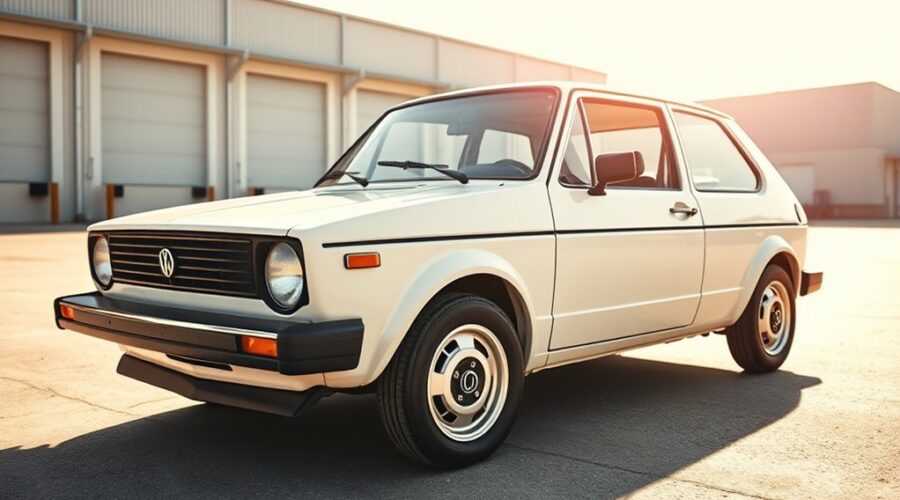
The 1980 VW Rabbit paired compact dimensions with simple mechanical choices. Buyers could select a 1.5-liter inline-four with 70 horsepower or a 1.6-liter diesel rated at 54 horsepower. It reached about 90 mph and moved from 0 to 60 mph in roughly 12 seconds. At 155.5 inches long, it remained easy to place in traffic, but its range of trims and equipment added more to evaluate.
1980 VW Rabbit Engine Options
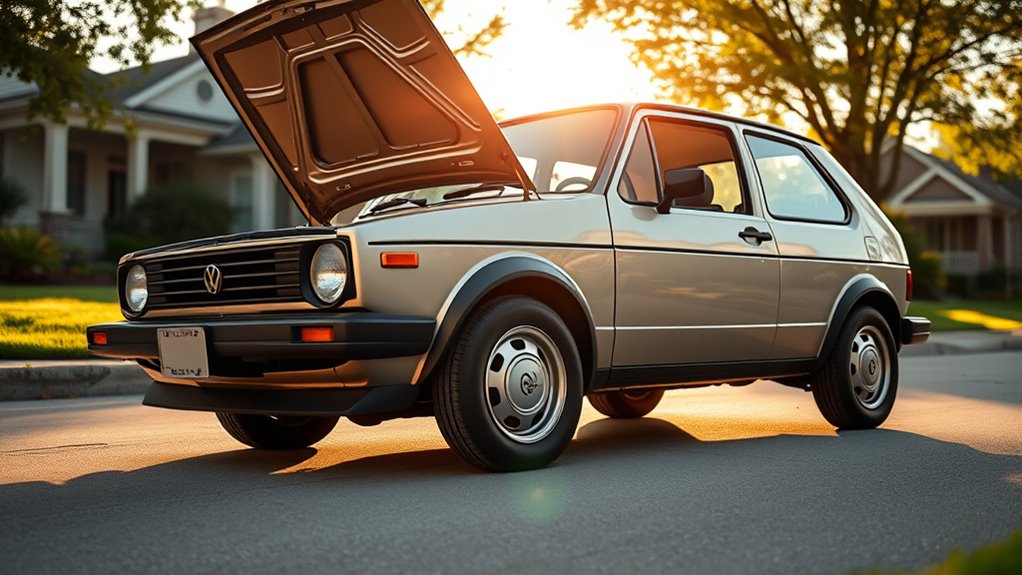
The 1980 VW Rabbit was offered with multiple engine options, including a 1.5-liter inline-four rated at 70 horsepower and a 1.6-liter diesel producing 54 horsepower with strong fuel efficiency.
These Volkswagen Rabbit engine options gave buyers a practical choice between modest output and greater fuel economy. The gasoline unit suited drivers seeking straightforward urban use, while the diesel emphasized reduced fuel use and longer range.
Both engines matched the Rabbit’s lightweight, front-wheel-drive design, supporting an uncomplicated driving experience. A 4-speed manual was standard, and a 3-speed automatic was available for added convenience.
With a curb weight near 2,000 pounds, the car kept demands modest and preserved efficiency. The result was a compact hatchback that offered accessible mobility without excess, aligning with drivers who valued independence, economy, and simple mechanical freedom.
1980 VW Rabbit Performance Specs
Powered by a 1.5-liter carbureted inline-four rated at about 70 horsepower, the 1980 VW Rabbit delivered modest but adequate performance for a compact hatchback. Its Powertrain favored efficiency over speed, yet the front-wheel-drive layout supported stable, predictable handling.
With a Curb Weight suited to the class, the Rabbit moved with enough urgency for urban traffic and daily independence.
- Top speed was around 90 mph, placing it near the middle of its segment.
- 0-60 mph acceleration took about 12 seconds, reflecting restrained Performance.
- The chassis and drive layout helped maintain control on city streets.
- The package balanced economy, usability, and a practical sense of freedom.
1980 VW Rabbit Transmission Details
Transmission choices for the 1980 VW Rabbit centered on practicality, with a 4-speed manual standard and a 3-speed automatic available as an option. The manual transmission used a gear ratio set tuned for useful acceleration while preserving efficiency in everyday driving. Shifts were smooth, which suited city traffic and easy suburban travel.
Buyers who preferred simpler operation could select the automatic, trading direct control for convenience. Front-wheel drive worked with the transmission to improve traction and stability during acceleration and cornering. The Rabbit’s light weight also supported responsive movement, allowing the drivetrain to feel agile rather than burdened.
This combination made the compact hatchback straightforward to drive and easy to place on the road. The overall setup reflected a focus on accessible motoring, giving drivers a practical transmission choice without unnecessary complexity or excess.
1980 VW Rabbit Fuel Economy and Range
Fuel efficiency was one of the 1980 VW Rabbit’s strongest qualities, with an estimated 29 mpg in the city and 35 mpg on the highway. Its fuel economy gave drivers greater independence from frequent fuel stops, a practical benefit in daily use.
- The 11.1-gallon tank capacity supported an estimated city driving range of about 322 miles.
- Highway driving range reached roughly 388.5 miles, extending usable travel between refills.
- Lightweight construction and a compact layout helped reduce consumption without sacrificing basic utility.
- Inline-four engine options were tuned to balance modest performance with economical operation.
These figures placed the Rabbit among efficient hatchbacks of its era. Lower fuel use translated into reduced running costs, reinforcing its appeal to budget-conscious drivers seeking mobility with less dependence on fuel.
1980 VW Rabbit Dimensions and Size
The 1980 VW Rabbit has compact exterior measurements, including a 94.5-inch wheelbase, 155.5-inch length, 65.2-inch width, and 56.7-inch height.
These dimensions support easy maneuvering in city driving while maintaining a stable road presence.
Inside, it offers about 12.4 cubic feet of cargo space with the rear seat up, adding practical storage for daily use.
Exterior Measurements
Compact proportions define the 1980 VW Rabbit’s exterior measurements, with a 93.1-inch wheelbase supporting its agile handling.
- The Overall Length measures 155.8 inches, a footprint suited to city streets and easy parking.
- Width reaches 64.2 inches, giving the hatchback a stable stance without excess bulk.
- Height stands at 55.9 inches, and the low profile helps the body cut through air efficiently.
- Ground Clearance is approximately 5.2 inches, offering workable clearance for uneven pavement and light roadside variation.
The compact shell reflects practical freedom: small enough for crowded routes, substantial enough for steady motion.
Wheel Size complements the stance, while the dimensions keep the Rabbit nimble, direct, and deliberately unencumbered.
Interior And Cargo Space
Interior dimensions in the 1980 VW Rabbit emphasize practical space for a small hatchback, with 94.0 cubic feet of total passenger volume supporting a comfortable cabin.
Passenger volume is distributed efficiently, giving occupants room to sit without crowding. Front headroom measures 39.3 inches, and rear headroom reaches 38.5 inches, helping taller passengers maintain comfort.
Front legroom extends to 41.2 inches, while the second row offers 35.3 inches, a layout that supports usable daily travel.
Cargo space is rated at 15.0 cubic feet with the rear seat in place, suitable for groceries and routine items.
Folding the rear seats expands capacity substantially, increasing utility for larger loads and flexible transport needs.
1980 VW Rabbit Interior and Cargo Space
Passenger accommodations in the 1980 VW Rabbit amount to about 94.0 cubic feet, giving it a relatively roomy cabin for a small hatchback. The layout supports practical movement and a sense of freedom inside a compact body.
A roomy 94.0-cubic-foot cabin gives the 1980 VW Rabbit practical space and a surprisingly open feel.
- Front Head Room measures 39.3 inches, allowing upright seating.
- Front Leg Room reaches 41.2 inches, giving the driver and passenger usable stretch.
- Rear seating provides 38.5 inches of Head Room and 35.3 inches of Leg Room, adequate for short or moderate trips.
- Cargo Space totals 15.0 cubic feet with the rear seats raised, and folding them down expands capacity for larger loads.
The cabin emphasizes function over luxury, but the proportions are efficient and usable.
Passengers benefit from space that supports daily independence, while the hatchback design preserves flexibility for errands, travel, and carrying gear.
1980 VW Rabbit Trims and Options
The 1980 VW Rabbit was offered in a base hatchback trim and a sportier Rabbit GTI, giving buyers a choice between economy and performance.
Trim features and options included items such as air conditioning, a sunroof, and upgraded audio systems.
Powertrain choices ranged from the base 1.5L engine to the GTI’s fuel-injected 1.8L unit.
Base Hatchback Trim
Base hatchback trim for the 1980 VW Rabbit centered on practicality and efficient performance, using a 1.5L carbureted inline-four rated at about 70 horsepower and a five-speed manual transmission. The Volkswagen Rabbit balanced modest output with responsive control, suited to drivers seeking freedom from excess weight and waste.
Compact proportions supported urban use, while the 94.5-inch wheelbase and 155.4-inch length aided maneuverability.
- Rabbit features emphasized simplicity and utility.
- Drive Axle Ratio supported steady, efficient acceleration.
- Approximate curb weight of 2,200 pounds helped efficiency.
- Cargo capacity reached about 12.4 cubic feet with rear seats up.
This base hatchback reflected a lean, accessible concept, offering practical transport without unnecessary complication.
Trim Features And Options
Beyond the base hatchback’s emphasis on simplicity, the 1980 VW Rabbit was offered with several trim levels and option packages aimed at different buyer needs.
Volkswagen kept the Rabbit lineup practical, with trim features that could add comfort, convenience, and a slightly more refined cabin without changing the car’s straightforward character.
Standard equipment remained modest, reflecting the model’s economy focus, while optional upgrades gave buyers more freedom to tailor the car to daily routines.
The compact hatchback layout stayed central to its appeal, supporting urban use and easy loading.
For drivers seeking a small car with flexible choices, the Rabbit presented a clear range of Volkswagen options that balanced utility, affordability, and personal preference.
Available Powertrain Choices
Several powertrain choices gave the 1980 VW Rabbit a practical range of performance and efficiency. The lineup centered on a 1.5L engine, a carbureted inline-four making about 70 horsepower, suited to modest daily use. A 1.6L diesel widened the powertrain range with stronger torque and improved fuel economy, supporting drivers who valued independence from fuel stops.
Transmission choices were simple and purposeful:
- 4-speed manual for direct control
- 3-speed automatic for ease of use
- Front-wheel drive for agile response
- Efficient engines for broad appeal
This combination reflected a compact car designed for mobility without excess. The Rabbit’s mechanical layout emphasized practicality, economy, and responsive handling, making its options accessible to a wide audience seeking freedom on the road.
1980 VW Rabbit Standard Features
The 1980 VW Rabbit came standard with a 1.5-liter inline-four engine rated at about 70 horsepower and a 4-speed manual transmission, with a 3-speed automatic offered as an option. This powertrain reflected modest output, yet it supported efficient, accessible motoring.
Among the standard features, the Rabbit included a basic AM/FM radio and seating for up to five passengers, keeping the cabin functional rather than ornate. Its dimensions, at 155.4 inches long with a 94.5-inch wheelbase, contributed to easy maneuvering in crowded streets and narrow parking spaces.
Cargo capacity measured 12.4 cubic feet, allowing room for groceries and daily goods. The package emphasized practical use, simple operation, and everyday mobility. For drivers seeking freedom from excess weight, the Rabbit presented a straightforward layout that prioritized usefulness, economy, and compact versatility.
Its standard features aligned with a no-nonsense design focused on transport, not luxury.
Related Reading
Frequently Asked Questions
How Fast Can a VW Rabbit Go?
A VW Rabbit can reach about 100 mph in stock form. Its acceleration specs are modest, with 0–60 mph in roughly 10–12 seconds; performance upgrades can improve both speed and responsiveness.
What Are the Common Problems With the VW Rabbit?
Common Rabbit problems include rust, fuel delivery failures, Engine issues, Electrical problems, oil leaks, transmission faults, and Suspension wear. These aging flaws often reduce reliability, demanding vigilant maintenance to preserve independent mobility and practical freedom.
What Is Vw’s Most Reliable Engine?
VW’s most reliable engine is often the 1.9L TDI, a marathon runner in sheet metal. Its engine longevity, simple maintenance tips, and modest performance upgrades make it a practical, liberating choice.
What Are Common Problems With Rabbit Trucks?
Common Rabbit truck problems include rust, electrical faults, fuel-system clogs, transmission grinding, and oil leaks. Regular engine maintenance tips, rust prevention strategies, and fuel efficiency improvements help preserve reliability and reduce roadside dependence.
Conclusion
The 1980 VW Rabbit concludes its case as a compact hatchback with modest but sufficient performance, practical dimensions, and straightforward engineering. Its engine choices, including a 1.5-liter gasoline unit and a more economical 1.6-liter diesel, reflect a design focused on efficiency over excess. With limited power, respectable cargo space, and easy urban maneuverability, it remains a sensible option for drivers seeking an unassuming yet capable small car.


