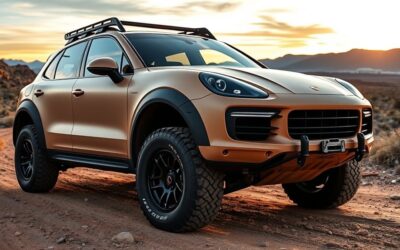
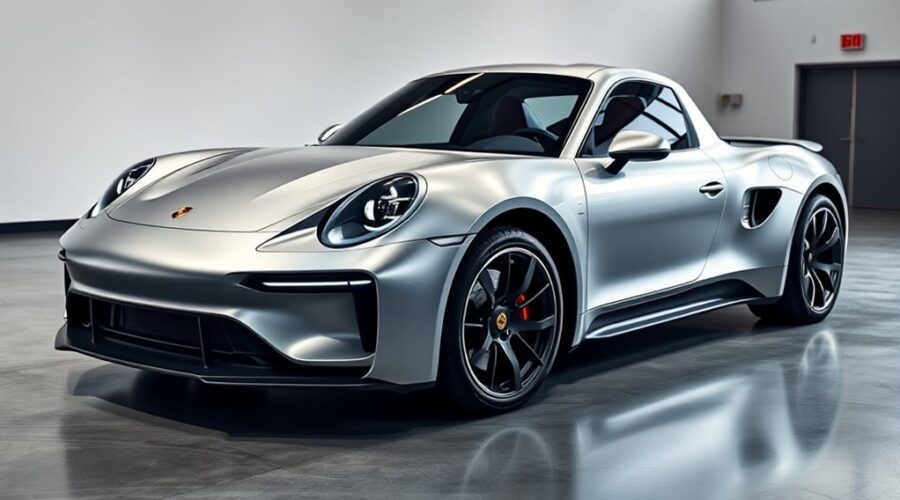
The Porsche Pickup Truck Concept, first imagined in 2017, turned the Cayenne SUV into a study in luxury utility. It kept Porsche’s familiar front end while adding a usable cargo bed and a reinforced structure built around the Cayenne platform. The result was practical on paper, but not easy to place within the brand’s identity. That tension between performance, function, and brand strategy is where the concept becomes more interesting.
Key Takeaways
- The Porsche Cayenne pickup concept was a speculative 2017 reimagining of Porsche’s luxury SUV as a performance truck.
- It kept the Cayenne’s recognizable front styling and proportions while adding a functional rear cargo bed.
- The concept used Cayenne platform engineering, but the bed would require structural reinforcement and rear packaging changes.
- Designers balanced utility and performance by focusing on weight management and preserving high-speed driving characteristics.
- Reactions were mixed, with some praising its boldness and others questioning its proportions, feasibility, and Porsche brand fit.
What Is the Cayenne Pickup Concept?
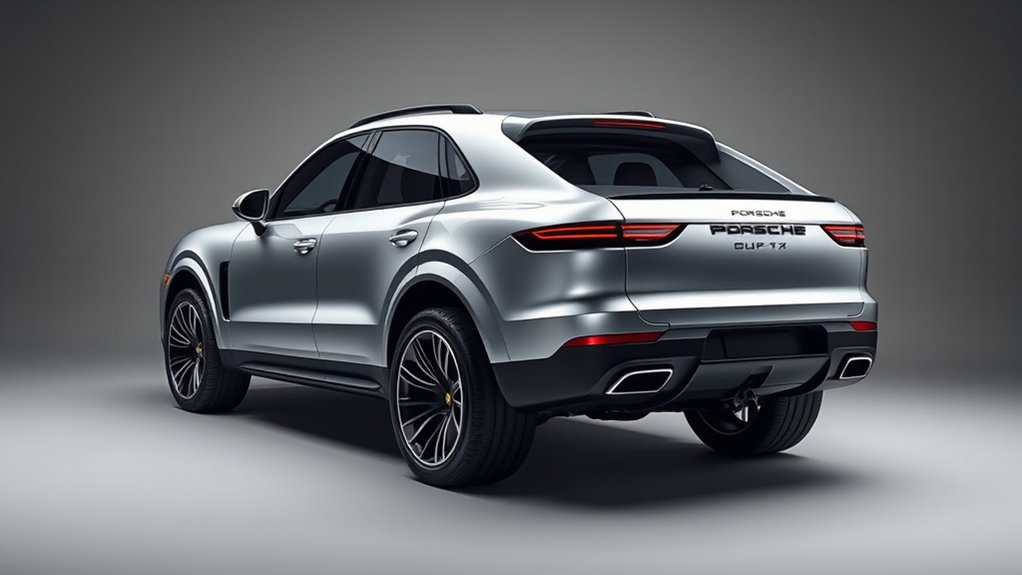
The Cayenne pickup concept is a speculative reworking of Porsche’s luxury SUV into a pickup truck, preserving the brand’s recognizable front-end styling while adding a functional cargo bed.
As a Porsche Cayenne pickup truck concept, it presents a blend of performance and utility aimed at drivers who want freedom without abandoning refinement. Visualized in 2017, it drew attention from automotive enthusiasts because its design asked whether a luxury SUV could legitimately serve the luxury pickup market.
The proposal also invited comparisons with vehicles such as the Honda Ridgeline, highlighting questions of practicality and feature integration. Rather than replacing Porsche’s core identity, the concept extends it into a new category, where premium materials, roadgoing performance, and hauling capacity coexist.
In that sense, the pickup truck concept reflects a broader industry interest in vehicles that maximize versatility while preserving status, capability, and the expressive design language associated with Porsche.
How the Cayenne Pickup Came Together
How the Cayenne pickup came together can be understood as an exercise in adapting Porsche’s familiar Cayenne formula to an entirely different body style. Porsche treated the concept as a study in market expansion, using the Cayenne’s sporty profile to frame a pickup truck for niche utility vehicles. Key design elements were preserved, especially the recognizable front end, while the rear was reworked into a cargo bed to add practical freedom.
- Retained Cayenne-based proportions
- Preserved Porsche front-end identity
- Replaced the rear with a truck bed
- Targeted luxury-minded buyers
- Tested unconventional aesthetics and innovation
Public reaction was divided. Some saw echoes of existing pickups, while others questioned the concept’s visual balance. Comments also suggested more opulent finishes, including gold and diamonds, revealing demand for luxury beyond convention.
As a result, the Porsche Cayenne pickup concept stood as an analytical signal of how design, utility, and aspiration can intersect.
Technical Details of the Porsche Pickup Concept
Technical details of the Porsche pickup concept center on converting the Cayenne’s established platform into a body style that preserves its signature front-end identity while adding a functional cargo bed.
The Porsche pickup truck would consequently rely on the Cayenne as its core architecture, enabling the brand to enter the luxury pickup market without abandoning its SUV engineering base.
In practical terms, the utility bed would need structural reinforcement, altered rear packaging, and careful weight management to retain acceptable performance characteristics.
That balance raises technical feasibility questions, because high-performance vehicles typically prioritize handling, braking, and refinement over load-carrying duty.
Comparisons with the Honda Ridgeline show how design differentiators could emerge through Porsche’s sharper aesthetics and more driver-focused tuning.
The concept ultimately depends on whether a luxury pickup can preserve Cayenne dynamics while satisfying utility demands, a challenge that defines its engineering appeal.
Why the Idea Split Opinions
Reactions to the Porsche Cayenne pickup concept quickly split once the practical engineering discussion gave way to questions of brand identity and visual appeal. The Porsche concept drew mixed reactions because its pickup truck format challenged expectations tied to luxury, performance, and traditional styling.
Some observers saw classiness in the idea, while others focused on aesthetics and questioned feasibility.
Some saw classiness in the idea, while others questioned the look and practicality.
- Supporters welcomed a bold luxury experiment.
- Critics argued the proportions looked awkward.
- Comparisons to the Honda Ridgeline sharpened doubts.
- Hybrid designs, such as a Porsche front on a Ridgeline, showed creative interest.
- Strong opinions branded the idea “stupid” and unfitting.
This divide reflected more than taste. It showed how a concept can invite freedom of imagination while also exposing limits in public acceptance.
In that sense, the discussion became a case study in how Porsche-inspired design can provoke both intrigue and resistance within the pickup truck conversation.
What This Concept Says About Porsche
The Porsche pickup truck concept suggests a brand willing to test the boundaries of its image by extending Porsche design language into a segment defined more by utility than heritage.
It positions the Porsche brand as adaptable, not confined to sports cars, by imagining a Cayenne-based luxury pickup that preserves familiar proportions and the signature front fascia. That choice signals confidence in automotive design as a tool for expansion, especially where affluent buyers want freedom of use without surrendering visual identity.
The mixed reaction also reveals how consumer preferences remain split between elegance and practicality, yet the concept shows real market interest in new vehicle types.
Porsche has already demonstrated this kind of innovation with the Cayenne, which broadened the company’s reach in 2002. A pickup proposal thus reads less as a novelty and more as evidence that Porsche continues to evaluate where its performance image can travel next.
Frequently Asked Questions
What Is Called the Poor Man’s Porsche?
The Porsche 924 is called the poor man’s Porsche, praised among affordable sports cars for budget performance, classic alternatives, and accessible luxury; its entry level models, compact designs, and enthusiast favorites made underrated brands’ value propositions enduring.
Has Porsche Ever Made a Pickup Truck?
Porsche has never officially made a pickup truck. Porsche design evolution, pickup truck feasibility, Classic Porsche models, Porsche racing heritage, Future automotive trends, Porsche electric vehicles, luxury vehicle market, iconic Porsche features, Porsche performance specifications, automotive brand loyalty.
What Is the Crappiest Car of All Time?
The Yugo GV is often cited as the worst car, despite debate. Its automotive failures, design flaws, engine problems, consumer complaints, reliability issues, poor safety ratings, weak resale value, low production numbers, and infamous models support that assessment.
What Is the Only Animal That Can Be Seen on the Porsche Logo?
A prancing horse is the only animal on the Porsche logo. In Porsche history, its logo symbolism reflects Stuttgart origins, racing heritage, brand evolution, luxury vehicles, automotive design, marketing strategies, and consumer perception.
Conclusion
In sum, the Porsche Pickup Truck Concept illustrates how the Cayenne platform could be adapted into a luxury utility vehicle without abandoning the brand’s performance identity. While some may see the idea as impractical or too far removed from Porsche tradition, its engineering logic and design continuity make it a credible exercise in brand expansion. As a concept, it is less about production readiness than about showing how far Porsche’s design language and technical ambition can reasonably extend.