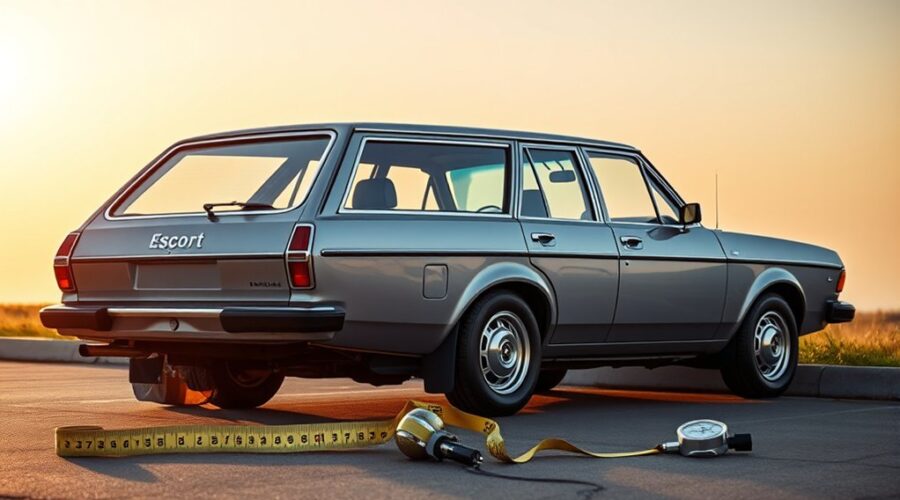
The Ford Escort Wagon combines a 2.0-liter naturally aspirated petrol engine with 112 PS and 169 Nm, aiming for everyday usability rather than outright speed. Its 28 MPG city and 37 MPG highway ratings support practical operation. At 4,387 mm long and 1,145 kg curb weight, it offers 482 to 1,161 liters of cargo capacity. The details behind its layout and equipment reveal more than the numbers suggest.
Key Takeaways
- 2.0-liter naturally aspirated petrol engine produces 112 PS and 169 Nm, with 5-speed manual or automatic front-wheel drive.
- It reaches 0–60 mph in about 12.4 seconds and tops out near 110 mph.
- Fuel economy is listed at 28 MPG city and 37 MPG highway, with a 48.1-liter fuel tank.
- The Escort Wagon measures 4,387 mm long and weighs 1,145 kg, supporting urban practicality and easy maneuvering.
- Cargo space ranges from 482 to 1,161 liters, with folding rear seats and basic safety and comfort features.
Ford Escort Wagon Specs at a Glance
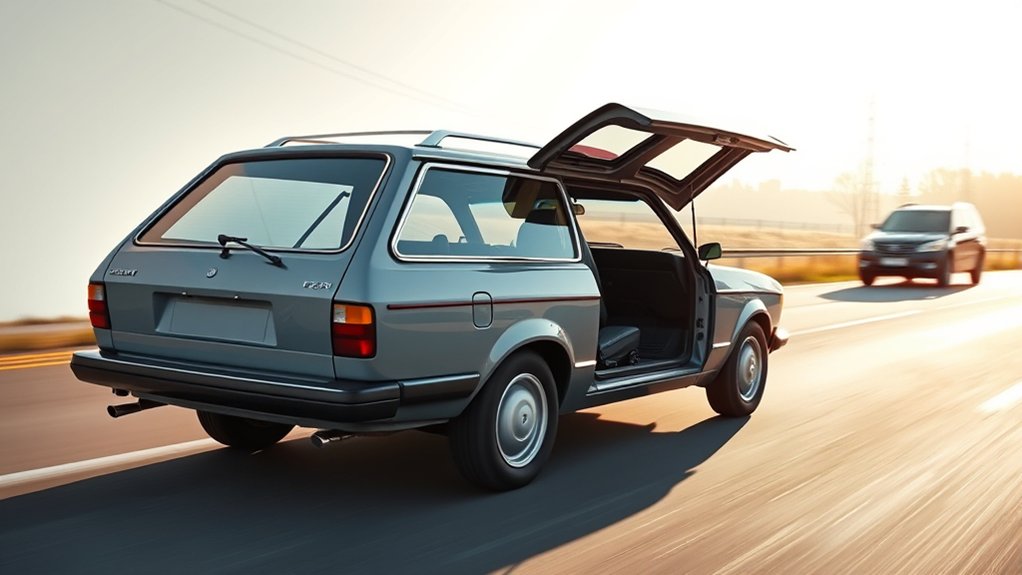
The 1997 Ford Escort LX Wagon is powered by a 2.0-liter naturally aspirated petrol engine rated at 112 PS (110 bhp) at 5000 rpm and 169 Nm of torque at 3750 rpm.
The Ford Escort Wagon pairs this powertrain with front-wheel drive and either a 5-speed manual or automatic transmission, giving buyers a straightforward mechanical layout.
Front-wheel drive and either a 5-speed manual or automatic transmission keep the Escort Wagon simple and accessible.
Its dimensions measure 4387 mm in length, with packaging tuned for practical use rather than excess. The wagon seats 4 to 5 passengers and provides a maximum trunk capacity of 1161 liters, supporting cargo flexibility and everyday autonomy.
A kerb weight of 1145 kg and a 48.1-liter fuel tank contribute to usable range, while stated economy reaches 28/37 US MPG in city and highway driving.
With a 9.2:1 compression ratio, the specification set reflects a compact family vehicle designed for efficient transport, accessible operation, and space that serves independent mobility.
Ford Escort Wagon Engine and Power Output
Propelled by a naturally aspirated 2.0-liter inline-four, the 1997 Ford Escort Wagon delivers 112 PS (110 bhp) at 5,000 rpm and 169 Nm (125 ft.lb) at 3,750 rpm.
This Ford Escort LX derivative uses a single overhead camshaft layout with two valves per cylinder and a 9.2:1 compression ratio, supporting a modest yet useful power output.
The front-wheel-drive drivetrain channels engine output through manual or automatic transmissions, giving drivers straightforward mechanical control and everyday independence.
Fuel economy measures 28 MPG city and 37 MPG highway, underscoring efficient use rather than excess.
- Compact engine bay geometry aids simple service access.
- Four-cylinder rhythm suggests steady, unforced urban motion.
- Clear torque delivery supports confident lane changes.
Ford Escort Wagon Performance Numbers
With a 2.0-liter naturally aspirated inline-four, the 1997 Ford Escort LX Wagon records 112 PS at 5,000 rpm and 169 Nm at 3,750 rpm, yielding a power-to-weight ratio of 97.41 PS/tonne and a weight-to-power ratio of 0.1 PS/kg.
This Escort wagon delivers measured performance rather than urgency, with 0 to 60 mph completed in about 12.4 seconds. The top speed is listed at 110 mph, placing it in the practical compact segment.
Fuel economy remains a notable strength, at 28 mpg city and 37 mpg highway, supporting efficient daily operation. The numbers indicate a balanced tuning strategy: modest output, moderate acceleration, and restrained fuel consumption.
For drivers seeking mobility with less dependence on excess, the wagon presents a technically straightforward package. Its performance profile favors usable pace, economical travel, and mechanical simplicity over aggressive dynamics, aligning with an accessible and independent approach to transport.
Ford Escort Wagon Dimensions and Cargo Space
Measuring 4,387 mm in length, the 1997 Ford Escort LX Wagon presents a compact footprint that still supports practical family use. The Ford Escort dimensions favor urban maneuverability while preserving usable interior volume.
With a kerb weight of 1,145 kg, the wagon remains relatively light, helping keep handling manageable in tight streets and everyday traffic. Its cargo area is built for flexibility, offering 482 liters of minimum trunk space and expanding to 1,161 liters when rear loading needs increase. That range gives occupants room to carry tools, travel gear, or household items without excess bulk.
Lightweight and flexible, it carries everyday gear with ease, expanding space when the rear seats fold down.
- A narrow city street, with the Escort Wagon easing through gaps.
- Rear seats folded flat, exposing a broad cargo floor.
- Weekend luggage stacked cleanly in the deep, squared load bay.
These Ford dimensions reflect a balanced package: compact outside, practical inside, and adaptable for drivers seeking freedom of movement.
Ford Escort Wagon Fuel Economy and Range
The 1997 Ford Escort LX Wagon is rated at 28 mpg in city driving and 37 mpg on the highway.
Its 48.1-liter fuel tank, or 12.7 US gallons, supports an estimated total range of about 468 miles on a full tank.
These figures indicate a balance of fuel efficiency and usable driving distance.
EPA City/Highway Ratings
EPA ratings place the 1997 Ford Escort LX Wagon at 28 mpg city and 37 mpg highway, giving it a combined efficiency profile suited to economical daily use.
The naturally aspirated 2.0-liter inline-four, with Escort GT lineage and four valves per cylinder, supports restrained fuel demand. Front-wheel drive helps reduce mechanical loss, while the wagon body preserves utility without a severe penalty in consumption.
- A light commuter moving through urban streets
- A steady highway cruise with measured throttle input
- A compact cargo shell carrying practical freedom
This EPA data reflects a drivetrain tuned for efficient mobility rather than excess. For drivers seeking independence from frequent fuel stops, the figures indicate disciplined operation and accessible running costs.
Combined Range Estimate
Combined efficiency figures for the 1997 Ford Escort LX Wagon support a practical range estimate suited to extended use. The naturally aspirated 2.0-liter engine and front-wheel-drive layout help the wagon return about 28 MPG in city driving and 37 MPG on the highway.
With these ratings, a full tank can support an estimated 468 miles of travel, giving drivers room for flexible routing and fewer fuel stops. Such range suits family travel considerations, especially where autonomy and schedule control matter.
For long trip preparation, basic fuel efficiency tips include steady speeds, light cargo loading, and prompt maintenance. The result is a compact wagon that balances thrift, utility, and mobility, aligning efficient operation with everyday freedom for households and commuters alike.
Fuel Tank Capacity
A 48.1-liter fuel tank, equal to 12.7 US gallons, gives the 1997 Ford Escort Wagon a practical refueling interval for daily use and longer-distance driving. Its capacity supports about 468 miles of range, with 28 mpg city and 37 mpg highway figures reflecting efficient use of fuel.
The 2.0-liter engine and FWD layout contribute to steady economy without restricting mobility.
- A tank filled for a week of commuting
- Highway travel with fewer fuel stops
- Clean gauges tracking efficient progress
Fuel efficiency tips include smooth acceleration, correct tire pressure, and reduced idle time.
Tank maintenance helps preserve system reliability and range accuracy. Eco friendly driving aligns with the wagon’s design, letting drivers move with less dependence on frequent refills while maintaining practical freedom and control.
Ford Escort Wagon Safety and Interior Features
The 1997 Ford Escort LX Wagon includes front airbags, standard seatbelts, and child safety locks as part of its safety equipment.
A dependable braking system supports routine driving, although anti-lock brakes are not specified.
Cabin comfort is provided by cloth upholstery, manual air conditioning, and a standard radio and cassette player.
Safety Equipment
Safety equipment in the 1997 Ford Escort Wagon includes front airbags, standard seatbelts, and child safety locks to support occupant protection. The airbag technology is straightforward, offering frontal impact cushioning, while child safety provisions help secure rear passengers.
Reliable braking systems contribute controlled stopping, though anti-lock functionality is not specified. These elements reflect practical restraint rather than excess, giving occupants baseline security for daily use.
- Front-seat airbag modules positioned within a simple dash layout
- Rear-door child locks engaged to restrict unintended opening
- Pedal feel and brake response calibrated for steady deceleration
Interior trim uses cloth upholstery and a manual air conditioning system, but those features belong to cabin comfort. Safety equipment remains focused on protection, restraint, and predictable vehicle control.
Cabin Comfort
Inside the 1997 Ford Escort LX Wagon, cabin comfort is built around practical features rather than luxury. The interior materials are primarily cloth upholstery, chosen for durability and everyday use.
Seating comfort is adequate for commuting and routine travel, with a layout that supports four occupants and leaves room for movement. Manual air conditioning provides climate control, allowing occupants to adjust cabin temperature in changing weather without complex controls.
The audio system includes a standard radio and cassette player, supplying basic entertainment. Safety elements, including front airbags, standard seatbelts, and child safety locks, reinforce the cabin’s functional design.
1997 Ford Escort Wagon History and Key Facts
Introduced as a practical compact family wagon, the 1997 Ford Escort Wagon used a naturally aspirated 2.0-liter inline-four engine rated at 112 PS (110 bhp) and 169 Nm of torque. Its Escort Wagon Legacy rests on accessible transport, modest running costs, and Compact Design that served a Family Vehicle role without excess.
With a kerb weight of 1145 kg, it returned 28 MPG city and 37 MPG highway, balancing mobility and restraint.
- 4387 mm body length in a clean wagon profile
- Cargo space from 482 liters to 1161 liters
- 48.1-liter fuel tank for practical range
Safety equipment included front airbags, standard seatbelts, and child safety locks, reflecting late-1990s family priorities. The flexible trunk made daily errands, travel, and cargo hauling easier, while the measured chassis and efficient powertrain supported straightforward use.
For buyers seeking utility and independence, the model offered an unfussy, durable, and space-efficient solution.
Frequently Asked Questions
How Fast Is a Ford Escort at Full Speed?
It reaches about 110 mph at full speed. Engine upgrades, Performance modifications, and Speed comparisons can alter results, but the stock 1997 Escort LX Wagon remains modest, efficient, and mechanically straightforward.
Which Years Were the Best for the Ford Escort?
The best years were the 1980s and mid-1990s, when Iconic Models, Engine Variations, and strong Market Impact peaked. The 1986 GT and 1997 LX Wagon best represent the Escort’s technical and commercial success.
What Is Ford’s Fastest Street Legal Car?
Ford’s fastest street-legal car is the Ford GT, reaching about 216 mph. Its twin-turbo V6, carbon-fiber chassis, and active aerodynamics reflect Mustang Evolution, Electric Performance, and Racing Heritage, delivering liberation through technical excellence.
What Are the Different Trim Levels of the Ford Escort?
Ford Escort trims varied by year: base L, GL, GLX, LX, SS, Escort GT, and Pony. Trim Features, Engine Options, Interior Styles differed, offering economy, comfort, and performance across configurations.
Conclusion
In conclusion, the Ford Escort Wagon stands as a practical relic of late-1990s family motoring, where modest power, efficient fuel use, and compact proportions worked in quiet harmony. Its 2.0-liter engine, measured performance, and flexible cargo capacity form a well-balanced package, like a dependable tool built for daily labor rather than spectacle. For buyers prioritizing simplicity, utility, and durability, it remains a straightforward example of sensible wagon engineering.