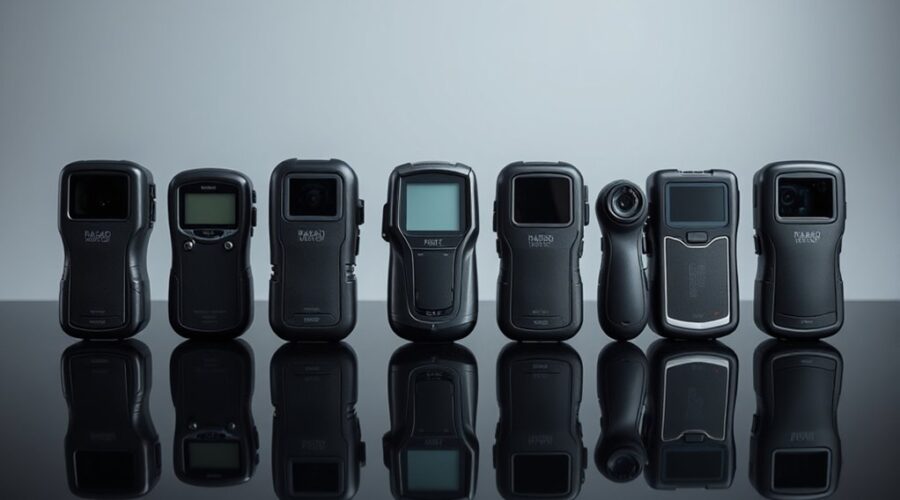
As 2026 approaches, radar detectors are evolving beyond basic alerts. The leading models now promise wider detection, smarter filtering, and stronger smartphone integration, with features like GPS, Wi-Fi, and dual antennas becoming more common. From the Uniden R8W to the Escort Redline 360c, each option offers a different balance of range, clarity, and convenience. The real question is which one delivers the most value when the details start to matter.
Uniden R8W Laser/Radar Detector with Wi-Fi, GPS, Alerts
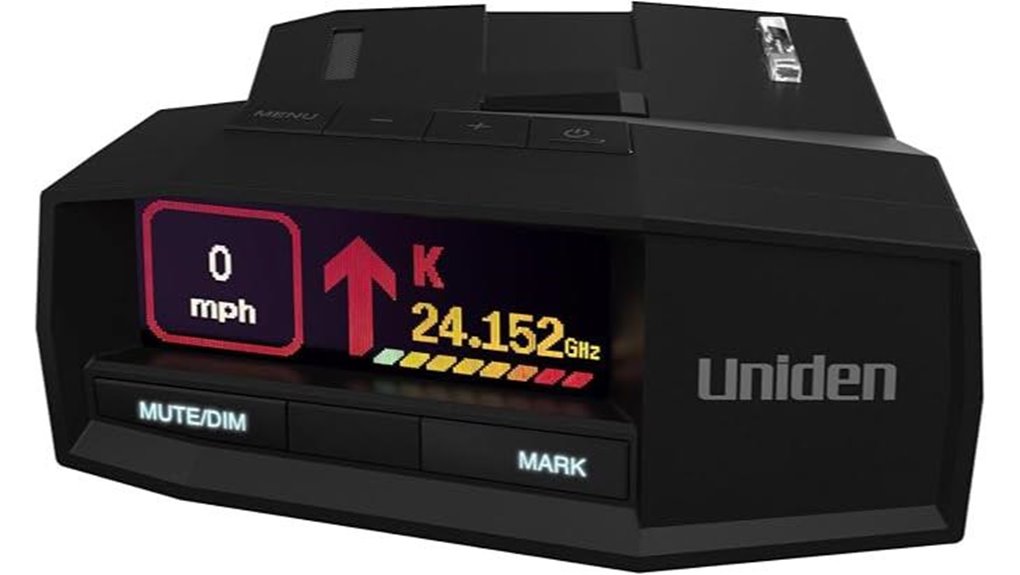
The Uniden R8W stands out as the best choice for drivers who want top-tier long-range detection and clear threat awareness, thanks to its dual antennas, Blackfin DSPs, and 360-degree directional alerts. As Uniden’s newest flagship portable windshield-mount detector, it delivers record-shattering performance with precise detection from every direction. Built-in GPS supports auto-mute memory, so repeated false alerts, such as store door alarms, are suppressed automatically. Preloaded red-light and speed camera data adds another layer of protection, while free updates keep coverage current. Voice alerts provide direction, band, and signal strength, reducing distraction.
Best For: Drivers who want a top-tier, portable radar detector with long-range performance, 360° directional awareness, GPS-based false-alert suppression, and camera alerts.
Pros:
- Exceptional long-range detection with dual antennas and Blackfin DSPs
- 360-degree directional alerts with voice guidance for band, signal strength, and direction
- Built-in GPS with auto-mute memory plus red-light and speed camera database updates
Cons:
- Premium flagship pricing may be expensive for some buyers
- Feature-rich interface may take time to learn and customize
- Windshield-mounted design may not appeal to drivers wanting a more discreet setup
Escort Redline 360c Plug and Play Radar Detector, Extreme Range
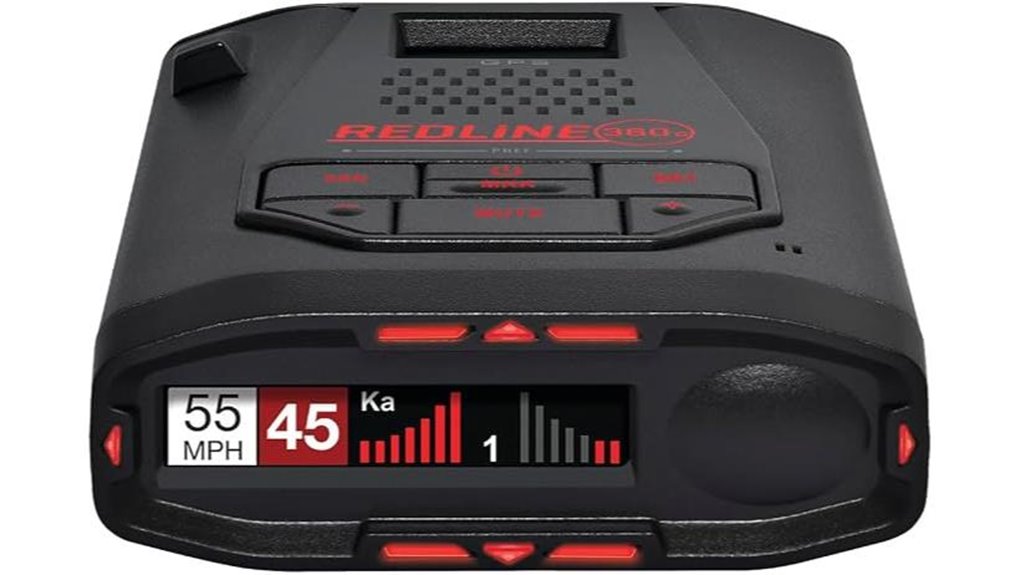
For drivers demanding maximum range and stealth, the Escort Redline 360c delivers standout protection. It offers twice the detection range of the Redline EX and responds 25 times faster, helping identify threats sooner. AI-assisted filtering uses GPS Autolearn, an updateable IVT filter, and the Drive Smarter network to cut false alerts. Full 360-degree awareness, precise GPS positioning within 2.5 meters, and stealth technology strengthen coverage. Shared alerts from other drivers add real-time context. Apple CarPlay and Android Auto support, plus the SmartCord USB, EZ Mag Mount, and travel case, make daily use practical.
Best For: Drivers who want maximum radar detection range, strong stealth, and connected real-time alert sharing for everyday and long-distance use.
Pros:
- Extreme range with twice the detection distance of the Redline EX and very fast response speed.
- AI-assisted filtering helps reduce false alerts using GPS Autolearn, IVT filtering, and the Drive Smarter network.
- 360-degree awareness, stealth technology, and smartphone/car integration add convenience and protection.
Cons:
- Premium features may come with a higher price than basic radar detectors.
- Connected features and community alerts rely on network participation and app compatibility.
- May be more advanced than needed for drivers who only want a simple detector.
Valentine One V1 Gen 2 Radar Detector
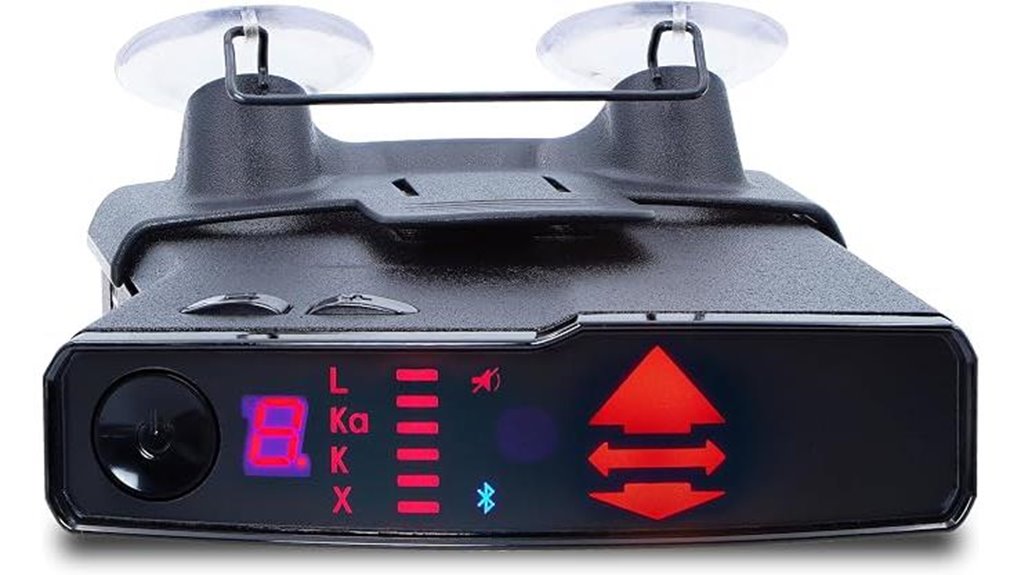
With 360-degree X, K, Ka, and Ku-band coverage, the Valentine One V1 Gen 2 suits drivers who want maximum situational awareness. It adds a rear radar antenna and Super Wideband Ka detection for broader protection. Its patented radar-seeking engine, adapted from military CHIRP radar, is designed to improve target acquisition. New SAW-D2L and LNA technologies extend Ka- and K-band range while improving precision. K-Verifier helps filter blind spot and door opener alerts. Bluetooth 5.0 supports Apple and Android devices, and the V1Connection app provides threat analysis and firmware updates.
Best For: Drivers who want maximum 360° radar detection, strong false-alert filtering, and smartphone app connectivity for real-time threat awareness.
Pros:
- 360° coverage with X, K, Ka, Super Wideband Ka, and Ku-band detection for broad protection
- K-Verifier and advanced radar-seeking technology help reduce false alerts and improve targeting
- Bluetooth 5.0 and the V1Connection app add wireless control, threat analysis, and firmware updates
Cons:
- Requires a corded power source, so it’s less convenient than a fully wireless device
- Premium feature set may come with a higher price than simpler radar detectors
- App connectivity and extra functions may be more than some casual drivers need
Escort MAXcam 360c Laser Radar Detector and Dash Camera, Great Range
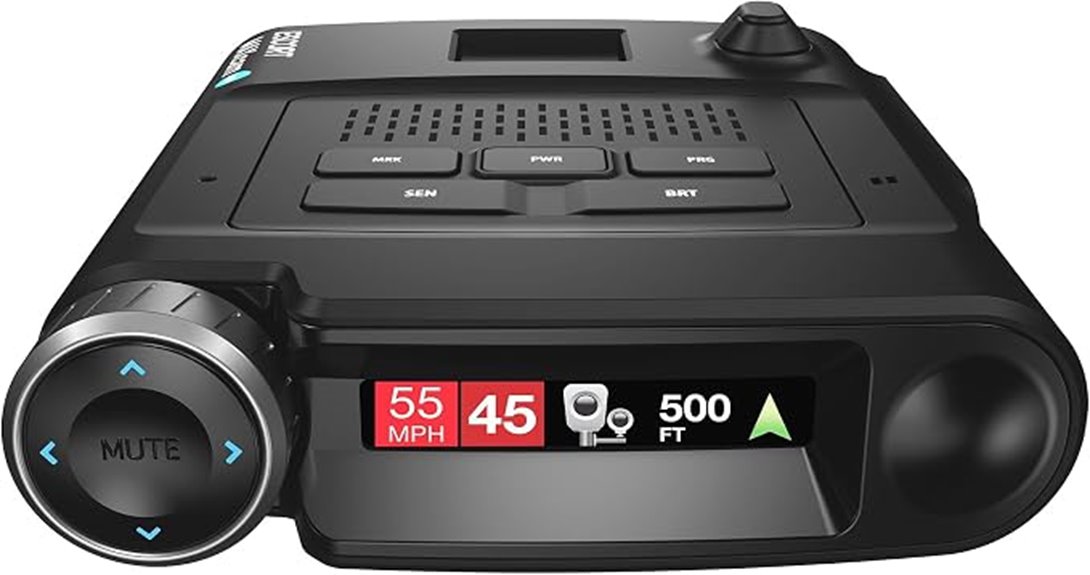
Escort MAXcam 360c suits drivers wanting top-tier range and integrated video protection. Its Blackfin 706 DSP and SDR AD 9363 chips deliver exceptional detection distance and strong filtering, while 360-degree directional arrows identify threat location. The 1440P QHD camera records detailed footage, supported by a Sony Starvis sensor and Ambarella SoC for low-light clarity. Built-in Wi-Fi enables cloud management through a mobile app, and Apple CarPlay compatibility adds convenience. Emergency Mayday Alerts, Incident Reports, and Parking Mode improve security. Designed for radar and laser awareness, it strengthens confidence on every drive.
Best For: Drivers who want a premium radar detector with strong range, 360° threat awareness, and integrated dash cam protection for added safety and documentation.
Pros:
- Excellent detection range with advanced Blackfin 706 DSP and SDR AD 9363 processing
- 1440P QHD dash cam with Sony Starvis sensor for clear low-light video
- Built-in Wi-Fi, cloud management, and Apple CarPlay compatibility for convenience
Cons:
- Likely expensive compared with standard radar detectors or dash cams
- Advanced features may require a learning curve to use effectively
- Designed mainly for radar/laser awareness, so it may be more than some casual drivers need
Cobra RAD 480i Laser Radar Detector, Long Range Detection, Bluetooth, Black
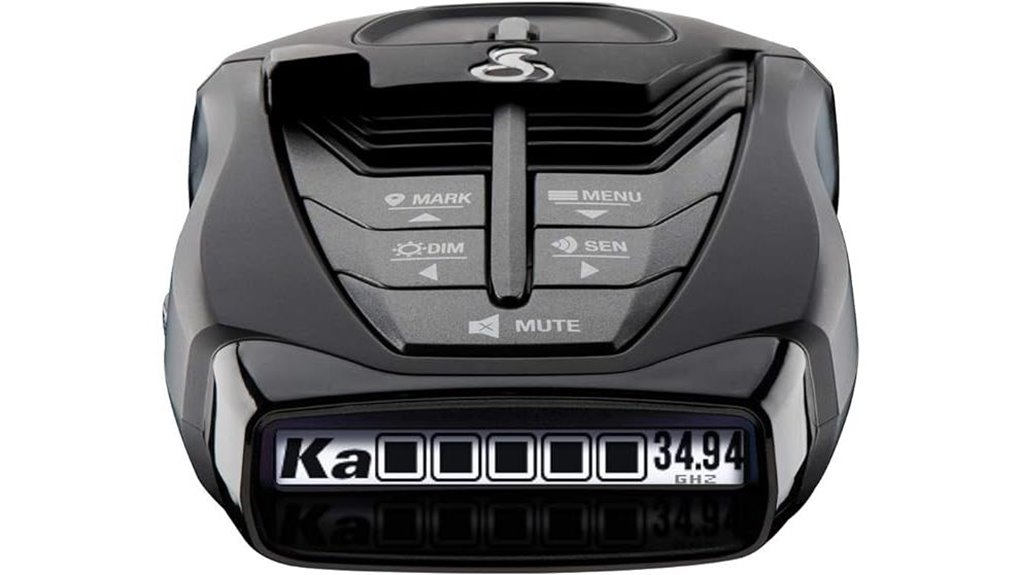
The Cobra RAD 480i suits drivers who want Bluetooth-connected, long-range radar alerts. Its LaserEye technology monitors signals from both the front and rear, while Digital Signal Processing helps deliver earlier warnings on laser threats. Updated IVT filtering and anti-falsing circuitry aim to reduce nuisance alerts from other vehicles’ systems. The iRadar app links the detector to the Drive Smarter community for live reports, and Apple CarPlay plus Android Auto support can place alerts on the vehicle display. It includes a 12V cord, windshield mount, and dash fastener. Cobra’s U.S.-supported legacy reinforces its focus on radar and laser detection.
Best For: Drivers who want a long-range, Bluetooth-connected radar and laser detector with community alerts and in-car display integration.
Pros:
- LaserEye technology detects signals from the front and rear for broader protection.
- iRadar app support and Drive Smarter connectivity provide live alerts from other drivers.
- Apple CarPlay and Android Auto compatibility make alerts easier to view on the vehicle display.
Cons:
- Designed only for radar and laser detection, so it does not offer broader driver-assist features.
- Performance can still be affected by false alerts despite IVT filtering and anti-falsing circuitry.
- Requires app and vehicle system compatibility to get the most out of its connected features.
Escort MAX 360c Laser Radar Detector, WiFi and Bluetooth Enabled, Black
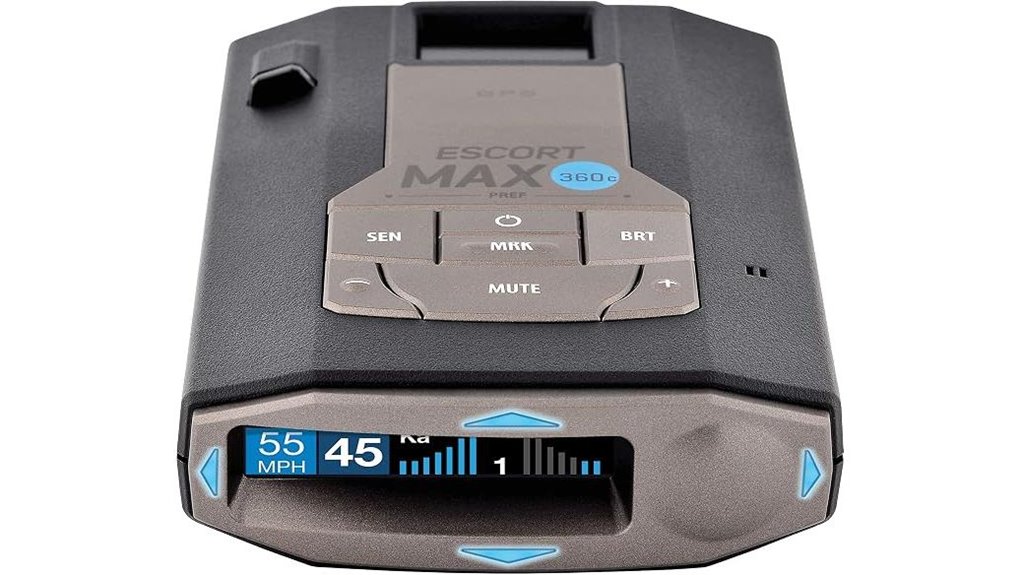
Drivers who want connected, 360-degree protection will appreciate this model’s real-time alert network. The Escort MAX 360c combines built-in WiFi, Bluetooth, and phone compatibility for iPhone and Android, plus Apple CarPlay and Android Auto support for easier alert viewing. Forward- and rear-facing antennas provide full coverage, while Autolearn, GPS intelligence, IVT filtering, and autosensitivity help cut false alarms. Shared Drive Smarter alerts add live community reports. The package includes a travel case, Smartcord USB with automute, and EZ Mag mount. Engineered in the USA, it emphasizes dependable radar and laser detection.
Best For: Drivers who want a connected, feature-rich radar detector with 360-degree coverage, smartphone integration, and community-driven alerts.
Pros:
- Built-in WiFi and Bluetooth with iPhone, Android, Apple CarPlay, and Android Auto compatibility
- 360-degree protection with forward and rear-facing antennas plus false-alert reduction features
- Includes useful accessories like a travel case, Smartcord USB with automute, and EZ Mag mount
Cons:
- May be more expensive than basic radar detectors due to its advanced connectivity and features
- Requires setup and pairing to fully use connected features and community alerts
- Some drivers may not need the extra complexity if they only want simple radar detection
Factors to Consider When Choosing Radar Detectors, Tested 2026
When choosing a radar detector, detection range and false alert filtering remain central because they shape both early warning and day-to-day usability. Directional awareness, GPS and camera alerts, and connectivity features can further improve how well the device supports real-world driving. A balanced model tends to combine these elements without sacrificing clarity or ease of use.
Detection Range
Detection range remains one of the most important factors in a radar detector’s performance, because greater distance means earlier warning and more time to react to potential threats. Longer-range units give drivers additional time to adjust speed, assess traffic, and make safer decisions before a signal becomes urgent. In testing, high-performance detectors have reached distances up to twice those of standard models, which can materially improve response time. Range also depends on design choices such as dual antennas, 360-degree coverage, and faster processors that help identify signals quickly from multiple directions. Advanced detection systems further support reliable performance across varied driving conditions. For buyers comparing 2026 models, range should be weighed as a primary indicator of how much advance notice a detector can realistically provide.
False Alert Filtering
False alert filtering has become a defining measure of radar detector quality, since strong performance means distinguishing real threats from everyday interference. Advanced systems now use AI-assisted filtering and adjustable sensitivity settings to reject common nuisance signals, including automatic doors and nearby vehicle electronics. GPS-enabled models add value with auto-learn functions that memorize recurring false-alert locations and silence them on future passes, reducing distraction during routine commutes. Community connectivity can further improve performance by letting users share live reports of spurious signals, which helps refine filtering rules over time. Ongoing software updates and database improvements also matter, because new interference sources appear regularly. Together, these features determine how calmly and accurately a detector performs in daily driving.
Directional Awareness
Directional awareness is a key factor in choosing a radar detector, because it helps identify where a signal is coming from and how urgent the threat may be. Models with 360° coverage can recognize radar from the front, rear, and sides, giving drivers a fuller picture of nearby enforcement. Dual antenna systems improve this capability by distinguishing direction and often pairing that information with voice alerts that report signal strength. More advanced units, including those using dual Blackfin DSPs, can track multiple angles with greater accuracy. Some detectors also use patented filtering technologies to reduce false warnings, which supports clearer directional判断 during travel. When paired with GPS memory, recurring nuisance alerts can be muted, helping the detector focus attention on meaningful threats.
GPS And Camera Alerts
GPS and camera alerts have become a major factor in radar detector selection, especially for drivers who want fewer distractions and more timely warnings. GPS-enabled units can learn recurring false alerts, then auto-mute signals from sources such as retail door alarms. This reduces nuisance warnings and helps the driver focus on the road. Many advanced detectors also include databases of red light and speed camera locations, delivering timely alerts before a violation occurs. High-quality GPS systems can locate a vehicle within 2.5 meters, improving confidence in each alert. Regular firmware updates are important because they keep camera data current and preserve alert accuracy over time. Together, these features make GPS a practical tool for safer, more informed driving in daily use.
Connectivity Features
Connectivity features have become a key differentiator in radar detectors tested in 2026, with built-in WiFi, Bluetooth, and app support shaping how useful a unit is day to day. WiFi can deliver real-time updates on speed traps and other enforcement threats directly to the detector, while Bluetooth links the unit to smartphone apps for live alerts and community-driven reports. Some models also work with Apple CarPlay and Android Auto, letting drivers view routes and warnings on larger vehicle displays. GPS-based filtering adds another layer by learning from location data to reduce false alerts over time. Community sharing matters too, since alerts from other drivers can improve situational awareness and help the detector respond to changing road conditions.
Mounting And Portability
Mounting and portability are two practical factors that can make a radar detector easier to live with day to day. Models with windshield mounts, dash mounts, or both give users more flexibility in placement and visibility. Suction cup and magnetic mounts are especially useful because they allow quick installation and removal without much effort. Durability also matters; sturdy hardware helps the detector stay secure despite road vibration and bumps. Compact, lightweight units are easier to move between vehicles and simpler to store discreetly when not in use. Some detectors include travel cases, which add protection during transport and help keep accessories organized. Taken together, these features determine how convenient a detector is outside of performance alone, especially for drivers who value ease of use and repeated relocation.
Related Reading
Frequently Asked Questions
What Is the Difference Between Radar and Laser Detectors?
Radar detectors and laser detectors differ in what they sense and how they warn. Radar detectors pick up police radar waves, usually from farther away, giving drivers more reaction time. Laser detectors respond to lidar, a focused beam that is harder to detect and often signals at shorter range. In practice, radar detection is broader, while laser detection is more precise but less forgiving, making combined units more useful.
Are Radar Detectors Legal in Every State?
Hardly any question seems more tangled than this one: radar detectors are not legal in every state. In most states, private passenger vehicles may use them, but Virginia and Washington, D.C. prohibit them, and federal law bans use in commercial vehicles over 10,000 pounds. Some states also restrict windshield mounting or detector jammers. Laws can change, so checking local regulations before driving remains essential for compliance and avoiding fines, citations, or confiscation.
How Often Should I Update Detector Firmware?
Detector firmware should be updated whenever the manufacturer releases a stable update, typically every few months or after major feature or database changes. Regular checks help preserve detection accuracy, reduce false alerts, and improve compatibility with new radar systems. If updates are infrequent, a quarterly review is reasonable. Before long trips, confirming the latest firmware is wise. In general, newer hardware benefits most from staying current.
Do Radar Detectors Work With Adaptive Cruise Control?
Yes, but only indirectly. Adaptive cruise control does not communicate with radar detectors; instead, its sensors can sometimes create warnings that seem suspiciously familiar. That small mystery often starts with brief alerts, then fades as the detector learns the pattern. Modern units may filter much of this interference, yet some still react to vehicle radar. The result is useful, if imperfect: awareness rises, but silence is never guaranteed.
Can a Detector Reduce False Alerts in Heavy Traffic?
Yes, a detector can reduce false alerts in heavy traffic by filtering common sources such as blind-spot monitors, automatic doors, and nearby vehicle radar. Advanced models use GPS lockouts, signal processing, and band-specific sensitivity controls to ignore repeating, weak, or non-enforcement signals. However, dense traffic can still create occasional nuisance alerts, so no detector eliminates them entirely. The best results usually come from pairing smart filtering with careful settings and placement.
Conclusion
In 2026, the best radar detectors will act like a co-pilot, quietly scanning the road and helping drivers stay one step ahead. From the Uniden R8W to the Escort MAX 360c, each model offers a blend of long-range detection, GPS guidance, and smart connectivity. Whether the priority is range, filtering, or added dash-cam protection, these six options stand out as reliable tools for safer, more informed driving on modern roads.