As car theft methods become more advanced, choosing the right GPS tracker matters more than ever. In 2027, a few devices stand out for recovery, stealth, and ease of use, each with different strengths. Some offer real-time tracking without monthly fees, while others focus on battery life, history playback, or simple setup. The differences are subtle, but they can decide how quickly a stolen car is found.
Vyncs 4G LTE GPS Vehicle Tracker (No Monthly Fee)
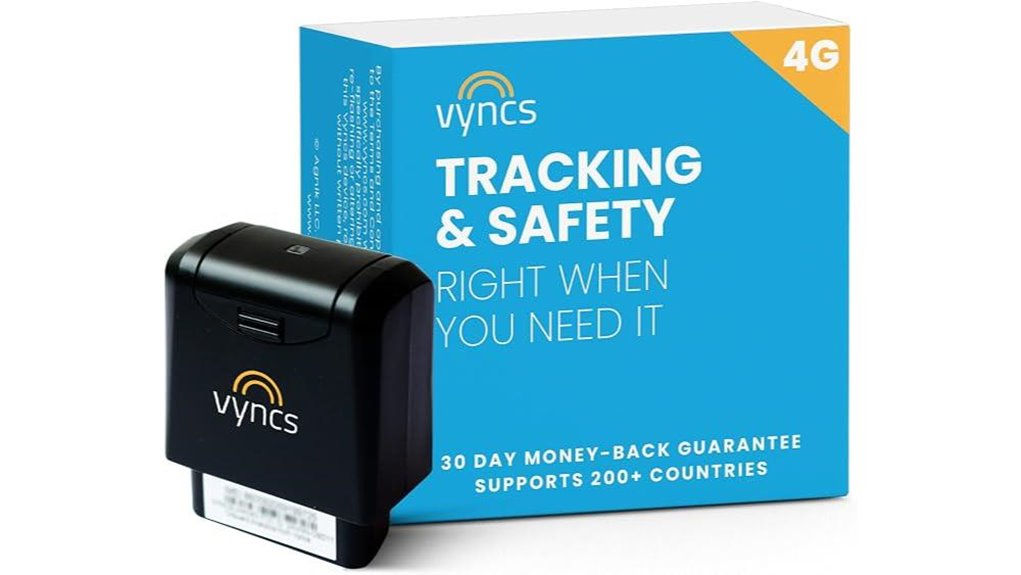
The Vyncs 4G LTE GPS Vehicle Tracker is a strong choice for drivers who want real-time car monitoring without a traditional monthly fee. It plugs into the OBD port, draws power from the vehicle, and uses 4G LTE to collect location data every second while sending updates to the server every minute. The system keeps unlimited trip history, shows routes with street addresses, and monitors DTC codes, fuel economy, idling, RPM, speed, and maintenance needs. It also supports speeding, harsh driving, tamper, and GeoFence alerts, plus shared tracking and global customer support.
Best For: Drivers, families, and small fleets that want a plug-in 4G LTE GPS tracker with real-time vehicle monitoring and no traditional monthly fee.
Pros:
- Real-time tracking with location data collected every second and minute-by-minute server updates
- Monitors vehicle health and driving behavior, including DTC codes, fuel economy, idling, RPM, speed, and harsh driving alerts
- Includes unlimited trip history, GeoFence alerts, shared tracking, and global customer support
Cons:
- Requires an activation fee and annual renewal after the first year
- Must plug into the OBD port, so it only works with compatible vehicles
- Some features depend on vehicle data availability, such as fuel level and certain diagnostics
LandAirSea 54 GPS Tracker with Long Battery
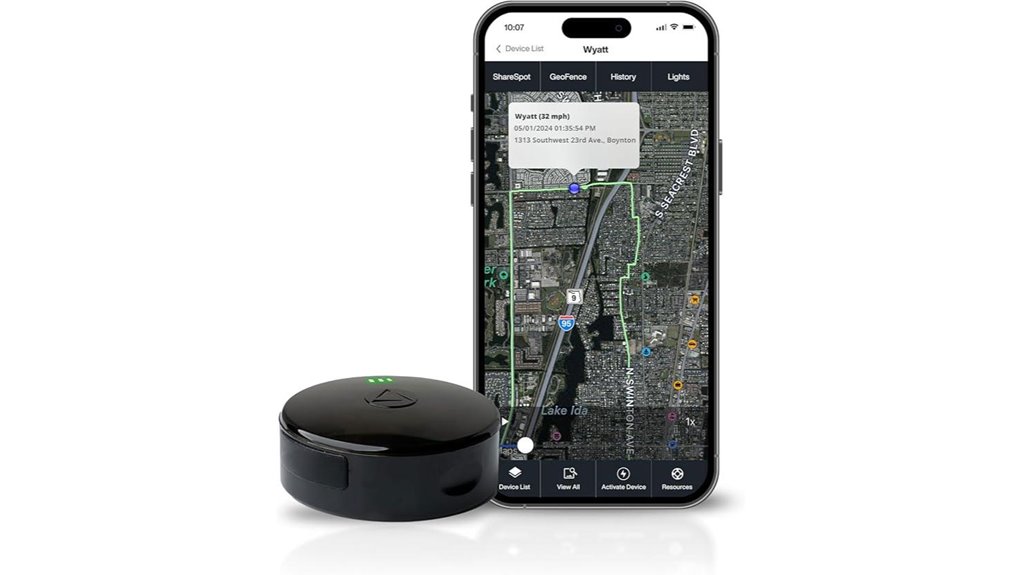
Ideal for drivers who want discreet, long-lasting tracking, the LandAirSea 54 adds real-time GPS updates every three seconds. This ultra-compact device uses an internal magnet for hidden placement on cars, ATVs, golf carts, and other assets. It provides accurate global location data through web software or the SilverCloud app, with historical playback available for up to one year and geofencing alerts. A motion-activated design helps conserve battery life. Made in the USA from domestic and imported parts, it requires a subscription, with affordable no-contract plans and a lifetime warranty.
Best For: Drivers and asset owners who want a discreet, long-lasting GPS tracker with real-time updates, geofencing, and easy hidden placement.
Pros:
- Updates location every 3 seconds for highly responsive tracking
- Ultra-compact design with an internal magnet for discreet installation
- Lifetime warranty and up to 1 year of historical playback
Cons:
- Requires an ongoing subscription to function
- Battery life may vary depending on motion and update usage
- Best features may be overkill for users needing only basic tracking
Bouncie GPS Tracker for Vehicles with Real-Time Location
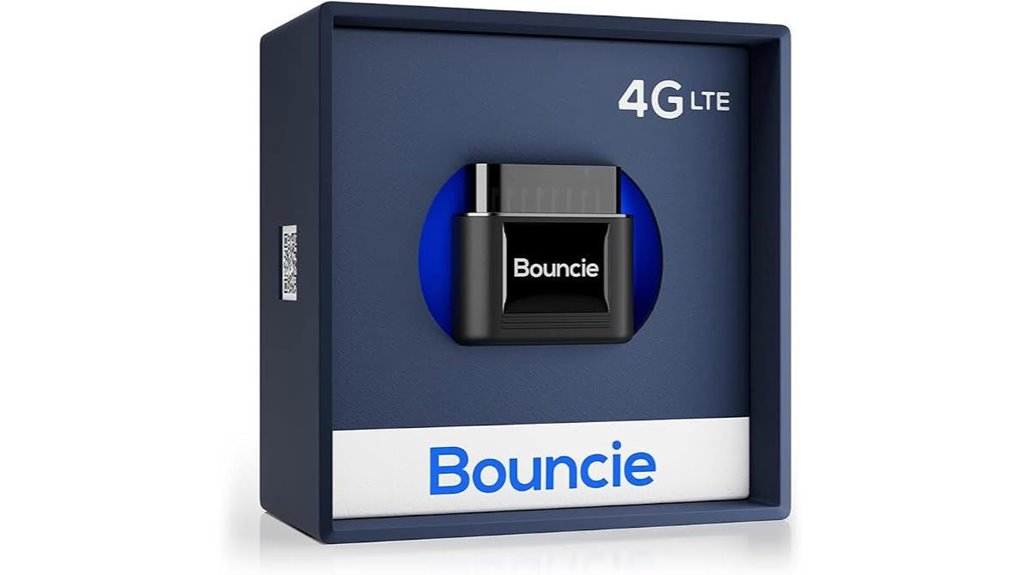
Bouncie stands out for drivers who want real-time tracking with detailed trip history. It delivers up-to-the-minute location updates and unlimited route records, including addresses, idle time, speed, and driving patterns. The device tracks hard braking, acceleration, and speeding, then uses alerts and color-coded indicators to highlight risky behavior. It also monitors diagnostic engine data and warns of maintenance issues before downtime occurs. Geo-fences trigger entry and exit notifications, while impact sensors can send SMS crash alerts. Plugging into the OBD2 port, it fits most 1996-and-newer vehicles and requires a monthly subscription.
Best For: Drivers, families, and fleet owners who want real-time vehicle tracking, driving insights, and maintenance alerts in one OBD2 plug-in device.
Pros:
- Provides real-time location updates with unlimited trip and route history.
- Monitors driving behavior, vehicle health, and crash impacts for added safety.
- Easy OBD2 installation and supports geo-fencing with alert notifications.
Cons:
- Requires a monthly subscription to use the service.
- Only works with most vehicles from 1996 and newer that have an OBD2 port.
- Advanced tracking and alerts may be more than casual users need.
Apple AirTag (1st Generation) Bluetooth Tracker
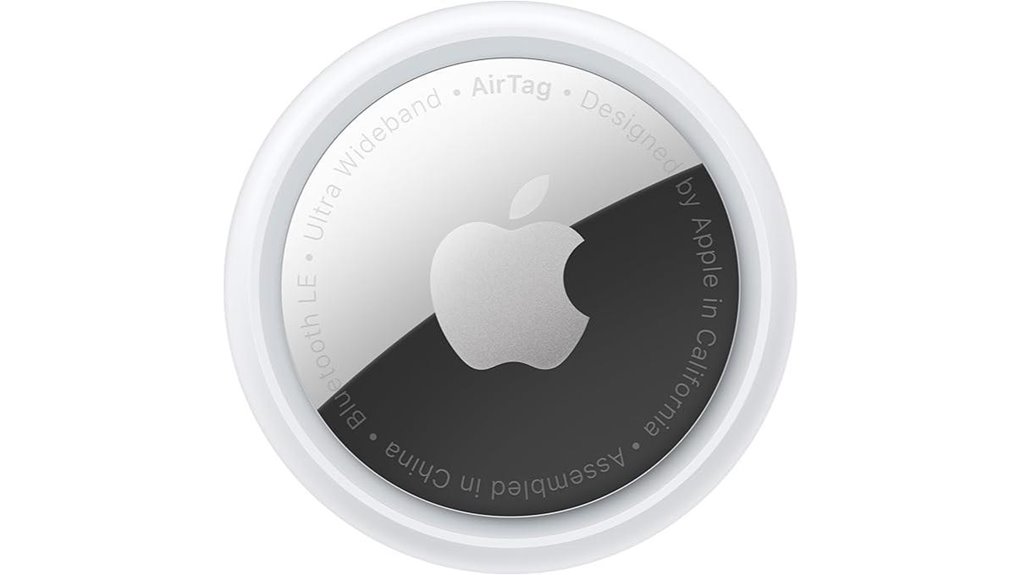
Apple AirTag suits iPhone users wanting a simple, affordable way to track vehicles and personal items. The 1st generation model pairs with iPhone or iPad through one-tap setup and is designed for keys, wallets, luggage, backpacks, and similar items. Tracking happens in the Find My app, with Lost Mode alerts and sharing for up to five people. Precision Finding helps locate nearby AirTags on supported iPhones. It works only with Apple devices, not Android. An encrypted, anonymous network protects privacy, while the replaceable battery lasts over a year and the IP67 rating adds water and dust resistance.
Best For: Apple users who want an easy, affordable Bluetooth tracker for keys, wallets, luggage, backpacks, and other personal items.
Pros:
- Simple one-tap setup with iPhone or iPad
- Find My app support with Lost Mode, sharing for up to 5 people, and Precision Finding on supported iPhones
- Replaceable battery lasts over a year, and the IP67 rating offers water and dust resistance
Cons:
- Only works with Apple devices and is not compatible with Android
- Precision Finding is limited to select iPhone models with Ultra Wideband support
- Best suited for personal-item tracking rather than broader vehicle tracking use cases
Factors to Consider When Choosing GPS Trackers for Cars 2026: Recover a Stolen Car
When choosing a GPS tracker in 2026 for stolen car recovery, real-time location updates and recovery alert features are key because they can speed up response and improve the chance of retrieval. Battery or power source also matters, since the device must keep working long enough to be useful during an incident. Subscription fees and vehicle compatibility should be checked as well to guarantee the tracker fits the car and remains affordable over time.
Real-Time Location Updates
Real-time location updates are one of the most important features in a car GPS tracker because they can show a stolen vehicle’s movement every few seconds, making faster recovery possible. Such frequent reporting gives a clear picture of where the car is headed and helps narrow down search areas with current, accurate data. Unlimited trip history adds value by preserving past routes, which can reveal the last known location and movement patterns. Geo-fencing also supports tracking by defining boundaries and showing when a vehicle leaves or enters a set area. Some trackers go further by monitoring driving behavior and vehicle diagnostics, giving authorities useful context during recovery. Together, these tools make location tracking more effective and improve the odds of finding a stolen car quickly.
Recovery Alert Features
Beyond live location tracking, recovery alert features can make the difference between spotting theft early and responding too late. Strong GPS trackers send real-time updates that help narrow a stolen car’s position as events unfold. Geofencing adds another layer by triggering alerts whenever the vehicle crosses preset boundaries, making unusual movement easier to detect. Impact sensors can warn of tampering, collisions, or break-in attempts before the thief gets far. Unlimited trip history and detailed route mapping also matter, since they preserve a clear trail for investigators and owners after theft occurs. A dependable customer support team further improves recovery, offering guidance when every minute counts. Together, these features strengthen response speed, evidence gathering, and the chances of locating the vehicle quickly.
Battery Or Power Source
Power matters as much as positioning in a car GPS tracker. Buyers should first decide between a battery-powered unit and one that draws energy from the vehicle’s OBD port. Battery models offer flexible placement, but they demand regular recharging or replacement, which can interrupt coverage if neglected. OBD-powered trackers install into the vehicle and usually run continuously with little maintenance. They typically use minimal power, enter sleep mode when the car is off, and preserve the device’s lifespan. Power source also affects update frequency: OBD devices often support more consistent real-time tracking than battery-limited models. The chosen tracker should also sustain power-hungry functions, including live location reporting and vehicle diagnostics, without failing under load.
Subscription And Fees
Subscription costs can shape the true value of a car GPS tracker, since many devices require an ongoing fee for real-time tracking, historical data, geofencing, and alerts. Plans often range from budget monthly options around $9.95 to more complete service near $19.95, with annual billing sometimes lowering the per-month rate. Buyers should watch for activation charges, renewal fees after an introductory period, and penalties for early cancellation, all of which raise ownership costs. It is also worth checking whether customer support and replacement services are included, because those extras can save money if the device fails. Flexible plans that allow cancellation at any time without penalties usually offer the best balance of control, convenience, and long-term value for stolen-car recovery.
Vehicle Compatibility
Vehicle compatibility is another major factor when choosing a car GPS tracker, because the wrong fit can limit both installation and performance. A device should match the vehicle’s OBD port, especially in models from 1996 and newer, so it can be installed quickly and work properly. Power needs also matter: some trackers draw electricity directly from the port and avoid battery upkeep, while others require periodic battery replacement. It is also important to verify whether the tracker functions only with an active subscription. Beyond basic fit, buyers should examine tracking accuracy and update intervals, since some units refresh every few seconds. Features such as vehicle health monitoring and geofencing can further improve security and make the tracker more useful overall for everyday use.
Historical Route Playback
Historical route playback gives owners a clear record of past trips, showing routes taken, stop locations, trip duration, speed, and idle time. This history helps reconstruct events before a theft and can support law enforcement efforts to trace a stolen vehicle. When a tracker retains data for months or up to a year, it allows deeper review of driving patterns and irregular behavior. Speed and idle-time records can reveal unauthorized use, detours, or stops that do not match normal routines. For families and fleets, the feature also improves accountability by making vehicle use easier to verify. A tracker with reliable playback makes post-incident analysis faster and more precise, which is valuable when every minute matters in recovering a car.
Geofencing And Tamper Alerts
Geofencing adds a proactive layer to trip history by letting owners set virtual boundaries around key locations and receive alerts when a car enters or leaves them. This feature helps monitor routine movements and quickly flags unexpected activity, which can be critical when a vehicle is stolen. Real-time location tracking strengthens that response by showing where the car is at the moment an alert is triggered, improving recovery chances. Tamper alerts add another safeguard by notifying owners if a tracker is removed, disturbed, or interfered with. Many systems also allow customized geofence settings, so alerts can match commuting patterns, parking habits, or restricted areas. Together, geofencing and tamper alerts provide active oversight, reduce response time, and offer peace of mind through continuous security monitoring.
Installation And Discreetness
Installation and discreetness are important because a GPS tracker that is easy to fit and hard to notice is more likely to stay in place when it matters most. Many car GPS trackers use simple OBD plug-in setups, requiring no tools or technical expertise, and the process can take less than five minutes. That speed helps preserve the vehicle’s appearance and reduces inconvenience. Discreet models matter just as much; compact housings and internal magnets let units be concealed in hidden spots on the car, where thieves are less likely to find them. Some trackers also use motion-activated power-saving modes, which extend battery life without attracting attention. When a device remains hidden and operational, it can continue sending real-time location updates, improving the odds of recovering a stolen vehicle.
Frequently Asked Questions
How Accurate Are GPS Trackers in Underground Parking Garages?
GPS trackers in underground parking garages are often less accurate because satellite signals weaken or disappear through concrete and metal. A tracker may report the last known outdoor location, then update only when it regains signal near an entrance or exit. Some models can still estimate position using cellular or motion data, but precision is usually reduced. Results depend on garage depth, building materials, and tracker quality.
Can GPS Trackers Work Without Cellular Service?
Yes. GPS trackers can work without cellular service for basic location determination, because GPS satellites provide positioning independently. However, cellular service is often needed to transmit that location to an app or monitoring center. Without a signal, many trackers store data locally or use alternative networks like Wi‑Fi or satellite. In a vehicle recovery situation, the device may still record positions, but real-time tracking is usually limited.
Do Car GPS Trackers Alert Police Automatically?
No, car GPS trackers generally do not alert police automatically; they are more like silent lanterns, not ringing bells. Most devices send location data to an owner’s app or monitoring service, which can then contact law enforcement. Some advanced recovery systems may include theft-response support, but police notification usually requires human action. Tracker features vary, so automatic alerts should be checked in the device’s specifications carefully.
How Long Do Hidden Trackers Typically Stay Undetected?
Hidden trackers typically stay undetected for days to months, depending on placement, device quality, and inspection frequency. Cheap or poorly concealed units may be found quickly during a routine search, while compact, well-hidden models can remain unnoticed much longer. Detection often comes only after physical inspection, RF sweeps, or battery checks. If suspicion is low, a tracker may persist indefinitely until the vehicle is thoroughly examined or serviced.
Are GPS Trackers Legal to Install on Leased Cars?
In most cases, yes—provided the lease agreement and local laws do not object, because bureaucracy rarely enjoys a surprise. A leased car can usually have a GPS tracker installed if the lessee owns the installation rights or secures the lessor’s consent. Hidden or consent-less tracking may breach contract terms and privacy laws. The safest course is to review the lease, ask the lender, and document approval before fitting anything.
Conclusion
Choosing the right tracker can make all the difference when a vehicle goes missing. Vyncs, LandAirSea 54, Bouncie, and Apple AirTag each offer distinct strengths, from real-time tracking to simple recovery support. Which one best fits your needs depends on how much detail, battery life, and convenience you want. In the end, the best GPS tracker is the one that helps locate a stolen car quickly and gives the owner peace of mind.