Clear glass can change the whole feel of a vehicle, but not every cleaner delivers the same result. In 2027, four products stand out for different reasons, from tint-safe formulas to concentrated professional blends and convenient wipes. Each one promises a streak-free finish, yet the best choice depends on how and where the glass gets cleaned. The details behind those differences may matter more than expected.
Chemical Guys, Signature Series Glass & Window Cleaner, Tint Safe, 16 oz
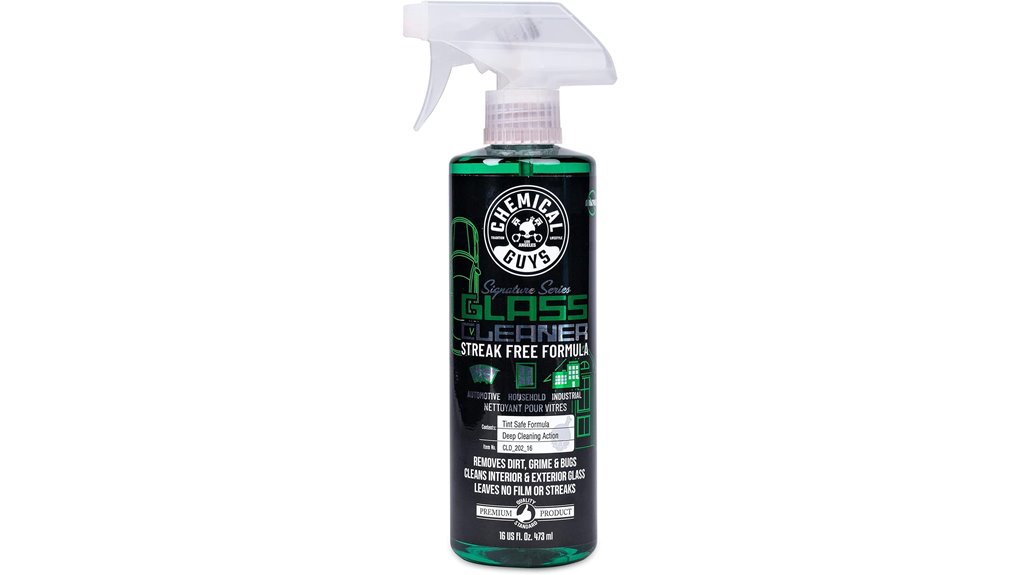
Chemical Guys Signature Series Glass & Window Cleaner, 16 oz, is a strong choice for drivers and detailers who want a tint-safe, streak-free cleaner for both interior and exterior glass. Its ammonia-free formula is designed for tinted windows, factory coatings, mirrors, and delicate surfaces, reducing the risk of damage during routine cleaning. It removes fingerprints, dirt, smudges, and road grime while drying quickly to minimize haze or residue. The compact 16 oz bottle suits glove boxes and detailing kits, and its versatility extends to cars, trucks, SUVs, motorcycles, RVs, and household glass, making it practical for regular maintenance.
Best For: Drivers, detailers, and automotive enthusiasts who want a tint-safe, streak-free glass cleaner for regular use on vehicle and household glass.
Pros:
- Ammonia-free formula is safe for tinted windows, factory coatings, mirrors, and delicate surfaces.
- Removes fingerprints, dirt, smudges, and road grime while drying quickly with minimal streaks or haze.
- Versatile 16 oz size works well for cars, trucks, SUVs, motorcycles, RVs, and home windows.
Cons:
- 16 oz bottle may run out quickly with frequent full-vehicle detailing.
- Primarily a glass cleaner, so it is not intended for heavy-duty cleaning beyond glass and similar smooth surfaces.
- Smaller bottle size may be less convenient for professional high-volume use than larger containers.
Meguiar’s Professional Glass Cleaner Concentrate, 1 Gallon
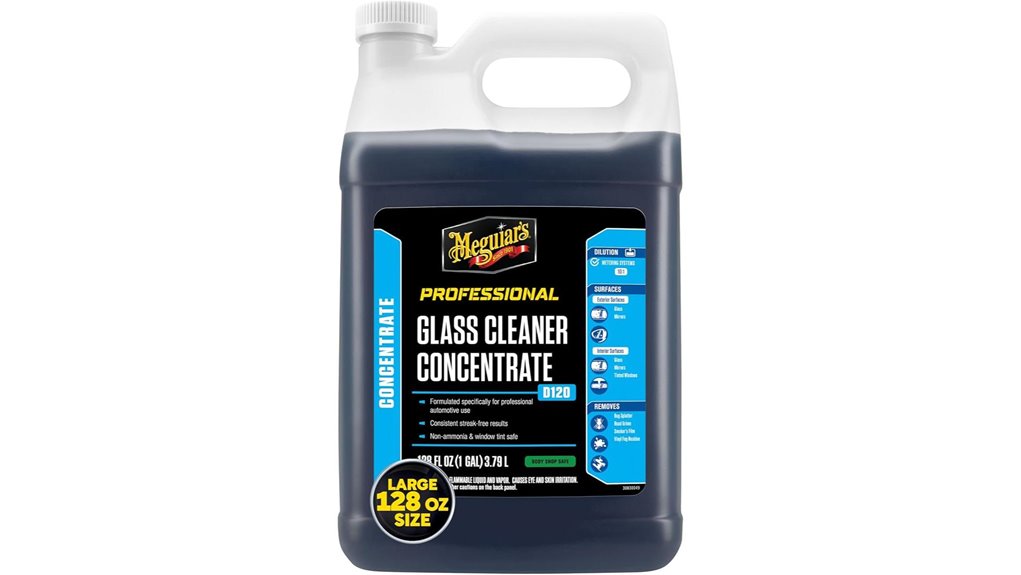
Meguiar’s Professional Glass Cleaner Concentrate suits detailers who need fast, streak-free results on vehicle glass. The concentrated formula handles car windows, mirrors, and glass surfaces with professional strength, cutting through vinyl fog residue, smokers film, road grime, dirt, and bug splatter. It sprays on smoothly, wipes off easily, and leaves clear visibility inside and outside the vehicle. Safe for tinted glass, it works well in home garages and auto shops alike. Its gallon size extends use, while Meguiar’s 125-year legacy reinforces trust in its automotive cleaning reputation.
Best For: Detailers, car owners, and auto shops that need a professional-strength, streak-free glass cleaner for fast cleaning of vehicle windows, mirrors, and tinted glass.
Pros:
- Removes tough grime, bug splatter, smokers film, and vinyl fog residue effectively.
- Safe for tinted glass and leaves a clear, streak-free finish.
- Highly concentrated gallon formula offers long-lasting, cost-effective use.
Cons:
- Designed mainly for glass, so it is not a multi-surface cleaner.
- Concentrate may require dilution and careful mixing before use.
- Gallon size may be more than casual users need for occasional cleaning.
Adam’s Polishes Glass Cleaner for Cars and Windows
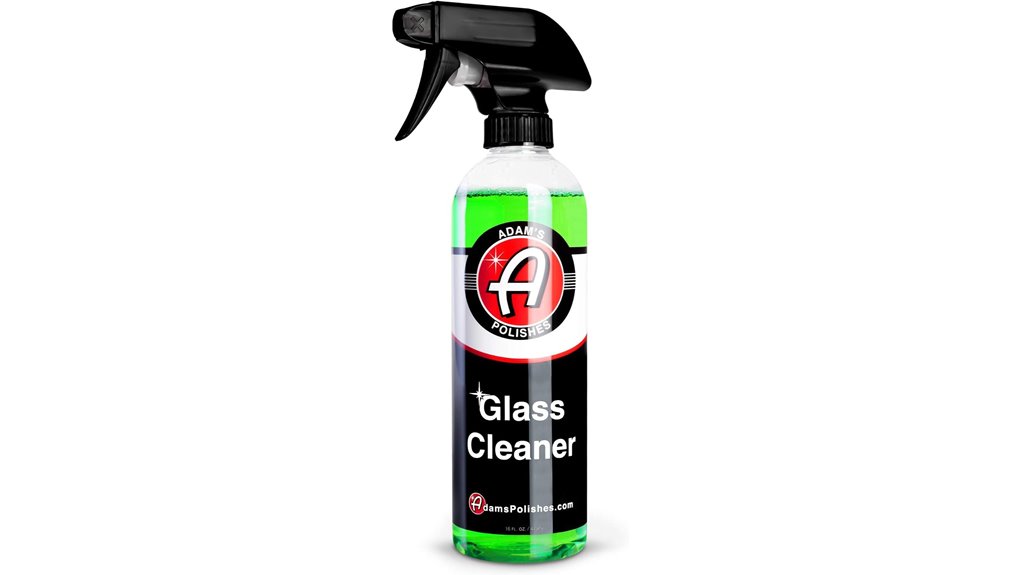
Adam’s Polishes Glass Cleaner suits drivers who want streak-free clarity on tinted windows. This 16-ounce, ammonia-free formula is all-natural, eco-friendly, and designed for a crisp, clear finish on factory or aftermarket tint. Optical clarifiers help improve visibility, while the sweet citrus scent adds a pleasant touch during use. Application is simple: spray onto glass and wipe with a microfiber towel, ideally Adam’s Green Glass Towel. Made in the USA and backed by a 110% satisfaction guarantee, it offers a practical, sustainable option for routine window care.
Best For: Drivers looking for a streak-free, ammonia-free glass cleaner that is safe for tinted windows and easy routine use.
Pros:
- Streak-free formula helps deliver clear, crisp visibility.
- Safe for factory and aftermarket tinted windows.
- Eco-friendly, all-natural formula with a pleasant sweet citrus scent.
Cons:
- Best results depend on using a microfiber towel and proper technique.
- 16-ounce size may not be ideal for heavy or frequent use.
- Primarily a maintenance cleaner, so it may not handle very tough grime alone.
Invisible Glass Auto Glass Cleaning Wipes, 28 Count, 90166
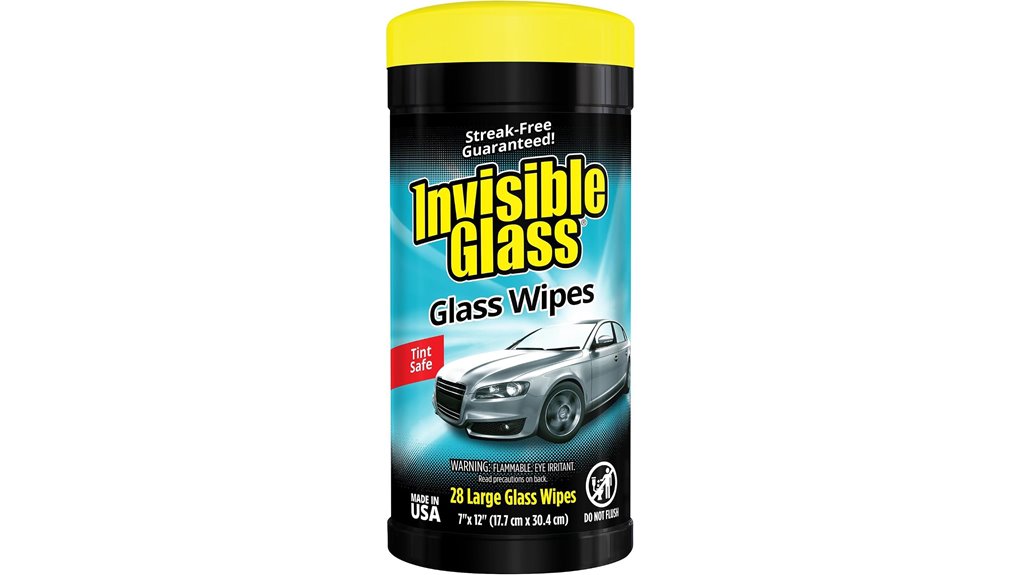
Invisible Glass Auto Glass Cleaning Wipes suit drivers who want quick, streak-free cleaning on the go. The 28-count, USA-made 90166 pack offers disposable wipes for convenient use inside and outside the vehicle. Its ammonia-free formula is designed for non-tinted and tinted glass, leaving no residue. The wipes remove dirt, bird droppings, bug splatters, salt spray, and stains with minimal effort. They also work on electronics, adding practical value beyond auto glass. Backed by a money-back guarantee, the product provides added confidence for buyers seeking portable, reliable cleaning between wash sessions.
Best For: Drivers who want a quick, portable, streak-free way to clean auto glass and electronics between wash sessions.
Pros:
- Disposable 28-count wipes are convenient for on-the-go cleaning inside and outside the vehicle.
- Ammonia-free formula is suitable for both tinted and non-tinted windows and leaves no streaks or residue.
- Removes dirt, bird droppings, bug splatters, salt spray, and stains with minimal effort.
Cons:
- 28 wipes may run out quickly for frequent users.
- Disposable format may create more waste than reusable cleaning options.
- Primarily designed for light cleaning, so heavily soiled glass may need extra effort or additional products.
Factors to Consider When Choosing Car Window Cleaners 2026: Streak-Free Glass Picks
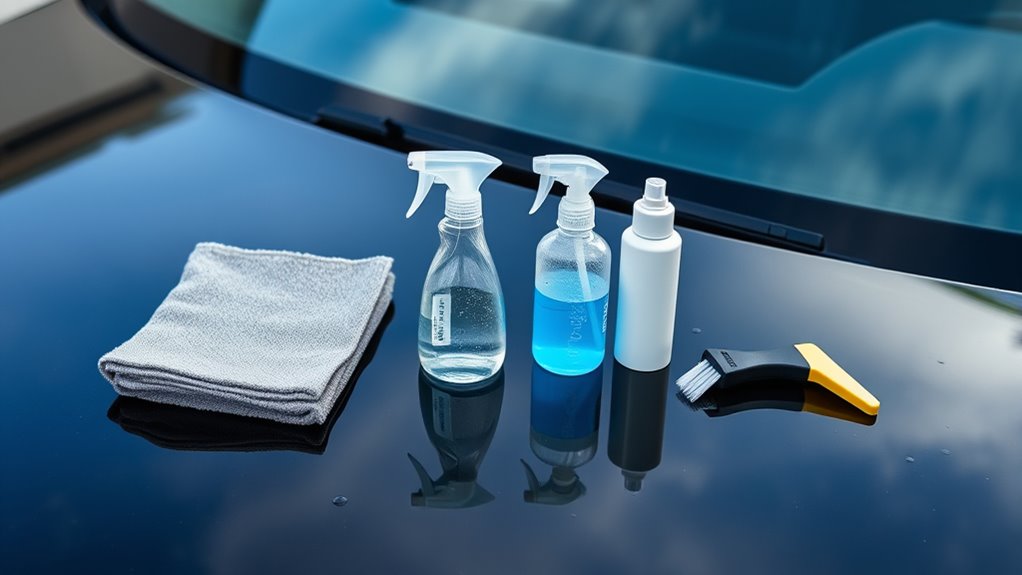
Selecting car window cleaners in 2026 often begins with streak-free performance, since clear glass is central to safe driving and a polished finish. Tint safety and an ammonia-free formula also matter, as they help protect delicate surfaces while reducing harsh fumes. Strong cleaning power and ease of use round out the key factors, making the best picks effective without adding extra effort.
Streak-Free Performance
Streak-free performance is one of the clearest signs of a quality car window cleaner, since it should remove dirt, smudges, and grime without leaving residue that can blur visibility. Fast-drying formulas help limit streak formation by reducing the time moisture remains on the glass. Products with optical clarifiers can improve clarity and support a cleaner finish, especially on exterior and interior panes. Application also matters: a microfiber towel generally helps lift loosened debris and leaves a more even surface than rougher materials. Ammonia-free formulas are often preferred for tinted windows, since they avoid unnecessary risk while still promoting a clear result. In practice, the best cleaners combine effective soil removal, controlled drying, and smooth wiping performance for consistently transparent glass.
Tint Safety
Tint-free visibility matters most when the cleaner also protects the glass itself. For tinted windows, the safest choice is a cleaner explicitly labeled tint safe, since that label signals lower risk to the film and its adhesive. Compatibility with both factory and aftermarket tints is especially valuable, because it helps guarantee the same product can be used across different vehicles without concern. A streak-free finish remains important here as well, since residue stands out more sharply on tinted glass and can reduce visibility. Versatile formulas that clean tinted and non-tinted surfaces offer practical convenience, provided they are approved for tint use. Careful selection helps preserve appearance, maintain clarity, and support long-term tint integrity while keeping everyday driving views clear and consistent.
Ammonia-Free Formula
Ammonia-free formulas are a smart choice for car window cleaners because they help protect tinted glass from long-term damage while still delivering a clear, streak-free finish. These cleaners avoid the harsh effects associated with ammonia-based products, making them a safer option for vehicles with window tint. Many are also non-toxic and environmentally friendly, which broadens their appeal for use around pets and in household spaces. Their gentle composition suits delicate surfaces such as mirrors and electronic screens, reducing the risk of damage. In addition, ammonia-free options often leave glass free of haze or residue, supporting a polished appearance. They can remove fingerprints, smudges, and everyday grime while maintaining a cleaner, more careful approach.
Cleaning Power
Cleaning power is a key factor in choosing car window cleaners, since the best formulas must remove fingerprints, dirt, road grime, and bug splatter without smearing the glass. Strong cleaners should lift varied contaminants in one pass while still leaving a streak-free finish that preserves visibility in bright sunlight and at night. Ammonia-free options remain especially important for tinted windows, as they help protect the film and the glass surface. Fast-drying technology also improves performance by reducing haze and residue after wiping. The most practical products often work on more than automotive glass, including interior mirrors and electronic screens, which increases overall value. A cleaner with broad surface compatibility and reliable residue control is generally better suited to routine vehicle care.
Ease Of Use
Ease of use often determines whether a car window cleaner becomes part of a regular routine or stays unused. Products that spray on evenly and wipe away with little resistance save time and reduce effort during each cleaning session. Fast-drying formulas add convenience by limiting waiting and helping glass return to service quickly. Pre-moistened wipes offer a practical option for quick touch-ups, especially when extra tools are not available. Ergonomic bottles also improve handling, making application more comfortable and controlled. Compatibility with different surfaces further simplifies maintenance, since one cleaner can often handle glass, trim, and other interior areas without switching products. When these features align, cleaning becomes less tedious and more likely to happen consistently, supporting clearer windows with less hassle overall.
Value And Size
Beyond ease of use, value and size play a major role in choosing a car window cleaner. Larger bottles often deliver better value for frequent users, especially automotive enthusiasts and professional detailers who clean glass often. Concentrated formulas can stretch further because they are diluted before use, reducing long-term cost compared with ready-to-use sprays. Price per ounce offers a practical way to compare options and identify the most economical choice without sacrificing cleaning power. Packaging should match the task: a 16 oz bottle suits personal use and easy storage, while a gallon is better for auto shops or extensive detailing. The best products balance price and quality, delivering streak-free results even when budget-friendly, so buyers avoid overpaying for convenience alone.
Frequently Asked Questions
How Often Should Car Windows Be Cleaned for Best Visibility?
Car windows should be cleaned whenever visibility begins to drop, typically every one to two weeks for daily drivers, and immediately after heavy rain, road salt, bugs, or pollen buildup. A detached observer would note that interior glass may need less frequent attention, but fingerprints and haze can still interfere with driving. Regular cleaning maintains clarity, reduces glare, and supports safer nighttime and wet-weather driving conditions overall.
Can Glass Cleaners Damage Ceramic Coatings or Tinted Windows?
Yes, some glass cleaners can scorch ceramic coatings or cloud tinted windows, like acid rain on polished stone. A detached assessment suggests ammonia, alcohol, and abrasive additives pose the greatest risk, especially on aftermarket tint and delicate coatings. Gentler, tint-safe formulas are usually safer, while a spot test on an inconspicuous area remains prudent. Manufacturers’ instructions should guide use, because protective layers and films vary widely in durability and chemistry.
Are Microfiber Towels Better Than Paper Towels for Windows?
Yes—microfiber towels are generally better than paper towels for windows because they trap dust, reduce lint, and leave fewer streaks. They also absorb cleaner more evenly and are less likely to scratch glass or trim. Paper towels can shed fibers, smear residue, and waste product. For best results, a clean, low-pile microfiber towel paired with a suitable glass cleaner usually delivers clearer, more consistent, streak-free glass.
Do Streak-Free Cleaners Work in Extreme Hot or Cold Weather?
Streak-free cleaners can work in extreme hot or cold weather, but performance often drops. In high heat, they may evaporate too quickly, leaving haze or residue. In cold weather, some formulas thicken or clean less evenly. Success usually depends on using the right product, applying it sparingly, and wiping promptly. A shaded surface and clean microfiber towel generally improve results in both temperature extremes.
What Causes Haze on Car Glass After Cleaning?
Haze on car glass after cleaning is usually caused by residue, oily films, hard-water minerals, or dirty microfiber towels. It can also come from using too much cleaner, leaving it to dry too quickly, or cleaning in direct sun. In some cases, interior off-gassing from plastics creates a stubborn film that returns after wiping. Proper rinsing, fresh towels, and a two-step clean can reduce the cloudiness considerably.
Conclusion
In 2027, the best car window cleaners continue to prove that spotless visibility is not just about appearance—it is about safety and confidence behind the wheel. Notably, studies show that even a thin film of residue can reduce driver visibility in sunlight and at night. Whether choosing a spray, concentrate, or convenient wipe, each of these top picks offers streak-free results, making it easier to keep every window crystal clear on the road.