Choosing the right motor oil in 2027 is less about brand loyalty and more about matching the formula to the engine’s demands. Some oils are built for long drain intervals, others for older engines, hybrids, or high-output performance. The differences can affect wear, cleanliness, and efficiency in subtle but important ways. A closer look at the leading options shows which one fits each type of engine best.
Mobil 1 Advanced Full Synthetic Motor Oil 5W-30, 5 Quart
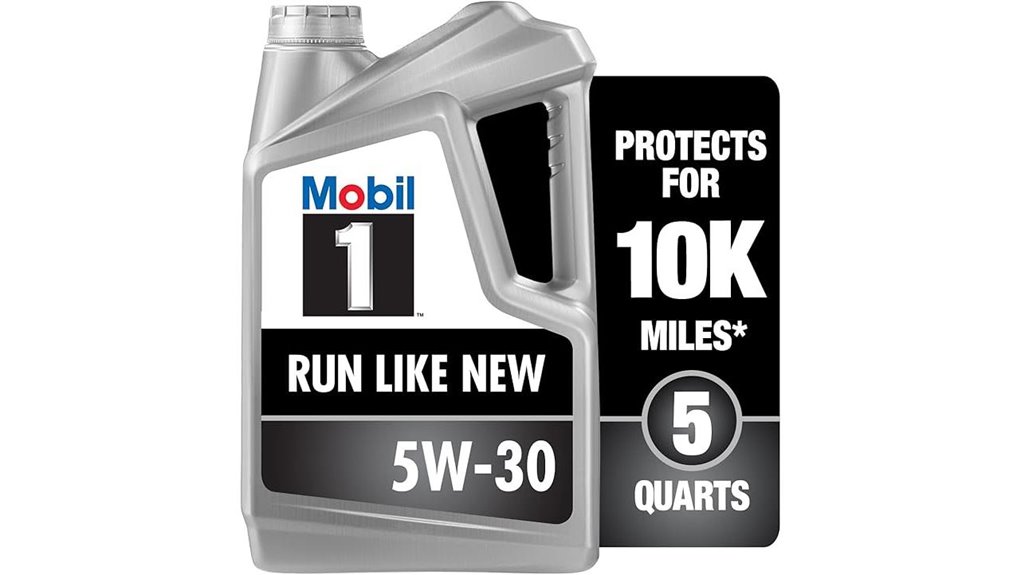
Mobil 1 Advanced Full Synthetic Motor Oil 5W-30, 5 Quart is a strong choice for drivers seeking reliable all-around engine protection, especially those who want extended performance between oil changes. Its Triple Action Formula supports strong engine performance, cleans sludge, and helps preserve efficiency. The oil protects critical parts for up to 10,000 miles, while controlling oxidation to slow breakdown. It also meets ILSAC GF-6 standards for LSPI and timing chain wear protection. With heat resistance up to 500°F and low-temperature flow to -30°F, it suits demanding conditions.
Best For: Drivers who want dependable full synthetic engine protection, long oil-change intervals, and solid performance in both hot and cold conditions.
Pros:
- Protects critical engine parts for up to 10,000 miles between oil changes
- Helps clean sludge and maintain engine cleanliness
- Meets ILSAC GF-6 standards for LSPI and timing chain wear protection
Cons:
- May be more expensive than conventional motor oils
- Long drain intervals may not suit drivers who prefer more frequent oil changes
- 5W-30 viscosity may not be ideal for every vehicle or climate requirement
Valvoline Advanced Full Synthetic SAE 5W-20 Motor Oil 5 QT
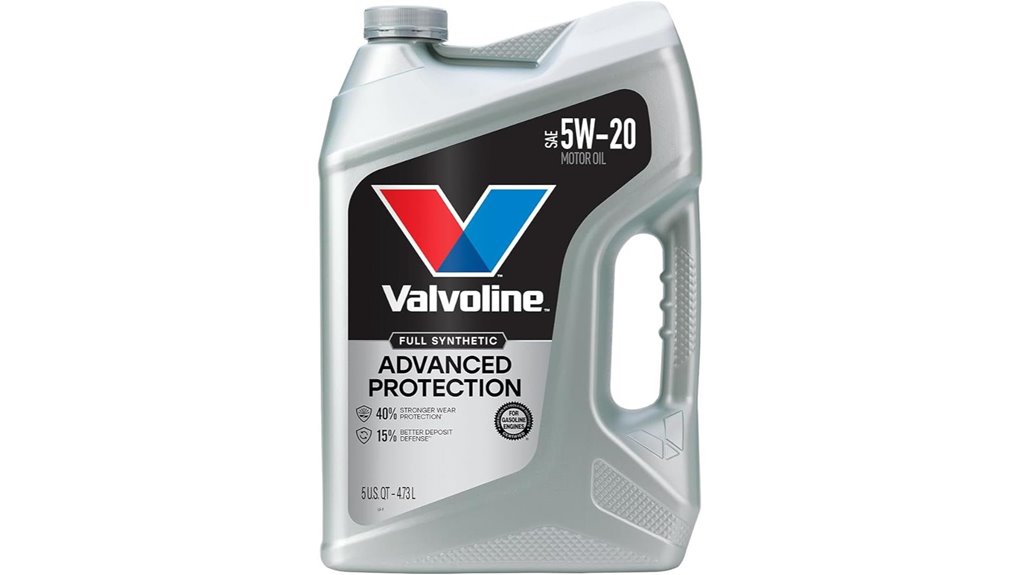
Valvoline Advanced Full Synthetic SAE 5W-20 is best for drivers wanting dependable year-round engine protection. This 5-quart, American-made oil comes from a brand trusted for more than 150 years. Its full synthetic formula targets the four main causes of engine breakdown: wear, friction, heat, and deposits. Valvoline claims 40% better wear protection and 25% better deposit control in industry testing. It also offers 24X stronger protection against contaminants than leading full synthetic oils. The formula meets ILSAC GF-6A, API SP, API SN Plus, and API SN requirements, making it a credible choice for modern engines.
Best For: Drivers who want a dependable year-round 5W-20 full synthetic motor oil with strong engine protection for modern vehicles.
Pros:
- Offers full synthetic protection against wear, friction, heat, and deposits
- Meets or exceeds major industry standards including ILSAC GF-6A and API SP
- 5-quart size is convenient for complete oil changes and top-offs
Cons:
- Only suitable for engines that specifically require SAE 5W-20
- May be more expensive than conventional motor oils
- Performance claims are based on industry testing and may be hard to verify in everyday use
Valvoline MaxLife High Mileage 5W-30 Synthetic Blend Motor Oil 5 Quart
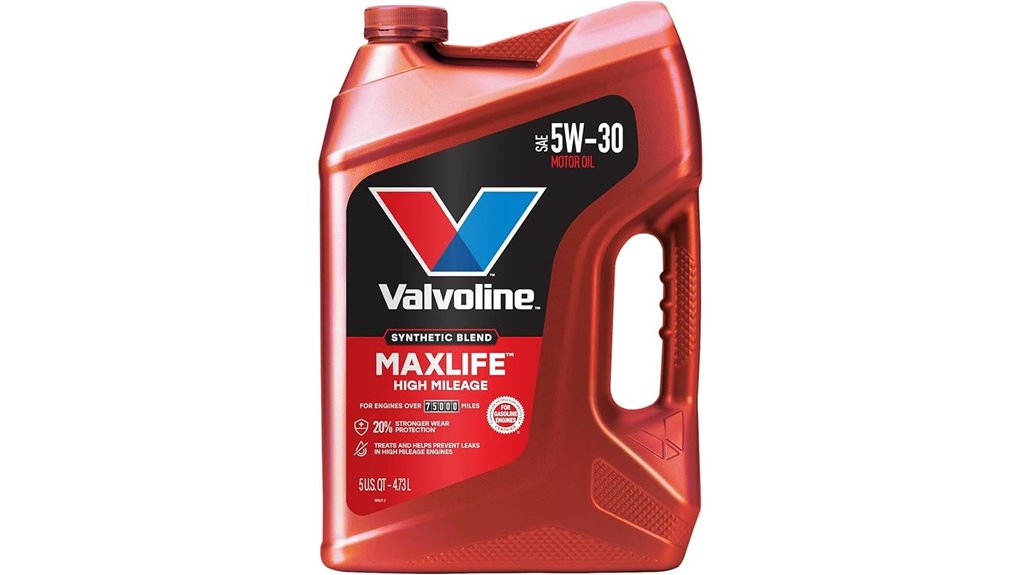
For engines past 75,000 miles, this blend helps curb leaks and oil burn-off. Valvoline MaxLife High Mileage 5W-30 Synthetic Blend Motor Oil uses seal conditioners to limit seepage and lower oil consumption. Its formulation claims 20% better wear protection and 15% better sludge defense than industry standards. Extra detergents help resist friction, corrosion, and deposits, keeping older engines cleaner. Friction-fighting additives support performance and fuel efficiency. It suits high-mileage, new, and rebuilt engines, and meets ILSAC GF-7A, API SQ, API SP, API SN Plus, Resource Conserving, Ford WSS-M2C971-A-1, and Chrysler MS-13340.
Best For: Drivers with vehicles over 75,000 miles who want a high-mileage 5W-30 oil that helps reduce leaks, oil consumption, and engine wear.
Pros:
- Contains seal conditioners to help curb leaks and lower oil burn-off
- Offers strong wear protection and sludge defense for older engines
- Meets a wide range of modern and prior API/ILSAC specs, making it versatile
Cons:
- Specifically formulated for high-mileage vehicles, so it may be less necessary for low-mileage engines
- Synthetic blend may not match the performance of a full synthetic oil in extreme conditions
- 5W-30 may not be the correct viscosity for every engine, so compatibility should be checked
MOTUL 8100 X-Cess 5W40 Full Synthetic Engine Oil
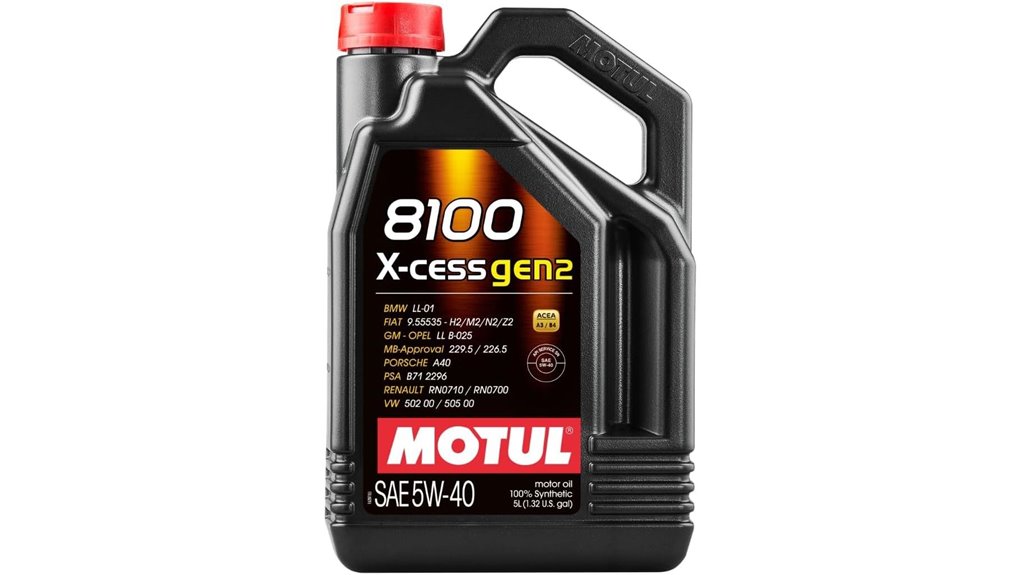
MOTUL 8100 X-Cess Gen 2 5W-40 suits high-performance European engines needing strong protection. This full synthetic oil carries BMW Longlife-01, Mercedes-Benz 229.5/226.5, Porsche A40, and Volkswagen 502 00/505 00 approvals, making it fit for demanding BMW M3, Porsche 911, AMG, and Audi S4 applications. Its 3.8 mPa.s HTHS viscosity, 186 viscosity index, and 228°C flash point support heat resistance and film strength. A -49°F pour point aids cold starts. The 10.2 TBN helps extend drain intervals while protecting catalytic converters.
Best For: Owners of high-performance European cars like BMW M3, Porsche 911, Mercedes-AMG, and Audi S4 who want a full synthetic 5W-40 oil with strong heat resistance, cold-start protection, and extended drain capability.
Pros:
- Strong OEM approvals for BMW, Mercedes-Benz, Porsche, Volkswagen, Renault, and GM-Opel applications
- Excellent high-temperature protection with 3.8 mPa.s HTHS viscosity, 186 viscosity index, and 228°C flash point
- Good for cold starts and longer intervals thanks to the -49°F pour point and 10.2 TBN
Cons:
- Overkill for many standard daily drivers that do not need a high-performance European-spec oil
- Not the best choice if your vehicle requires a different viscosity grade or newer low-SAPS specification
- Premium synthetic formula may cost more than more basic engine oils
Valvoline Hybrid Vehicle Full Synthetic SAE 0W-20 Motor Oil 1 QT, Case of 6
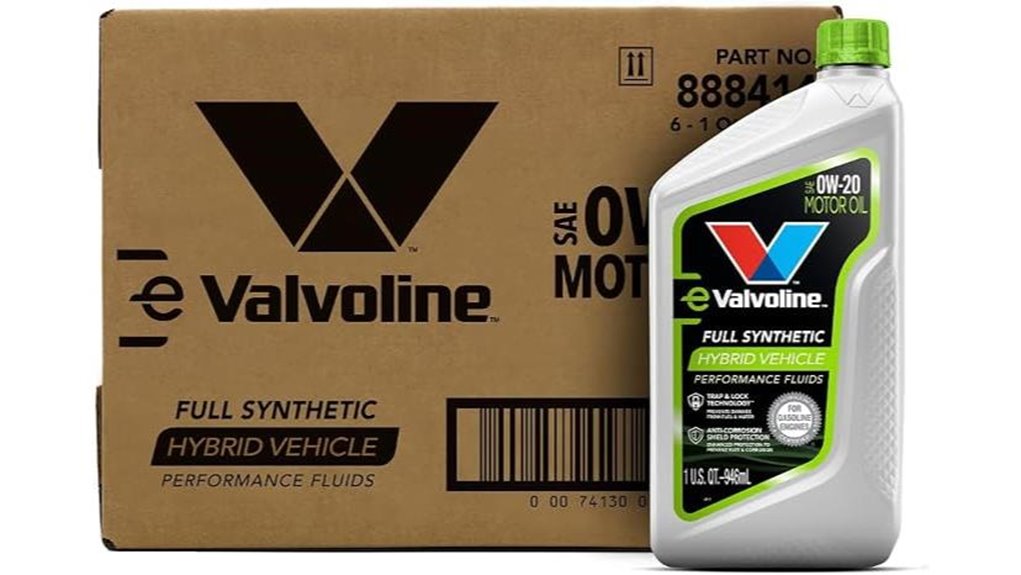
Designed specifically for hybrid vehicles, this full synthetic 0W-20 oil suits drivers seeking targeted engine protection. Valvoline’s Hybrid Vehicle Full Synthetic SAE 0W-20 Motor Oil uses exclusive technology to suspend water molecules in the oil, helping reduce damage from fuel and moisture. Its Trap and Lock Technology supports performance, while additives resist sludge and deposits. An Anti-Corrosion Shield helps guard against rust and oil breakdown. Formulated in America and backed by over 150 years of brand trust, it promotes proper lubrication, reduced wear, and efficient engine operation in a case of six quarts.
Best For: Hybrid vehicle owners looking for a full synthetic 0W-20 motor oil designed to help protect against moisture, sludge, wear, and corrosion.
Pros:
- Engineered specifically for hybrid vehicles
- Helps suspend water molecules to reduce damage from fuel and moisture
- Includes additives and Anti-Corrosion Shield for better sludge, deposit, and rust protection
Cons:
- Only suitable for vehicles that require SAE 0W-20
- Packaged as a case of 6, which may be more than some buyers need
- More specialized for hybrid use than a general-purpose motor oil
Factors to Consider When Choosing Motor Oils 2026: Top Picks for Every Engine
Choosing the right motor oil in 2026 begins with matching the viscosity grade to the engine’s needs, mileage, and climate conditions. Synthetic and blend options should be weighed against the expected temperature range and driving demands. The final choice should always confirm OEM specification match for proper protection and performance.
Viscosity Grade Selection
Viscosity grade is a key factor in motor oil selection because it determines how readily the oil flows in cold weather and how well it holds up under heat. The SAE system uses numbers such as 5W-30, where the W denotes winter and the first number reflects low-temperature flow. Lower numbers improve cold-start performance, while higher numbers better resist thinning at elevated temperatures. Vehicle manufacturers specify grades to match climate and operating demands, helping preserve engine protection, efficiency, and smooth operation. Multi-viscosity oils offer a practical compromise by performing across a wider temperature range. Selecting a grade that is too low may reduce lubrication in heat, while one that is too high can impede starting and circulation in cold conditions.
Engine Mileage Needs
Engine mileage plays an important role in oil selection, as older engines often need formulations that address wear, leaks, and consumption more directly. Engines with more than 75,000 miles often benefit from high mileage motor oils, which include seal conditioners that help limit leaks and reduce oil use. These oils also provide stronger wear protection and sludge defense, sometimes delivering up to 20% better performance than standard formulas. For newer engines, standard full synthetic oils are generally recommended because they protect well against wear, heat, and deposits. Matching the oil to the engine’s mileage helps support performance and longevity. Viscosity grade should still align with the engine’s specifications, since proper lubrication remains essential for healthy operation and efficient protection.
Synthetic Vs Blend
While both synthetic motor oils and synthetic blends can support engine protection, they serve different needs. Full synthetics are engineered for higher performance, with stronger thermal stability, greater resistance to oxidation, and additive packages that help detergents clean deposits while friction modifiers reduce wear. They are often chosen for vehicles needing maximum engine efficiency and longer service intervals. Synthetic blends mix conventional and synthetic base oils, delivering improved protection and smoother operation at a lower price, which suits routine commuting and general use. However, blends usually provide less wear resistance and may require more frequent changes than full synthetics. The choice often comes down to budget, maintenance goals, and how much protection the engine owner wants to prioritize.
Temperature Range Fit
Temperature range fit is another key factor when selecting motor oil, because each formula is designed to protect and lubricate best within certain hot and cold conditions. Oils with a high viscosity index resist thinning when engine temperatures climb, helping maintain a stable film during severe heat. In colder weather, the pour point matters because it indicates how easily the oil flows at low temperatures; a lower pour point supports quicker circulation and easier cold starts. Synthetic oils generally handle wider temperature swings better than conventional oils, keeping viscosity more consistent across seasons. The most suitable choice depends on the vehicle’s operating environment and local climate. Where seasonal changes are pronounced, an oil that performs reliably in both winter mornings and summer traffic offers stronger, more dependable protection year-round.
OEM Specification Match
OEM specification match is essential because each vehicle manufacturer sets oil requirements to support its engines’ performance, protection, and efficiency. OEM approval confirms that a motor oil meets the exact standards intended for a specific engine design, including viscosity grade and additive balance. When the recommended specification is followed, the engine is more likely to receive the protection needed for longevity, reduced wear, and resistance to corrosion. Matching OEM requirements also helps keep the vehicle operating within manufacturer-approved parameters and reduces the risk of warranty issues. For that reason, drivers and technicians should verify the specification listed in the owner’s manual before selecting oil. Regular adherence to OEM guidance can also limit the chance of oil breakdown and avoid damage linked to non-compliant products.
Deposit Control Performance
Beyond meeting the correct OEM specification, a motor oil also needs strong deposit control to keep an engine clean over time. That performance depends heavily on advanced cleaning detergents, which can provide up to 25% better deposit protection than industry standards. High-quality synthetic blends further help by limiting sludge formation, a major source of harmful buildup that can restrict oil flow and shorten engine life. Formulations with strong oxidation resistance also matter, because they slow oil breakdown and reduce the deposits that develop under heat and stress. In demanding engines, the best oils may protect against engine-killing contaminants up to 24 times more effectively than leading competitors. Compliance with standards such as ILSAC GF-6 signals rigorous cleanliness control and reliable long-term engine protection.
Fuel Economy Benefits
Fuel economy gains often start with the right motor oil, especially formulations built with advanced synthetic technology that reduce friction and improve lubrication between engine parts. Those lower internal losses can help an engine use less energy during normal operation. Oils carrying ILSAC GF-6 approval are also engineered for improved viscosity control and support in low-speed pre-ignition conditions, both of which contribute to efficient combustion. Clean-running formulations that limit sludge buildup may preserve that efficiency longer by keeping passages and moving parts clear. Cold-weather protection matters too, since easier starts reduce wasted energy in low temperatures. High-performance oils, chosen consistently, can help engines maintain their intended operating condition, supporting better fuel economy and lower emissions over time.
Drain Interval Expectations
Drain intervals vary widely, with most motor oils falling into the 5,000 to 10,000-mile range, though the right schedule depends on the oil type and the vehicle’s own specifications. Full synthetic formulations often last longer because they resist heat and oxidation more effectively, and under ideal conditions they may reach 15,000 miles. High mileage oils, however, are usually chosen for protection against leaks and wear in engines above 75,000 miles, not for extended service intervals. Driving habits matter as well: short trips, heavy traffic, towing, and extreme temperatures can shorten oil life. Regular checks of oil condition and engine behavior provide a practical guide, allowing changes to be timed more accurately than mileage alone.
Frequently Asked Questions
How Often Should I Change Motor Oil in 2027?
Motor oil should generally be changed every 5,000 to 7,500 miles in 2027, though some vehicles may safely go 10,000 miles or more with synthetic oil and ideal driving conditions. Severe use, such as frequent short trips, towing, or extreme temperatures, may require earlier service. The owner’s manual remains the most reliable guide, and oil life monitors can help determine the proper interval for each engine and driving pattern.
Can I Mix Synthetic and Conventional Motor Oils?
Yes, synthetic and conventional motor oils can usually be mixed in an emergency, because they are generally compatible. However, doing so creates a blend whose performance will typically fall somewhere between the two, not equal full synthetic protection. A complete oil change is still preferable to preserve the intended viscosity, additives, and engine protection. For routine use, following the vehicle manufacturer’s recommended oil type remains the safest choice.
What Oil Is Best for Turbocharged Engines?
For turbocharged engines, full synthetic oil is usually the best choice, because it withstands extreme heat like a hero surviving a furnace. It should meet the manufacturer’s viscosity and performance specifications, especially for high-temperature protection and turbo deposit control. Oils rated API SP or ILSAC GF-6 are often excellent picks. Regular oil changes matter greatly, since turbocharged engines punish neglected oil with brutal speed and heat.
Does Colder Weather Require a Different Oil Grade?
Colder weather does not always require a different oil grade, but it often favors a lower winter viscosity rating, such as 0W or 5W, for easier cold starts and faster lubrication. The correct grade still depends on the manufacturer’s recommendation and the engine design. In very cold climates, using the specified winter-rated oil can reduce wear, improve cranking, and help the engine reach proper oil flow sooner.
How Do I Dispose of Used Motor Oil Safely?
Used motor oil should be poured into a clean, sealable container and taken to a recycling center, auto parts store, or hazardous waste facility. It should never be poured into drains, soil, or trash, because it can contaminate water and harm wildlife. Spills should be wiped up with absorbent material and disposed of properly. Local disposal rules should be checked, since collection programs and accepted quantities vary by area.
Conclusion
Ultimately, the five oils stand out as smart solutions for shifting driving demands in 2027. Mobil 1 offers mileage-minded longevity, Valvoline Advanced delivers dependable defense, MaxLife supports seasoned engines, MOTUL 8100 satisfies spirited performance, and Valvoline Hybrid meets modern mobility needs. Together, they reflect a simple truth: the best motor oil is not merely lubricant, but lasting protection, precise performance, and peace of mind for every powertrain, purpose, and path ahead.