
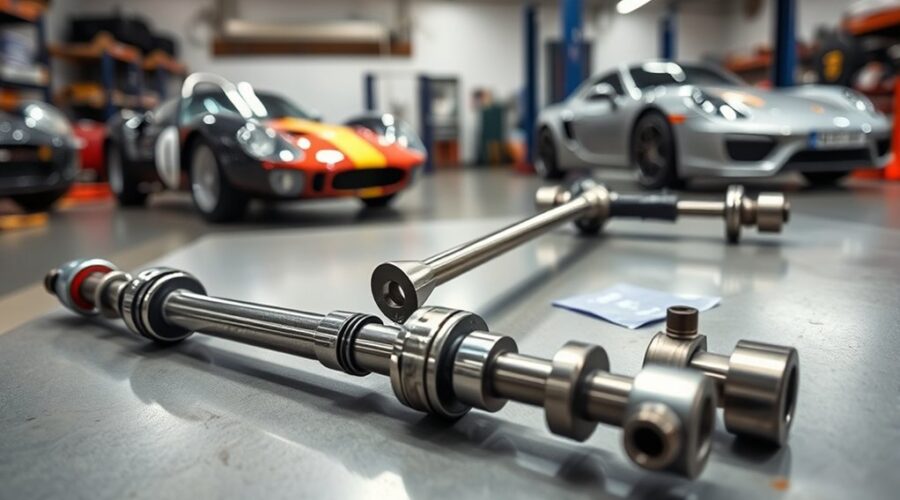
An anti-roll sway bar is a compact suspension device that links the left and right sides of a vehicle to resist body roll in cornering. It operates as a torsion spring, shifting load between wheels and altering handling balance. Design choices, bar diameter, and adjustability all change its effect. The original concept dates back to 1919, but modern systems are far more adaptable, and the details become more consequential than they first appear.
What Is an Anti-Roll Sway Bar?
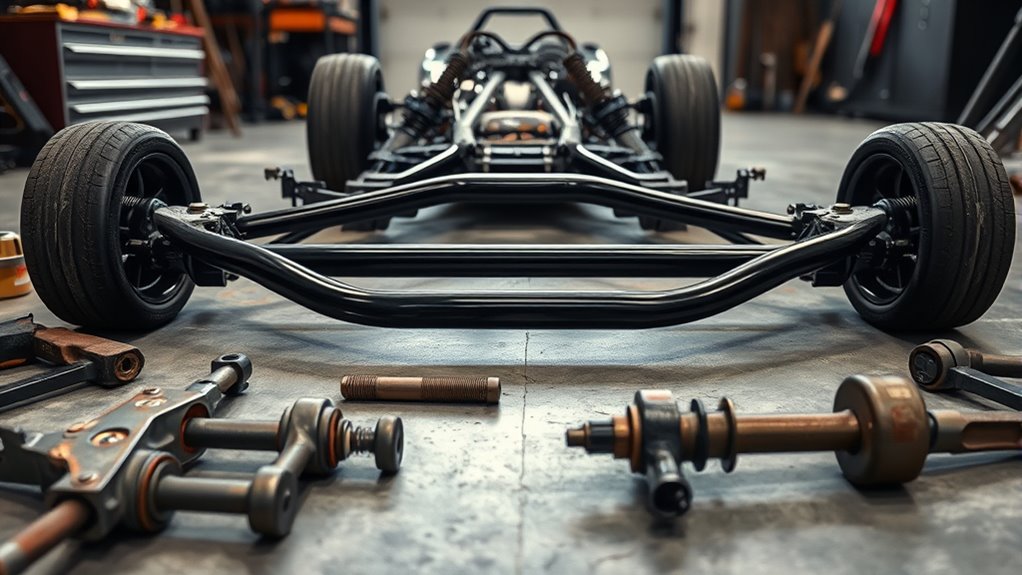
An anti-roll sway bar, also called a stabilizer bar, is a suspension component that links the left and right wheels of a vehicle to reduce body roll during cornering and improve stability.
In technical terms, the anti-roll bar connects opposite wheels and acts as a torsion element within suspension design. When one wheel moves relative to the other, the bar twists, generating resistance that contributes to vehicle stability and preserves handling balance.
Its function depends on geometry, diameter, material selection, and mounting points, all of which determine stiffness and response. A fixed stabilizer bar provides a constant rate, while an adjustable version permits real-time tuning for different road or track conditions.
First patented by Stephen Coleman in 1919, the device entered automotive design as a deliberate method for controlling chassis attitude. It remains a precise tool for engineers seeking freedom from excessive roll without sacrificing composure or control.
How a Sway Bar Reduces Body Roll
A sway bar reduces body roll by acting as a torsion spring that links the left and right suspension sides during cornering.
As one wheel is loaded, the bar resists twist and transfers force to the opposite wheel, limiting load transfer and keeping the body more level.
This mechanism preserves tire contact and improves stability, grip, and traction under lateral acceleration.
Torsion Spring Action
When a vehicle corners, the anti-roll bar acts as a torsion spring, twisting along its length as lateral forces create unequal suspension travel from side to side.
This anti-roll bar links both wheels through lever arms and sway bar bushings, converting asymmetric motion into resisting torque. The result is greater roll stiffness, which restrains body roll without eliminating suspension independence.
Because the bar reacts to the vehicle’s weight shifting outward, it reduces the tendency of the chassis to lean and keeps the tires better aligned with the road.
Stiffness at the rear can further tune the response, altering how quickly roll develops. In this way, the bar contributes to controlled load transfer, preserving stability and a more liberated, precise handling feel during cornering.
Load Transfer Control
By linking the left and right suspension, the sway bar redistributes load from the more heavily loaded outside wheel toward the inside wheel during cornering, opposing the body’s tendency to roll. Sway bars connect opposite wheels through the control arm, converting lateral force into torsion. This load transfer is governed by bar stiffness, which rises with diameter, material strength, and lever arm geometry.
| Factor | Effect |
|---|---|
| Vehicle’s weight | Increases load transfer |
| Bar stiffness | Limits body roll |
| Track width | Improves stability |
| Cornering hard | Raises torsional demand |
As the bar twists, it resists differential wheel motion, keeping the platform level and preserving tire contact. The result is improved stability, more direct response, and freer control under aggressive driving.
Anti-Roll Bar Parts and Design
The anti-roll bar is typically a cylindrical steel torsion member, often formed in a U or curved profile, whose diameter and material stiffness determine its resistance to body roll.
Bushings and end links mount the bar to the chassis and suspension, with bushing material selection influencing compliance, noise isolation, and steering response.
Design variation also includes fixed and adjustable bars, where adjustability allows the torsional rate to be tuned for handling balance and ride quality.
Core Bar Structure
At its core, an anti-roll bar is a cylindrical steel rod, typically formed into a U or curved shape, that acts as a torsion spring to reduce body roll during cornering and other lateral load transfers.
This core structure links the vehicle’s chassis to the suspension through bushings and end links, forming a controlled path for force redistribution. Its stiffness depends on bar diameter, material properties, and lever-arm length, each variable shaping resistance to roll.
In adjustable anti-roll bars, multiple mounting positions alter effective stiffness, enabling calibrated response for differing surfaces, loads, and driver intent.
The design is compact yet decisive: a restrained mechanical element that limits unwanted lean while preserving chassis freedom.
Bushings And End Links
Support for the anti-roll bar is provided by bushings and end links, the interface elements that connect the torsion bar to the chassis and suspension.
Bushings, typically rubber or polyurethane, cushion the vehicle mount, permit pivoting motion, and suppress noise.
End links couple the anti-roll bar to suspension members, transmitting forces during cornering and regulating load transfer between opposite wheels. Their geometry may be radial, axial, or combined, altering response and handling.
Proper installation is essential; misalignment weakens the anti-roll system and degrades performance. Worn bushings often produce clunking and reduced handling, signaling replacement.
- A bar centered by compliant bushings
- End links pulling load across a leaning vehicle
- Tight suspension motion preserving liberated cornering
Fixed Versus Adjustable Bars
Fixed anti-roll bars are engineered around a specific stiffness target, delivering consistent roll resistance and handling balance when driving conditions are predictable. They suit fixed anti-roll bars applications where vehicle dynamics demand repeatable handling characteristics and controlled body roll. Adjustable anti-roll bars add freedom by changing bar stiffness for varying circuits, loads, or road surfaces, tuning performance without replacing hardware.
| Type | Strength | Tradeoff |
|---|---|---|
| Fixed | Stable response | Limited tuning |
| Adjustable | Versatile setup | Added complexity |
| Materials | Steel or hollow | Weight vs stiffness |
Diameter, materials, and installation and maintenance practices shape effectiveness. Thicker bars usually reduce body roll, while correct bushing torque and anti-rotation features protect longevity.
How Sway Bar Thickness Changes Handling
Sway bar thickness directly alters handling by changing suspension stiffness: a thicker bar reduces body roll during cornering, keeping the body flatter and improving steering response.
In sway bars, greater stiffness shifts load transfer, so the vehicle’s center of gravity feels more controlled and handling responsiveness rises. A thicker sway bar also restricts independent wheel movement, binding the axle into a more connected, precise road feel that supports liberation from vague motion.
By contrast, thinner bars permit more articulation, preserving ride quality on broken surfaces but allowing greater lean and softer turn-in.
Suspension design and center of gravity determine how much effect thickness delivers; a low, well-tuned chassis may benefit from less bar, while a tall vehicle often demands more.
- A flatter cornering stance under lateral force.
- A taut chassis tracing a clean arc.
- A firmer line through a sweeping bend.
Adjustable and Active Sway Bar Systems
Adjustable and active sway bar systems add a tunable layer of control to anti-roll behavior, allowing stiffness to change with driving demand rather than remaining constant.
Adjustable sway bars permit multiple stiffness settings through alternate mounting positions, altering the effective lever arm length and shifting handling characteristics with precision. This makes them useful for commuting, spirited road use, or track work, where cornering performance and vehicle stability can be balanced without fixed compromise.
Active sway bars go further by using hydraulic pressure or electric motors to vary roll resistance in real time. BMW and Toyota systems illustrate how adaptive control can preserve composed response during aggressive maneuvers while still respecting ride freedom.
Jeep SmartBar can disconnect the bar for greater off-road articulation, and Toyota’s Kinetic Dynamic Suspension System disengages stabilizer bars to let wheels move independently, improving terrain compliance while maintaining on-road control.
How to Choose the Right Sway Bar
Selecting the right anti-roll bar depends on the vehicle’s intended use, suspension layout, and desired balance between comfort and cornering control. A performance vehicle often benefits from a stiffer sway bar, while a daily driver may need softer tuning to preserve ride compliance.
Choosing the right anti-roll bar balances sharper cornering with everyday ride comfort.
The bar’s diameter is decisive: greater thickness increases roll resistance, helps reduce body roll, and sharpens handling characteristics during hard cornering. Adjustable designs add freedom, letting the driver alter stiffness for street routes or track sessions.
- A low sports coupe leans into a fast bend, then settles as an adjustable bar tightens response.
- A lifted hatchback crosses uneven pavement, where compatibility with the suspension protects comfort and control.
- An aftermarket bar is fitted beneath a chassis, its diameter visibly larger than stock.
Proper selection requires checking vehicle type, mount geometry, and bushing fitment. When matched correctly, the upgrade can deliver substantial stability gains without a full suspension overhaul.
Frequently Asked Questions
What Are the Downsides of Using Anti-Roll Bars?
Anti-roll bars can reduce ride comfort, alter handling dynamics, and introduce performance trade offs. They also bring installation challenges, weight distribution sensitivity, cost considerations, vehicle compatibility limits, tuning options complexity, and greater maintenance needs.
What Is the Main Purpose of an Anti-Roll Bar?
Its purpose is to restrain body roll, like a stern hand on a tilting ship, improving vehicle stability, handling performance, and cornering dynamics, while suspension tuning, weight distribution, material choices, installation tips, aftermarket options preserve ride comfort.
Are Anti-Roll Bars and Sway Bars the Same Thing?
Yes—anti-roll bars and sway bars are the same component, differing mainly in terminology. Their sway bar functionality improves vehicle stability, driving dynamics, and handling characteristics. Anti roll bar types, aftermarket options, installation process, maintenance tips, performance enhancements matter.
Can I Drive Without an Anti-Roll Bar?
Yes, though a lifted SUV once felt like a sail in crosswinds. Without an anti-roll bar, suspension performance, handling characteristics, vehicle stability, and driving safety degrade; load distribution shifts. Aftermarket options and installation tips may help, but cornering ability and ride comfort suffer.
Conclusion
To summarize, the anti-roll sway bar remains a central suspension element for managing lateral load transfer and limiting body roll. Its torsional resistance, material composition, and diameter directly influence handling balance, steering response, and ride compliance. Adjustable and active systems extend this control by adapting to operating conditions. Who would dismiss a component that so effectively reconciles stability with comfort? Selection should consequently reflect vehicle mass, use case, and desired dynamic performance.
