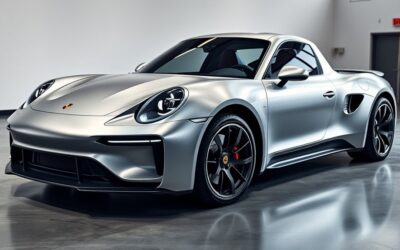
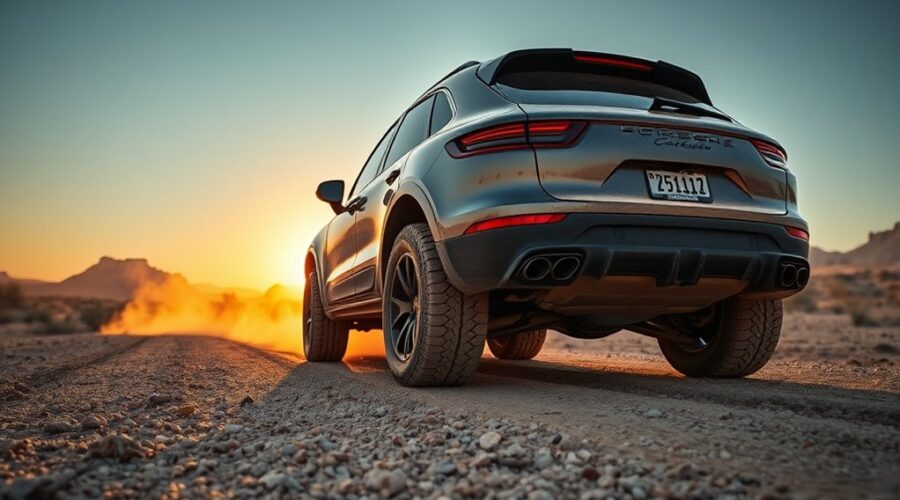
Porsche’s off-road lineup is built around controlled capability rather than extreme terrain specialization. The Cayenne offers air suspension, up to 268 mm of ground clearance, and Porsche Torque Vectoring Plus for traction management. The 911 Dakar takes a different approach with raised suspension and rally-inspired tuning. Both models combine strong powertrains, compact dimensions, and driver aids that shape their off-road behavior in ways that are not immediately obvious.
Key Takeaways
- The Cayenne is Porsche’s most purpose-built off-roader, with air suspension and up to 268mm of ground clearance.
- Porsche Torque Vectoring Plus and off-road driving modes help maintain traction and stability on loose or steep surfaces.
- Hill Descent Control works from 2 to 19 mph, giving controlled speed on steep downhill terrain.
- The 911 Dakar adds 50mm of ride height over a standard 911 Carrera and uses a raised sports suspension.
- Porsche’s off-road heritage includes the Type 597 Jagdwagen, 953 and 959 Dakar racers, and the Cayenne S Transsyberia.
Which Porsche Models Are Best Off Road?
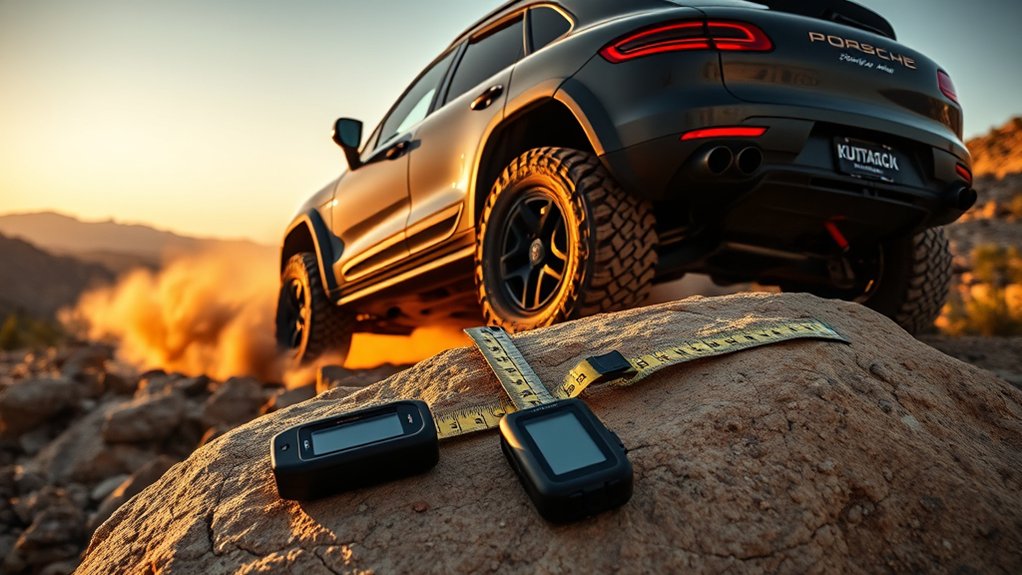
Among Porsche’s off-road-capable models, the Cayenne stands out as the most purposefully equipped, particularly in Cayenne S Transsyberia form, where a reinforced chassis and upgraded suspension improve durability and control on rough terrain.
The Porsche Cayenne remains the benchmark for drivers seeking range beyond paved restraint, because its ground clearance can reach 268mm with air suspension, supporting passage over ruts, stones, and uneven grades. Advanced traction management, including Porsche Torque Vectoring Plus, helps distribute grip with measured precision, preserving stability where surfaces break away unexpectedly.
The Cayenne E-Hybrid extends this versatility by adding electric assistance for low-speed maneuvering in demanding environments. The 911 Dakar also belongs in this group, with a raised sports suspension and 50mm more ride height than a standard 911 Carrera, but its focus is narrower.
Porsche Off-Road Performance Specs
Porsche off-road performance is defined most clearly by the Cayenne’s hardware, which combines air suspension with a maximum ground clearance of 268mm to improve clearance over ruts, rocks, and uneven ground.
Porsche Torque Vectoring Plus contributes precise traction management, distributing drive force to help maintain composure on loose, wet, or broken surfaces. Hill descent control functions between 2 and 19 mph, allowing controlled speed on steep grades without constant brake modulation.
Porsche Torque Vectoring Plus helps keep the Cayenne composed on loose or broken surfaces, while hill descent control manages steep grades.
Wheel articulation is substantial, enabling the chassis to remain planted as individual corners rise and fall over obstacles. The suspension can also be raised by up to six inches, sharpening approach and departure angles for more liberated travel beyond paved routes.
While launch control and top speed matter on road, the off-road specification prioritizes stability, articulation, and controlled momentum. The result is a performance profile designed less for spectacle than for confident access to terrain that would stop lesser SUVs.
Porsche Off-Road Clearance and Size
With the air suspension raised, the Cayenne achieves a maximum ground clearance of 268mm, giving it enough underbody height to handle ruts, rocks, and uneven surfaces with greater confidence. Its stance remains lower than a Range Rover’s 300mm, yet the Porsche still balances size, agility, and freedom from terrain limits.
| Metric | Value |
|---|---|
| Ground clearance | 268mm |
| Range Rover clearance | 300mm |
| Suspension type | Air-adjustable |
| Terrain benefit | Better geometry |
Adjustable ride height also improves approach and departure angles, helping the body avoid contact on steep changes. The chassis and suspension package support wheel articulation that keeps tires planted while the vehicle crosses broken ground. Despite its road-focused luxury, the Cayenne’s dimensions and Luggage Compartment packaging preserve practicality. For readers reviewing a Privacy Policy, the vehicle’s size profile shows no compromise in spatial efficiency. The result is a technically capable SUV with enough clearance to expand off-road access without sacrificing comfort or control.
Porsche Off-Road Tech and Driver Aids
Beyond its raised suspension and substantial clearance, the Cayenne’s off-road ability is reinforced by a suite of chassis and driver-assistance systems designed to manage traction, descent control, and low-speed maneuvering on difficult terrain.
Its air suspension can elevate ground clearance to 268 mm, supporting freer passage over ruts, rocks, and washouts. Porsche Torque Vectoring Plus apportions drive force to individual wheels to sustain grip and directional stability when surfaces lose uniformity.
- Hill Descent Control maintains controlled speeds from 2 to 19 mph on steep grades.
- Off-road driving mode recalibrates chassis parameters for maximum traction on loose terrain.
- ParkAssist and Surround View improve spatial awareness in confined, obstructed environments.
- Carbon Fiber components may reduce mass in select applications, complementing driver assistance systems.
Together, these systems create a technical platform aimed at confident progression beyond paved limits, where precision, control, and autonomy are prioritized over ornament.
Porsche Off-Road Models and Heritage
Long before modern crossovers and rally specials, the marque built a credible off-road lineage through purpose-engineered vehicles such as the Type 597 Jagdwagen, an amphibious 1950s military 4×4 produced in only 71 units.
That foundation later supported the 911 SC Safari, created for the 1978 East African Safari Rally, with raised suspension and a reinforced chassis for rough terrain.
The 953 and its successor, the 959, extended this engineering path, culminating in a one-two finish at the 1986 Paris-Dakar Rally and confirming high-speed durability beyond pavement.
In a new account of the brand’s evolution, the Cayenne S Transsyberia added a 10,000 km endurance test and became a road-legal special edition in 2009.
In recent years, the 911 Dakar has carried the same heritage forward with greater ground clearance and dedicated off-road modes, presenting liberation from conventional road limits through controlled, technically measured capability.
Frequently Asked Questions
Which Porsche Is Best for Off-Roading?
The Porsche Cayenne is generally best for off-roading, offering superior off road capabilities, advanced traction systems, and rugged performance. The Porsche Macan remains competent, but the Cayenne’s chassis, clearance, and control modes provide greater technical versatility.
What Is Called the Poor Man’s Porsche?
The poor man’s Porsche is commonly the Volkswagen Golf GTI. It delivers budget performance, agile handling, and practical utility, making it a technical, accessible choice among luxury alternatives for drivers seeking liberation without Porsche pricing.
What Car Does Bill Gates Drive?
Bill Gates drives a Porsche 911 Carrera, yet his garage contrasts luxury and restraint: Gates’ favorites include a Tesla Model X and a Honda Accord, with luxury hybrids reflecting measured, technically minded mobility choices.
What Is Porsche’s Best Engine?
Porsche’s best engine is the 4.0-liter twin-turbo V8 in the Cayenne Turbo E-Hybrid. It delivers class-leading engine performance, notable turbo advantages, and 729 hp, combining forceful acceleration with efficient hybrid assistance.
Conclusion
Ultimately, Porsche’s off-road models show that high-performance engineering can translate effectively beyond pavement. With the Cayenne’s air suspension and 268 mm maximum ground clearance, plus the 911 Dakar’s raised ride height, these vehicles balance traction, stability, and controlled momentum on uneven terrain. Add systems such as Porsche Torque Vectoring Plus, and the result is a capable, technically refined off-road package. Who says rugged terrain cannot be handled with precision and composure?