
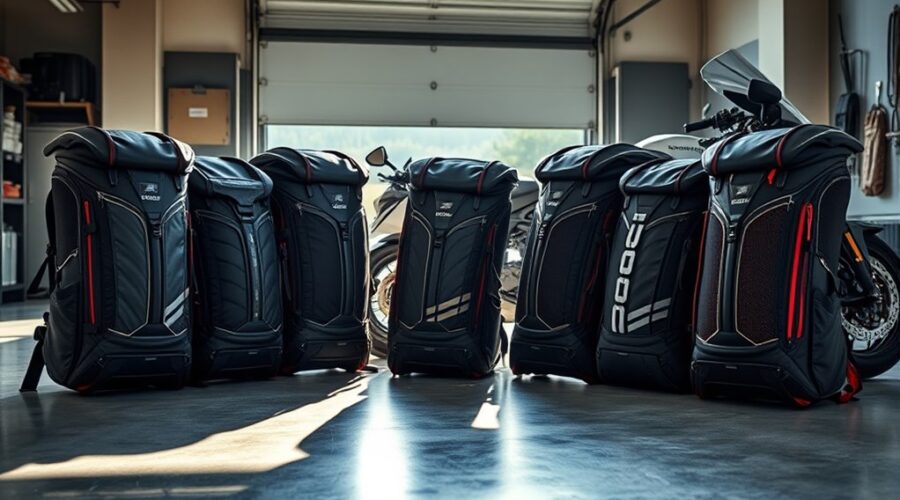
Motorcycle backpacks in 2026 are expected to balance aerodynamics, storage, and weather resistance in ways that matter on every ride. From streamlined commuter bags to rugged adventure packs, the right choice depends on how and where it will be used. Some models stand out for comfort, while others focus on durability or hydration. The most useful options are not always the most obvious, and a few details can change everything.
OGIO No Drag Mach 5 Motorcycle Backpack
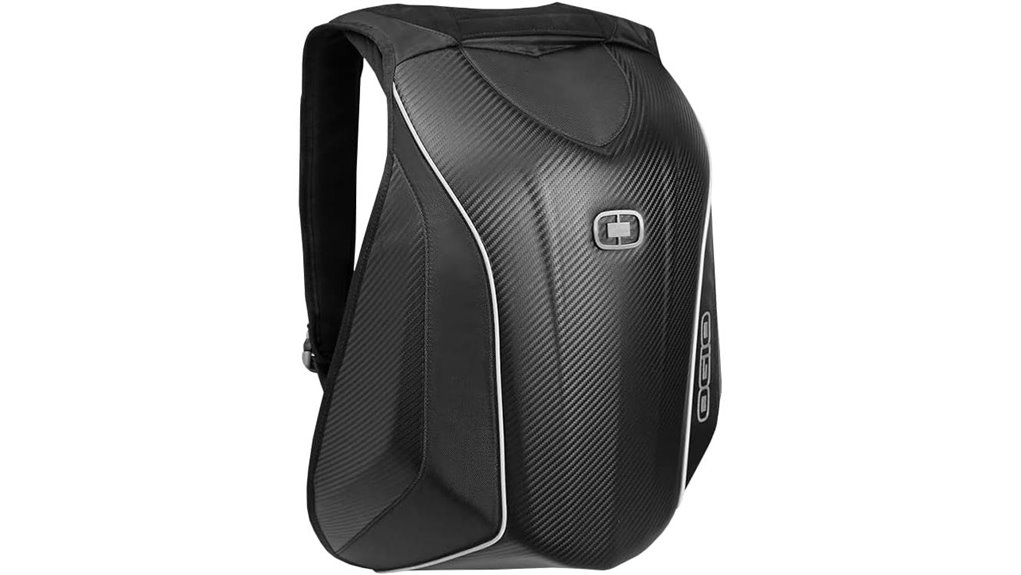
The OGIO No Drag Mach 5 Motorcycle Backpack is a strong fit for riders who value aerodynamic efficiency and organized storage in a streamlined pack. Its molded, water-resistant shell resists wind shear deformation, while the shoulder gasket and soft straps improve comfort and helmet compatibility. The bolstered back foam aids ventilation during long rides. Storage is extensive, with a large main compartment, adjustable divider, organizer panel, fleece-lined pockets, and a removable hip pouch. Reflective piping enhances visibility, and the off-center hip belt helps protect the gas tank. The concealed carry handle adds convenience.
Best For: Riders who want a streamlined, aerodynamic motorcycle backpack with strong storage organization, comfort, and added visibility.
Pros:
- Aerodynamic molded shell resists wind shear and supports a sleek riding profile
- Well-organized storage with multiple compartments, divider, organizer panel, and fleece-lined pockets
- Comfort and safety features include ventilated back foam, reflective piping, and helmet-friendly straps
Cons:
- At 3.7 lbs, it may feel a bit heavy for riders seeking an ultra-light pack
- Limited capacity may not be enough for larger or bulkier travel loads
- Motorcycle-specific design may be less versatile for everyday non-riding use
Kriega Trail 18 Adventure Backpack
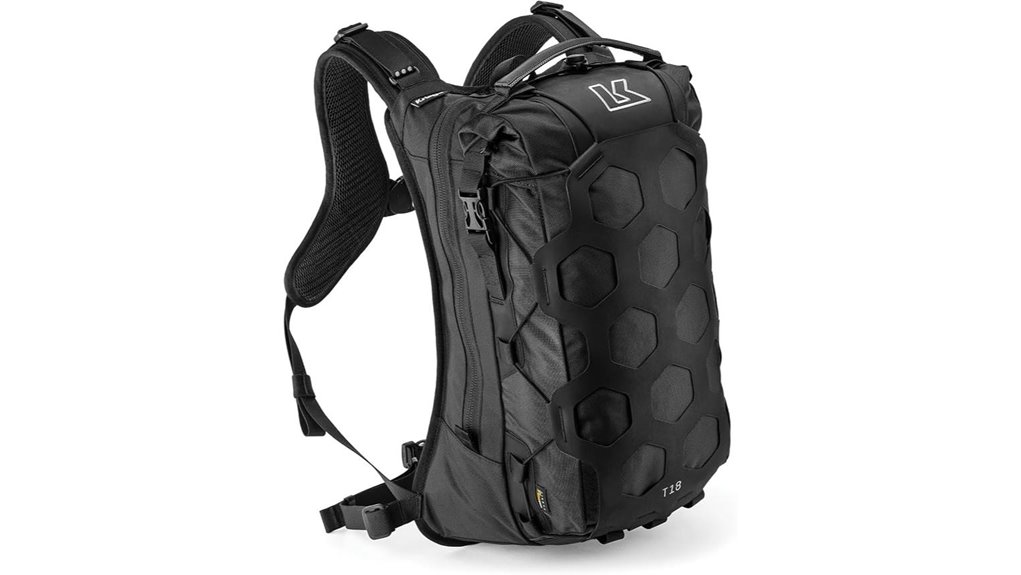
With 18 liters and a Quadloc-Lite harness, the Kriega Trail 18 suits riders who prioritize comfort and organization. Its layout pairs a 7-liter rear compartment with an 11-liter waterproof main body secured by a roll-top closure, offering practical separation for daily essentials and larger gear. Built from 420D Cordura Lite Plus and fitted with YKK heavy-duty zips, it is designed to withstand harsh conditions. Reflective harness panels improve low-light visibility, while the external Hypalon net adds quick-access space for wet items, making it versatile for touring and adventure use.
Best For: Adventure and touring riders who want a comfortable, organized 18-liter backpack with weather protection and added visibility.
Pros:
- Quadloc-Lite harness improves comfort by shifting weight off the shoulders during long rides.
- Waterproof 11-liter main compartment plus 7-liter rear pocket offers practical organization.
- Reflective panels and durable Cordura Lite Plus construction add safety and reliability.
Cons:
- 18-liter capacity may be too small for riders needing to carry bulkier gear.
- Roll-top access can be less convenient than a full zip opening for frequent access.
- External storage is limited, so it may not suit those who want lots of extra pockets.
Biltwell EXFIL-48 Backpack (Black)
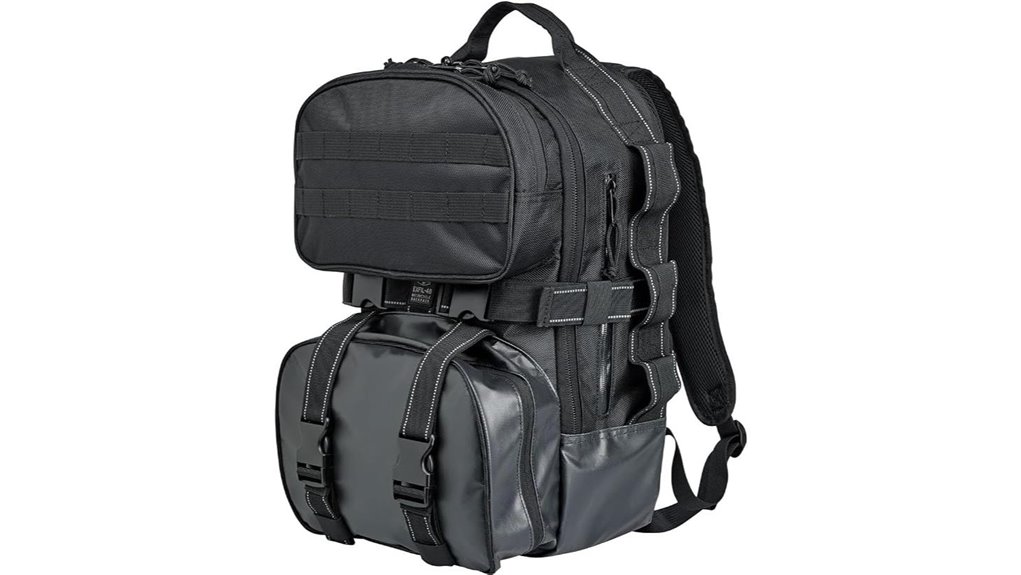
Built for riders who need rugged organization, the Biltwell EXFIL-48 Backpack (Black) stands out immediately. Its 1680 denier ballistic nylon chassis, backed by a PVC coating, helps resist moisture and daily abuse. Water-resistant bottom and side panels add another layer of durability. Inside, the main compartment and two secondary compartments use hi-vis orange nylon, making contents easy to spot. A zippered upper pouch suits keys and small essentials, while the lower section adds two pouches and a treated nylon tool caddy. Heavy-duty nylon zippers enhance access and reliability.
Best For: Riders who want a rugged, highly organized backpack with durable materials and easy-access storage for everyday or travel use.
Pros:
- 1680 denier ballistic nylon chassis with PVC coating helps resist moisture and wear.
- Multiple compartments and pouches make organization and quick access easy.
- Hi-vis orange interior lining improves visibility of stored items.
Cons:
- The rugged build may feel bulkier than a lightweight everyday backpack.
- Limited internal simplicity could be overkill for users who only carry a few items.
- The utility-focused design may not appeal to those wanting a more casual style.
Kriega Sling Messenger Bag
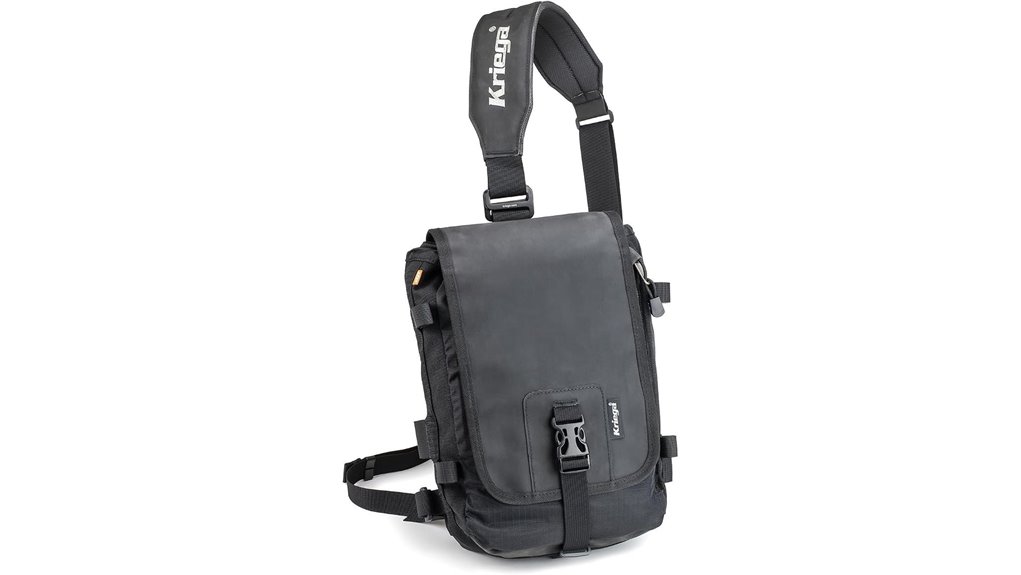
Kriega’s Sling Messenger Bag suits riders needing compact, waterproof storage for daily commutes. Its 8-liter main compartment uses a secure roll-top closure and a 100% waterproof build to keep gear dry in changing weather. A side pocket with a water-resistant YKK zip holds gloves, while an internal mesh pocket organizes maps and cables. An alloy strap adjuster allows quick fitting over helmets, and the grip fabric backing helps prevent shifting. Built from 1000D Cordura, Hypalon, and 420D nylon rip-stop, it adds durability, plus a reversible padded shoulder strap and dependable YKK zips.
Best For: Riders and daily commuters who need a compact, fully waterproof sling bag with organized storage and a secure, comfortable fit.
Pros:
- 100% waterproof 8-liter main compartment with secure roll-top closure
- Practical storage with a side pocket for gloves and an internal mesh pocket for maps and cables
- Durable build with Cordura, Hypalon, rip-stop nylon, and dependable YKK zips
Cons:
- 8-liter capacity may be too small for riders carrying larger loads
- Sling-style design may not suit everyone’s preferred carry comfort
- Premium materials and construction likely make it more expensive than basic messenger bags
USWE Outlander Hydration Pack with Water Bladder
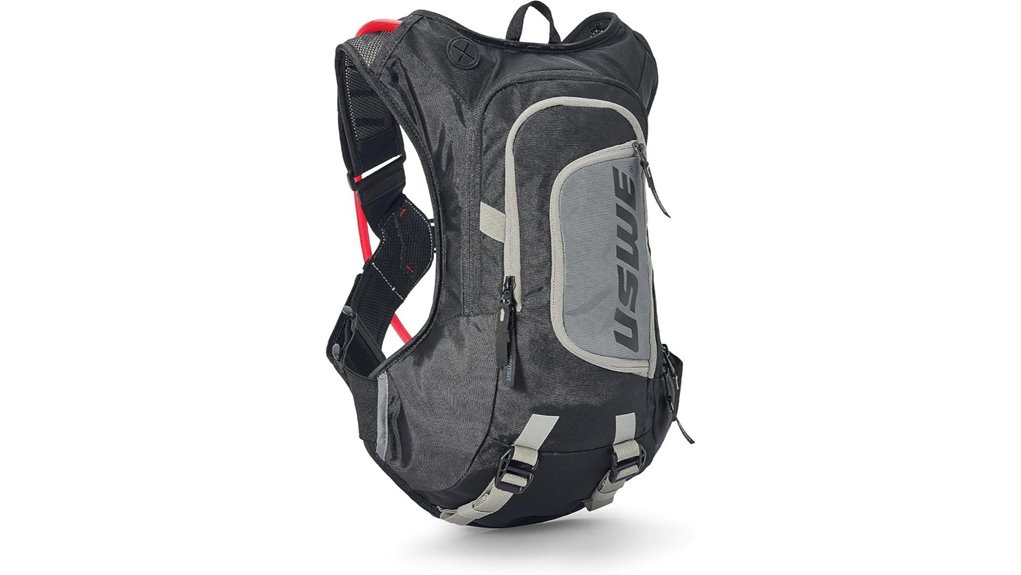
USWE Outlander suits off-road riders who need a bounce-free hydration pack. Built for Enduro and dirt bike use, it offers a balanced fit, 12 liters of storage, and sizes from M to XL for chest sizes 33 to 43.3 inches. The included 3.0-liter Elite bladder has a slider opening for cleaning, drying, and adding ice, plus a secure Plug-n-Play tube coupling. Ventilated straps and an air-vented back panel improve comfort, while organizer pockets, external straps, reflective points, and tube clips support practical, hands-free riding in demanding conditions.
Best For: Off-road, Enduro, and dirt bike riders who want a bounce-free hydration pack with ample storage, hands-free drinking, and a comfortable fit for long, demanding rides.
Pros:
- Bounce-free, balanced fit designed for active motorcycle riding.
- Includes a 3.0L Elite bladder with easy-clean slider opening and ice compatibility.
- Ventilated straps, air-vented back panel, organizer pockets, and reflective details add comfort and practicality.
Cons:
- Sized only for M to XL chest ranges, so fit may not work for everyone.
- At 1.3 lb before the bladder, it may feel bulky for riders seeking an ultra-light pack.
- Best suited to motorsports use, so it may be less versatile for casual everyday carry.
Roll-Top Waterproof Backpack 28 Liter
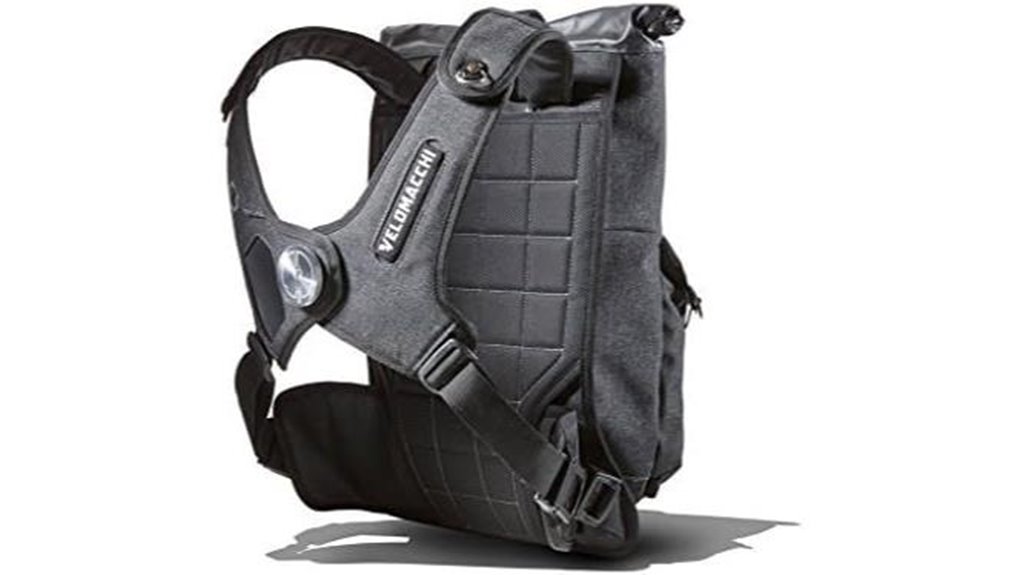
The 28-liter roll-top waterproof backpack suits riders needing secure gear and quick helmet access. Its waterproof roll-top closure and magnetic seal help protect contents, while a side pocket provides fast access to medium tools. The Patent Pending 3 Point Harness System, magnetic sternum coupler, and locking torso adjustments improve stability on the move. Side grip pads add control. It includes clip and front pockets, an emergency contact pocket, key storage, anchor points for tethering motorcycles, a camera mounting plate, hydration-sleeve compatibility, a tire pressure gauge, and room for additional accessories.
Best For: Riders and outdoor commuters who need a secure, waterproof backpack with quick helmet access, stable carry, and organized storage for tools and accessories.
Pros:
- Waterproof roll-top closure with magnetic seal helps protect gear from the elements.
- Patent Pending 3 Point Harness System with magnetic sternum coupler and locking torso adjustment improves stability and comfort.
- Useful rider-focused features like helmet access, tool pocket, hydration compatibility, and a tire pressure gauge.
Cons:
- Hydration bladder is not included, so additional purchase is required.
- Tool storage and some accessories are limited by size, with the side pocket only fitting medium tools.
- Many of the specialized features may be unnecessary for users who want a simple everyday backpack.
HydraPak Water Reservoir Hydration Bladder with Bite Valve
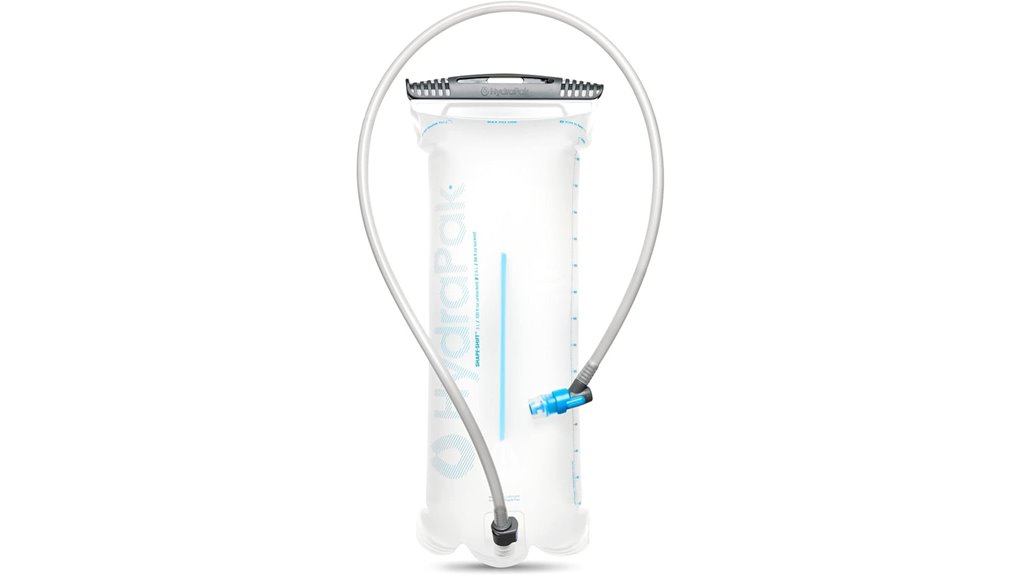
HydraPak’s high-flow bite valve suits riders who need quick, hands-free hydration on the move. The reservoir comes in 1.5L, 2L, and 3L sizes, and fits most backpacks. Its ultra-durable, BPA-free TPU build is made for demanding use, while the adjustable baffle helps keep the bladder low-profile and stable during riding, hiking, or snow sports. A Slide-Seal top opens wide for easy filling and closes securely. The Plug-N-Play system simplifies tube removal, and the fully reversible, dishwasher-safe design makes cleaning straightforward. A lifetime warranty adds practical long-term value.
Best For: Hikers, riders, and snow-sport athletes who want a durable, easy-to-clean hydration bladder with quick-access hydration and broad backpack compatibility.
Pros:
- High-flow bite valve supports fast, hands-free hydration on the move.
- Durable, BPA-free TPU construction with an adjustable baffle for better stability.
- Fully reversible, dishwasher-safe design with a Slide-Seal top and Plug-N-Play system for easier filling and cleaning.
Cons:
- Not as useful for users who don’t need an in-pack hydration system.
- The bladder may be more feature-rich than necessary for casual day use.
- Large 3L capacity can be bulky in smaller packs despite the low-profile design.
Factors to Consider When Choosing the Best Motorcycle Backpacks for 2026

When selecting the best motorcycle backpacks for 2026, capacity and fit should match the rider’s needs without restricting movement. Waterproof protection, comfort and stability, safety visibility, and durable materials also play a major role in overall performance. Together, these factors help determine whether a backpack is practical, secure, and built for long-term use.
Capacity And Fit
Capacity and fit should be prioritized first, since a motorcycle backpack must balance storage with stability on the move. Storage needs vary widely, with capacities from 12 liters to more than 1,400 cubic inches, so the chosen pack should match the rider’s typical load without excess bulk. Adjustable harness systems are valuable because they spread weight more evenly, helping reduce fatigue and improving comfort over long distances. A snug fit is equally important; sizing that accommodates chest circumferences from about 33 to 43.3 inches can limit shifting and maintain control. Organized compartments for tools, hydration systems, or personal items improve access while riding. Overall weight should also be checked, since lighter packs, roughly 1.3 to 3.7 pounds, lessen strain during extended use.
Waterproof Protection
After fit and storage, weather resistance becomes the next major concern for riders who face changing conditions. Waterproof motorcycle backpacks help keep gear dry in rain and road spray, reducing damage to electronics, documents, and clothing. Fully waterproof constructions, especially roll-top closures, resist water ingress better than standard zippers and are often the most reliable choice for wet-weather commuting or touring. Durable fabrics such as 1000D Cordura, combined with PVC coatings, add abrasion resistance while strengthening moisture defense. Reflective panels can further improve safety by increasing visibility in low light and stormy conditions. To preserve performance, the backpack should be cleaned regularly and its seals inspected for wear, since neglected closures and coated materials can lose effectiveness over time.
Comfort And Stability
Comfort and stability determine whether a motorcycle backpack feels like useful gear or a distraction on the road. A well-designed harness system, such as Quadloc-Lite, shifts weight from the shoulders to the chest and body, cutting fatigue on long rides. Ventilated shoulder straps and a bolstered back profile add comfort by improving airflow and easing pressure points. Adjustable fasteners and torso settings help the pack stay centered, reducing unwanted movement at speed or over rough pavement. Backpacks that contour closely to the body also distribute weight more evenly, which supports aerodynamics and sustained comfort during fast travel. Grip fabric and secure straps further strengthen stability, keeping the load from sliding or bouncing as riding conditions change.
Safety Visibility
Visibility becomes a key safety factor when choosing a motorcycle backpack, especially for early morning, late evening, or low-light rides. A strong option should feature 360-degree reflective materials or piping so the rider can be seen from multiple angles. Integrated reflective panels or logos add another layer of visibility and help other road users notice the wearer sooner. Bright colors or high-contrast patterns can also make the backpack stand out against common roadside backgrounds. Safety-minded designs may include off-center hip belts that reduce scratching and help the rider stay focused. It is also wise to prioritize models that meet recognized visibility standards, since tested gear offers more confidence in changing conditions. These details improve noticeability without adding unnecessary distraction during travel.
Durability Materials
Tough materials are the foundation of a reliable motorcycle backpack, especially for riders who face frequent use and changing weather. High-denier fabrics such as 420D Cordura or 1680D ballistic nylon offer strong abrasion resistance and hold up well against constant wear. Waterproof and moisture-resistant builds, including PVC coatings and roll-top closures, help protect gear in rain and road spray. Heavy-duty YKK zippers add dependable performance by reducing snagging and breakage over time. Reinforced stitching and robust construction improve structural strength, making the pack better suited to demanding conditions. Treated nylon panels and protective coatings also help resist dirt, oil, and other contaminants, preserving both appearance and function during regular riding.
Storage Organization
Beyond material strength, storage organization shapes how practical a motorcycle backpack will be on the road. Multiple compartments and pouches help riders separate essentials, find items quickly, and reduce time spent searching at stops. Adjustable load dividers add flexibility, letting the pack adapt to different trip lengths and cargo types. Zippered security pockets give valuables added protection while motion and vibration increase. Specialized pockets for electronics, tools, and personal items support efficient packing and limit clutter. External storage, including elastic cords or netting, expands utility for wet gear or objects needed at a moment’s notice. Reflective panels improve visibility in low light, while keeping critical equipment organized and accessible during the ride.
Related Reading
Frequently Asked Questions
Which Backpack Is Best for Commuting in Heavy Rain?
For commuting in heavy rain, a fully waterproof backpack with welded seams, roll-top closure, and weatherproof zippers is best. It should use durable TPU or coated nylon, have a snug, stable fit, and include reflective details for visibility. A removable rain cover can add backup protection, but a truly sealed waterproof design performs better. Riders should also favor simple access and a ventilated back panel for comfort during wet commutes.
Do Motorcycle Backpacks Fit Over Armored Jackets Comfortably?
Yes, motorcycle backpacks can fit over armored jackets comfortably, though the fit depends on jacket bulk, strap design, and pack shape. Like a bridge spanning two shores, a well-made backpack connects protection and practicality without strain. Slim, adjustable straps and a contoured back panel help reduce pressure on armor. Larger or rigid packs may feel awkward, so comfort often improves with careful sizing, balanced load, and proper adjustment.
How Do I Clean a Motorcycle Hydration Bladder Safely?
He would clean a motorcycle hydration bladder by rinsing it with warm water after each ride, then washing it with mild soap or a bladder-safe cleaning solution. A soft brush can reach the tube and mouthpiece. Harsh chemicals, boiling water, and abrasive scrubbers should be avoided. After washing, it should be air-dried completely with the reservoir open to prevent mold, odor, and bacteria growth before storage.
Are Sling Bags Safer Than Traditional Backpacks While Riding?
Safer? Only sometimes. A sling bag can feel like a lighter shadow, less bulky and easier to swing around, but it often sits unevenly, shifting weight and tempting movement during a ride. Traditional backpacks usually distribute load more evenly and stay more stable, especially with a chest strap. Still, safety depends on fit, contents, and restraint. A poorly packed bag becomes a hitchhiker; a well-secured one, a quiet passenger.
Can I Use One Backpack for Both Riding and Hiking?
Yes, one backpack can serve both riding and hiking if it balances comfort, stability, and durability. A low-profile design with adjustable straps, chest and waist support, and weather resistance helps in both activities. Still, a riding-specific pack usually offers better aerodynamic fit and impact-friendly features, while a hiking pack may provide superior ventilation and load distribution. Choosing a versatile model works, but compromises are often unavoidable.
Conclusion
Ultimately, the best motorcycle backpacks balance speed, storage, and protection: the OGIO No Drag Mach 5 cuts through wind, the Kriega Trail 18 shrugs off weather, and the Biltwell EXFIL-48 handles hard use. Likewise, the Kriega Sling Messenger Bag favors compact carry, the USWE Outlander supports hydration, and waterproof roll-top options add security. For riders, comfort matters; for commuters, durability matters; for adventurers, versatility matters. The right pack serves the ride, the road, and the rider.



[…] 7 Best Motorcycle Backpacks for 2026 […]