
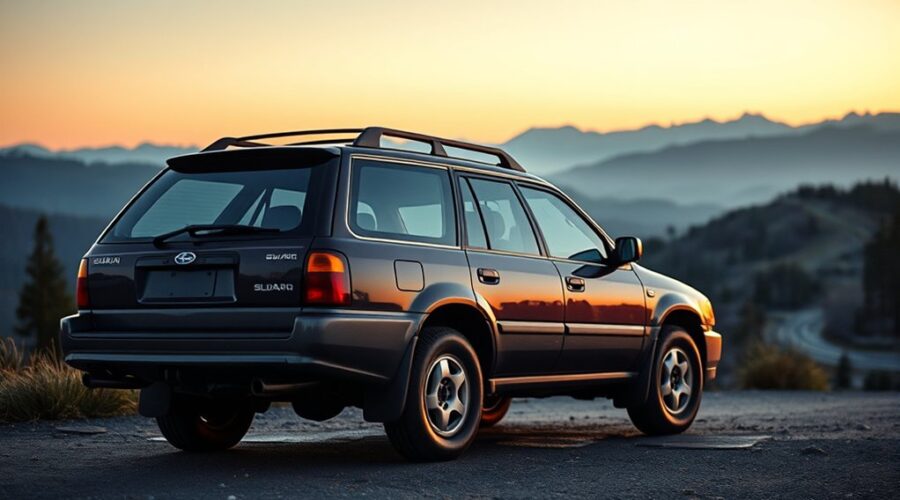
Older Subaru Outback specs vary sharply by generation, so one set of numbers cannot accurately describe every used Outback. For North American models from 1995 through 2014, engines ranged from naturally aspirated flat-fours to six-cylinders and turbocharged XT models, while towing, dimensions, transmissions, fuel economy, and driver-assist technology changed substantially over time.
Quick Answer
Older Subaru Outbacks used 2.2- and 2.5-liter flat-fours, 3.0- and 3.6-liter six-cylinders, and a turbo 2.5XT in some years. Selected 2005–2014 models tow 2,700 to 3,000 pounds, while later fourth-generation cars offer 8.7 inches of ground clearance and substantially more cabin space than earlier versions.
Older Subaru Outback Specs at a Glance
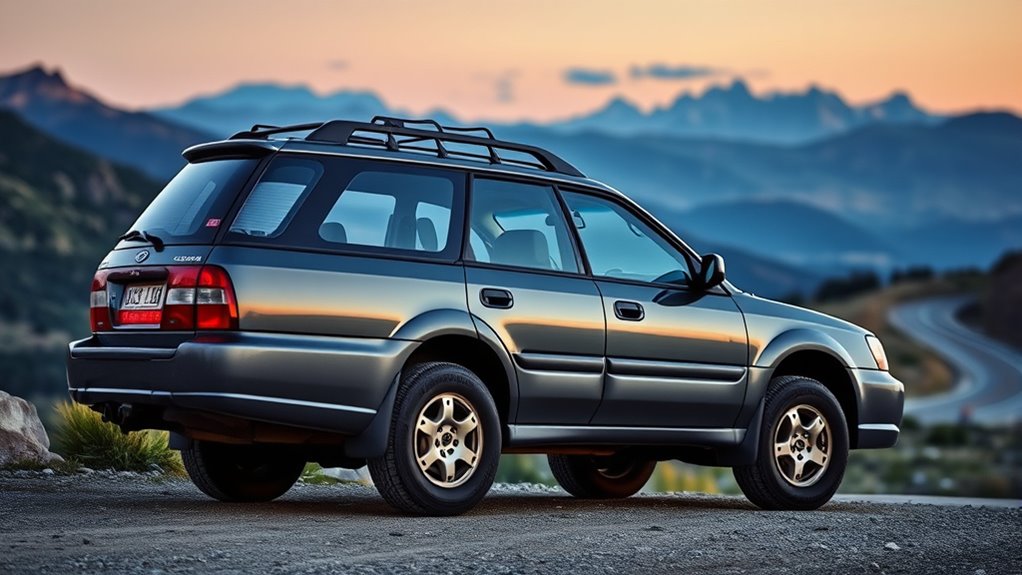
Older Outbacks evolved through several distinct powertrain families. That makes model year more useful than a single generic specification: a 2005 2.5XT, a 2010 2.5i, and a 2013 3.6R may share the Outback badge and standard all-wheel drive, but their engines, transmissions, performance, and capacities differ.
Subaru’s 2005 Outback specifications show how broad the lineup had become by the third generation, with naturally aspirated four-cylinder, turbo four-cylinder, and six-cylinder choices.
| Model year / era | Representative engines | Representative output |
|---|---|---|
| First generation | 2.2L EJ22 and 2.5L EJ25-series flat-fours | Varied by model year and engine |
| 2000–2004 | 2.5L flat-four; available 3.0L H6 | 2.5L around 165 hp; H6 up to 212 hp |
| 2005 | 2.5i, 2.5XT turbo, 3.0R | 168 hp, 250 hp, 250 hp |
| 2007 | 2.5i, 2.5XT turbo, 3.0R | 175 hp, 243 hp, 245 hp |
| 2010 | 2.5i flat-four; 3.6R flat-six | 170 hp; 256 hp |
| 2013–2014 | 2.5i DOHC flat-four; 3.6R flat-six | 173 hp; 256 hp |
Trim names and equipment varied by market, so match specifications to the exact model year, engine, transmission, and VIN before buying parts or planning a trailer load.
Subaru Outback Engine Options
Older Subaru Outback engine options fall into three useful groups: naturally aspirated flat-fours, six-cylinder BOXER engines, and the turbocharged 2.5XT. Each delivers a different balance of fuel use, towing ability, acceleration, and mechanical complexity.
Early Outbacks used EJ-series horizontally opposed four-cylinder engines, including the 2.2-liter EJ22 and 2.5-liter EJ25 family. By the early 2000s, the 2.5-liter four-cylinder remained the volume engine, while a 3.0-liter H6 offered smoother power and more torque.
The third-generation 2005 Outback expanded the choice considerably. The 2.5i produced 168 hp and 166 lb-ft, the 3.0R produced 250 hp and 219 lb-ft, and the turbocharged 2.5XT produced 250 hp and 250 lb-ft. Output changed during the generation; for example, the 2007 2.5XT was rated at 243 hp and 241 lb-ft.
The fourth generation changed direction. Subaru dropped the Outback XT for 2010 and paired a 170-hp 2.5-liter four-cylinder with either a six-speed manual or Lineartronic continuously variable transmission. The 3.6R used a 256-hp, 247-lb-ft flat-six with a five-speed automatic, according to Subaru’s 2010 Outback factory specifications.
For 2013, the 2.5-liter engine changed to a DOHC design rated at 173 hp and 174 lb-ft. The 3.6R remained at 256 hp and 247 lb-ft. Those differences matter when comparing an older Outback because an engine description such as “2.5-liter” does not identify one single powertrain across all years.
Performance, Towing, and Fuel Economy
Performance and efficiency depend heavily on model year and engine. A turbocharged 2.5XT is the performance-oriented choice among these older cars, while naturally aspirated 2.5-liter models generally prioritize economy. Six-cylinder versions trade some fuel economy for stronger low-speed response and higher towing ratings in several years.
Towing Capacity
Older Subaru Outback towing capacity is commonly 2,700 or 3,000 pounds in the factory examples below, not 3,500 pounds. The exact limit depends on year, engine, trailer braking, load, and other conditions specified in the owner’s manual.
| Example | Factory maximum with trailer brakes |
|---|---|
| 2005 Outback 2.5i | 2,700 lb |
| 2005 Outback 2.5XT | 2,700 lb |
| 2005 Outback 3.0R | 3,000 lb |
| 2013 Outback 2.5i | 2,700 lb |
| 2013 Outback 3.6R | 3,000 lb |
Do not apply a newer 3,500-pound turbo Outback rating to an older XT simply because both use turbocharged engines. The chassis, cooling system, drivetrain, hitch requirements, and factory certification are model-specific.
Fuel Economy
There is no single fuel-economy rating for an older Outback. Engine, transmission, generation and test cycle all matter, so no one mpg figure fits the whole lineup.
One useful U.S.-market example is 2013. Subaru’s 2013 Outback specifications list the 2.5i six-speed manual at 21/28/24 mpg city/highway/combined and the 2.5i CVT at 24/30/26 mpg. The 3.6R five-speed automatic is listed at 18/25/20 mpg.
Those numbers also show why engine and transmission matter. A fourth-generation 2.5i CVT and an older turbo XT should not be compared using the same mileage figure.
Dimensions and Cargo Space
Older Outback dimensions grew unevenly rather than following one specification throughout production. The 2005 redesign used a 105.1-inch wheelbase and was about 188.8 inches long, while the 2010 redesign stretched the wheelbase to 107.9 inches and created a noticeably roomier cabin despite an overall length of about 188.2 inches.
By 2013, the Outback measured 189.0 inches long on the same 107.9-inch wheelbase. Passenger volume was 105.4 cubic feet without the moonroof, with 34.3 cubic feet of cargo volume behind the rear seat and 71.3 cubic feet with the rear seatbacks folded.
A model year’s wheelbase and cargo measurements are more useful than applying current Outback dimensions to an older car.
Newer Outbacks are larger still (a wheelbase of about 108 inches and a length near 192 inches), so do not use current-model dimensions or cargo figures for a 1995–2014 car.
Ground Clearance and AWD Capability
All-wheel drive is a defining feature of older Outbacks, but ground clearance and AWD hardware were not identical across every version. Later cars in this period reached about 8.7 inches of clearance, while some third-generation trims sat slightly lower.
The AWD system also changed with the transmission. Manual-transmission models commonly used a viscous-coupling center differential, while automatic and CVT versions used electronically managed systems. Some six-cylinder models used Subaru’s Variable Torque Distribution system.
Ground Clearance Figures
Ground clearance increased as the Outback moved farther from its Legacy-wagon roots. Subaru’s 2005 specifications list roughly 8.4 inches for the 2.5i, about 8.5 inches for the 3.0R, and about 8.7 inches for the 2.5XT, depending on trim.
- 2005 2.5i: about 8.4 inches
- 2005 3.0R: about 8.5 inches
- 2005 2.5XT: about 8.7 inches
- 2010 Outback: about 8.7 inches
- 2013 Outback: 8.7 inches
That is enough clearance to distinguish these Outbacks from ordinary low-slung wagons, but it does not make every older Outback equivalent to a modern Wilderness model. Wilderness-specific 9.5-inch clearance is outside this article’s 1995–2014 scope.
Did Older Outbacks Have X-Mode Off-Road Assist?
The 1995–2014 Outbacks covered here did not use the modern Outback X-Mode system. X-Mode appears on the following 2015 generation, where it coordinates engine output, the CVT, AWD, braking, and Hill Descent Control on equipped models.
That distinction matters when shopping by feature name. A 2010–2014 Outback can still have standard AWD, Vehicle Dynamics Control, traction control, and substantial ground clearance without having X-Mode.
AWD Traction Advantages
Standard all-wheel drive gives older Outbacks a practical traction advantage on snow, gravel, wet pavement, and other low-grip surfaces. It cannot create grip that the tires do not have, however, so tire condition and type remain important.
On a 2013 2.5i with the manual transmission, Subaru used a viscous-coupling locking center differential. CVT-equipped 2.5i models used an electronically managed hydraulic transfer clutch, while the 3.6R used Variable Torque Distribution AWD. The badge may be the same, but the mechanical strategy differs.
For a used-car buyer, that makes the exact transmission as important as the model year when researching AWD behavior, maintenance requirements, or replacement parts.
Safety Features and Ratings
Safety equipment improved substantially across these older generations. Later models added stability control and increasingly sophisticated driver assistance, culminating in optional EyeSight on the fourth-generation Outback.
Subaru’s 2013 Outback announcement states that the Outback debuted the EyeSight driver-assist system for that model year. It combined Adaptive Cruise Control, Pre-Collision Braking, and Vehicle Lane Departure Warning using stereo cameras.
Availability also depended on trim and market, so an older Outback should never be assumed to have EyeSight simply because of its model year.
The IIHS rating for the 2013 Outback shows a Top Safety Pick+ award for vehicles built after August 2012. IIHS rated the 2010–2014 design Good in its original moderate-overlap front, side, roof-strength, and head-restraint evaluations, while the small-overlap evaluation was Acceptable for the qualifying 2013–2014 cars.
Crash-test results should be compared within their original test era. Safety tests and award criteria change, so an older Top Safety Pick+ is not directly equivalent to a current-model award.
What Changed in Older Outback Models?
The biggest changes were the move from Legacy-based wagon proportions toward a larger crossover-like body, the arrival and later disappearance of the turbo XT, the switch to a 3.6-liter six-cylinder, the introduction of the Lineartronic CVT, and the arrival of EyeSight.
- First generation: established the raised-wagon formula with EJ-series four-cylinder engines and AWD.
- 2000–2004: retained the 2.5-liter four-cylinder while adding the smoother 3.0-liter H6.
- 2005–2009: added the performance-oriented 2.5XT turbo and a stronger 3.0R six-cylinder, along with more sophisticated transmissions and safety equipment.
- 2010–2012: brought a larger cabin, 107.9-inch wheelbase, 3.6R engine, six-speed manual, and Lineartronic CVT.
- 2013–2014: updated the 2.5-liter engine, improved fuel economy, and introduced available EyeSight.
For a used purchase, maintenance history is more useful than a blanket list of “bad years.” Subaru issued a CVT warranty extension covering 2010–2015 Legacy and Outback models equipped with CVTs. The notice specifically states that the extension was not a recall.
Subaru also issued an oil-consumption warranty extension for applicable 2013–2014 Legacy and Outback models with 2.5-liter FB engines. That does not mean every vehicle has the condition, but it is a useful item to investigate in service records.
Pro Tip: Before buying an older Outback, use the VIN rather than the model year alone. Review maintenance records, verify the installed engine and transmission, inspect for leaks and rust, and check for unrepaired safety recalls.
The NHTSA recall lookup can identify unrepaired recalls associated with a U.S. vehicle’s VIN. Because older recalls may have limitations in online lookup coverage, documentation from Subaru or a Subaru retailer can also be useful.
For the current generation see the 2025 Subaru Outback specs and the Outback Wilderness specs. Other Subaru guides: older Subaru models and the 2026 Crosstrek specs.
Frequently Asked Questions
Which Subaru Outback Engine Is Best?
The best older Outback engine depends on your priorities. A naturally aspirated 2.5-liter suits buyers who value fuel economy and simpler performance, the 3.0- and 3.6-liter six-cylinders provide stronger response, and the 2.5XT is the performance-focused choice. Compare the exact year because specifications and engine designs changed.
What Year Did the Subaru Outback Get Bigger?
The most noticeable size jump among these older models came with the 2010 redesign. Its wheelbase increased to 107.9 inches, and Subaru made the body wider and taller to create more passenger space. The 2005 redesign had also grown modestly, so Outback size increased in more than one generation.
Did Older Subaru Outbacks Have a Turbo Engine?
Yes. The third-generation Outback 2.5XT used a turbocharged 2.5-liter flat-four. The 2005 version was rated at 250 hp, while the 2007 version was rated at 243 hp. The XT disappeared from the U.S. Outback lineup with the 2010 redesign covered here.
When Did the Subaru Outback Get EyeSight?
EyeSight became available on the Outback for the 2013 model year, according to Subaru. Early EyeSight availability was limited to specific higher trims rather than every Outback, so confirm equipment on the individual vehicle instead of inferring it from the model year.
How much can an older Subaru Outback tow?
Subaru’s factory examples show 2,700 pounds for the 2.5i and 2.5XT and 3,000 pounds for the 3.0R and 3.6R, with trailer brakes. Check the owner’s manual for the exact year and engine.
What is the ground clearance of an older Subaru Outback?
About 8.4 to 8.7 inches, depending on year and trim; the 2005 2.5XT and the 2010–2014 Outbacks are listed at about 8.7 inches.
Conclusion
Older Subaru Outback specs make sense only when matched to the correct generation, engine, and transmission. The 2.5i, turbo 2.5XT, 3.0R, and 3.6R differ meaningfully in power, towing, economy, and drivetrain hardware, while the 2010 redesign brought a major increase in cabin space. For a used purchase, verify the VIN, service history, exact powertrain, and factory specifications before making a decision.
Sources
- Subaru 2005 Outback Specifications: 2005 engines, power, towing, dimensions, and ground clearance.
- Subaru 2010 Outback Specifications: 2010 engines, transmissions, dimensions, AWD systems, and ground clearance.
- Subaru 2013 Outback Specifications: U.S.-market 2013 engine output, dimensions, cargo volume, AWD systems, and EPA fuel economy.
- Subaru Canada 2013 Outback Release: 2013 EyeSight introduction and features.
- IIHS 2013 Subaru Outback Ratings: crashworthiness ratings, Top Safety Pick+ qualification, and optional EyeSight evaluation.
- NHTSA Recall Lookup: VIN-based unrepaired safety recall checks.
- Subaru CVT Warranty Extension Notice: CVT warranty extension for applicable 2010–2015 Legacy and Outback models.
- Subaru Oil Consumption Service Bulletin: warranty-extension information for applicable 2013–2014 Outbacks with 2.5-liter FB engines.



[…] it with the 2026 Subaru Crosstrek specs, the older Subaru Outback specs, the Honda Civic Sport specs and the Hyundai Elantra […]