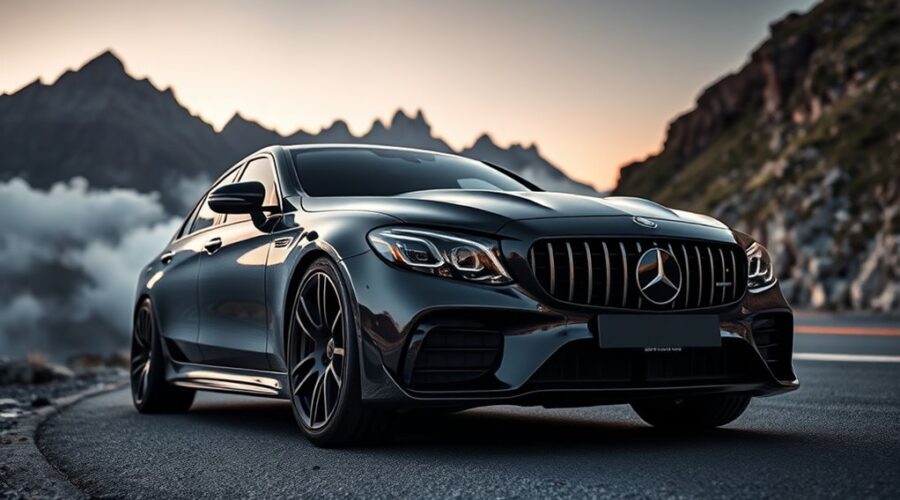
The Brabus Rocket is a heavily reworked Mercedes-Benz performance model built around extreme output rather than restraint. Its twin-turbo V8 hybrid powertrain, advanced chassis changes, and bespoke aerodynamic bodywork push it far beyond the standard CLS-Class. Key figures include four-digit horsepower, rapid acceleration, and limited production, but the exact hardware, dimensions, and version differences reveal how far Brabus went in engineering this car.
What Is the Brabus Rocket?
The Brabus Rocket is a high-performance, heavily modified Mercedes-Benz CLS-Class first introduced in 2006, engineered by Brabus to combine luxury with extreme performance.
BRABUS transformed the Rocket into a grand-touring saloon with substantial performance upgrades, refined luxury enhancements, and reworked aerodynamics. Based on the Mercedes-Benz CLS-Class, it uses a V12 engine layout that prioritizes immense torque delivery and high-speed stability.
Brabus transformed the Rocket into a grand-touring saloon, blending V12 torque, luxury refinement, and aerodynamic poise.
Its defining metrics include brutal acceleration, a 0-100 km/h time of 3.2 seconds, and an electronically limited top speed of 365.7 km/h, a figure that set a 2006 street-legal saloon record.
Later variants increased output further, reaching 800 PS to 900 PS, while maintaining exclusive trim and chassis revisions.
The Rocket is consequently not merely a tuned sedan, but a technical statement of controlled force, mechanical freedom, and liberated speed for collectors and enthusiasts who value engineered excess.
How the Rocket Makes Its Power
At the core of the BRABUS Rocket’s output is a 4.5-liter twin-turbo V8 paired with a 105 kW synchronous permanent-magnet electric motor, creating a combined system rating of 736 kW, or 1,000 hp. The V8 engine provides the primary peak output, while the electric motor adds immediate assistance for cleaner, sharper power delivery.
Maximum torque reaches 1,820 Nm, electronically limited to 1,620 Nm to protect the drivetrain. Twin-turbo boost pressure peaks at 1.4 bar, enabling the combustion side to breathe aggressively under load.
A 6.1 kWh lithium-ion battery supplies the hybrid functionality, supporting electric drive and helping free the system from hesitation during launch. The result is technical efficiency directed toward unrestrained acceleration, with performance metrics showing 0 to 100 km/h in 2.6 seconds.
Each component is calibrated to work in concert, translating fuel and current into force with minimal delay and controlled intensity.
Brabus Rocket Performance Specs
The BRABUS ROCKET 1000 is rated at 1000 hp and 1820 Nm of torque, output supported by a 4.5-liter twin-turbo V8 and a 105 kW electric motor.
This powertrain enables 0-100 km/h acceleration in 2.6 seconds, placing its launch performance among the most extreme in its class.
Its 316 km/h top speed, combined with substantial torque delivery, underscores the coupe’s high-speed capability and forceful midrange performance.
Power And Acceleration
Delivering a combined 735 kW (1,000 hp), the BRABUS ROCKET 1000 pairs a 4.5-liter twin-turbo V8 with an electric motor to produce 1,820 Nm of peak torque, electronically limited to 1,620 Nm.
This powertrain integrates a hybrid system with a 6.1 kWh lithium-ion battery, enabling sustained output and precise energy delivery. The V8 engine and electric assistance work together to create immediate acceleration, propelling the car from 0 to 100 km/h in 2.6 seconds.
Such performance reflects an engineered pursuit of freedom through controlled force and rapid response. The system is calibrated for efficiency as well, recording 12.7 kWh/100 km in consumption.
This configuration underscores a technical balance between power, responsiveness, and electrified deployment.
Top Speed And Torque
Beyond acceleration, the BRABUS ROCKET 1000’s performance profile is defined by its high terminal speed and immense torque reserve.
The Brabus Rocket 1000 combines a 4.5-liter twin-turbo V8 engine with an electric motor to produce 1000 hp, a power output that supports exceptional supercar capabilities. Its peak torque reaches 1820 Nm, although output is electronically limited to 1620 Nm to preserve drivability and traction.
This calibration enables decisive acceleration while maintaining stability at speed. The top speed is rated at 316 km/h, placing it among the quickest high-performance sedans.
Design and Aerodynamics
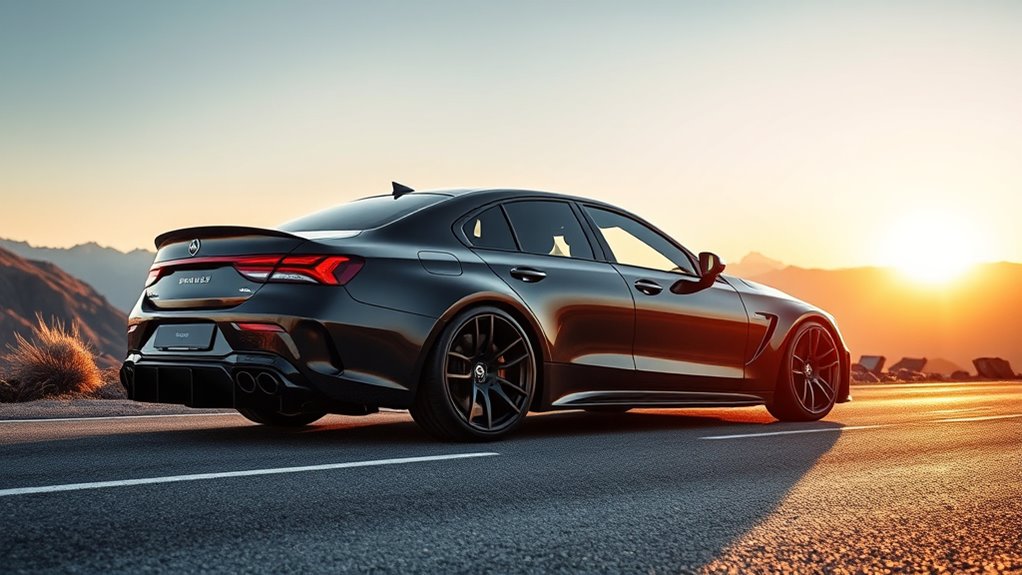
The BRABUS ROCKET 1000 employs extensive carbon bodywork, including a front apron, rear wing, and rear diffuser, to reduce mass while refining airflow.
Its widebody configuration and integrated aero-blades contribute to improved stability by managing wheel wake and increasing aerodynamic efficiency.
These elements work together to generate substantial downforce, supporting high-speed composure and overall performance.
Carbon Bodywork
Carbon bodywork defines the BRABUS Rocket’s design and aerodynamic function, with a unique widebody configuration that increases overall width by 6.7 cm compared with the base vehicle.
The exposed carbon structure delivers a high strength-to-weight ratio, supporting performance upgrades while preserving aerodynamic efficiency. A carbon front apron, carbon aero-blades in the wheels, and custom carbon elements, including illuminated features and a rear diffuser, refine airflow management across the body.
These components work with the widebody design to control lift, add downforce, and improve stability at high speeds. The result is a technical exterior that is both visually assertive and functionally exact, using carbon bodywork to integrate weight reduction, controlled airflow, and stable road behavior without compromising the vehicle’s liberated character.
Downforce Enhancements
Aerodynamic downforce is further developed through the BRABUS ROCKET’s widebody package, which extends the vehicle by 6.7 cm over the base model to improve high-speed stability and visual stance.
The carbon front apron directs airflow to reduce lift, while the multi-piece rear wing adds measurable downforce at velocity. Integrated carbon aero-blades guide air toward the wheels, supporting aerodynamic efficiency and precise airflow management.
A custom diffuser and large intakes refine underbody flow, helping maintain balanced pressure distribution. Lightweight construction, achieved through high-tech forging and CNC methods, reduces mass without compromising rigidity.
This supports handling stability during high-speed maneuvers, allowing the chassis to remain composed under sustained load. The result is a technical body package that prioritizes control, efficiency, and liberated road performance.
Wheels, Tires, and Suspension
Mounted to the Rocket 1000 are 21-inch front and 22-inch rear BRABUS Monoblock P forged wheels, engineered to balance visual impact with high-speed performance. These wheels use lightweight forging and CNC machining to reduce unsprung mass, while carbon aero-discs manage airflow for improved aerodynamics and stability.
| Component | Specification | Effect |
|---|---|---|
| Front wheels | 21-inch forged | Precise steering response |
| Rear wheels | 22-inch forged | Stronger road contact |
| Tires | SportContact 7 high-performance | Grip and control |
| Suspension | Adjustable, -20 mm | Lower center of gravity |
The suspension is adjustable, allowing the coupe to sit up to 20 mm lower, refining handling and maximizing performance. Paired with high-performance tires, the setup supports firm grip during rapid direction changes and sustained acceleration. The result is a chassis package tuned for liberated driving, where efficiency, control, and road-holding work together without compromising aerodynamic function.
Interior and Craftsmanship
Inside the BRABUS Rocket, the cabin is executed as a bespoke Masterpiece environment, hand-trimmed in high-grade black leather with the BRABUS “Ellipse” quilting pattern.
The interior emphasizes craftsmanship through precise stitching, tailored panel surfacing, and controlled material changes that support a distinctly exclusive atmosphere.
Precise stitching, tailored surfacing, and restrained material contrasts create a cabin atmosphere of distinctive exclusivity.
Customization extends to individual color schemes and trim finishes, allowing the cockpit to be configured to specific preferences without compromising visual coherence.
High-gloss carbon accents, anodized aluminum BRABUS pedal pads, and a black Dinamica microfiber headliner reinforce the technical luxury theme.
Ambient lighting is integrated to shift in color with cabin illumination, producing a dynamic but measured effect.
BRABUS door sill trims with LED backlit BRABUS logo elements further define the presentation.
The result is an interior that combines luxury, exclusivity, and functional clarity, expressed through premium materials and disciplined execution.
Rocket 900, Rocket 1000, and Rocket GTS
Beyond the handcrafted cabin, the Rocket lineup extends the same level of precision to its performance variants, led by the BRABUS Rocket 900, Rocket 1000, and Rocket GTS.
The Brabus Rocket 900 uses modified 4.5-liter twin-turbo V8 performance upgrades to deliver 900 hp, reaching 0-100 km/h in 3.7 seconds and a top speed of 280 km/h.
The Brabus Rocket 1000 raises output to 1000 hp and 1820 Nm of torque, cutting 0-100 km/h to 2.6 seconds and extending top speed to 316 km/h.
The Brabus Rocket GTS combines a 735 kW / 1000 hp hybrid system with a 585 kW V8 engine and a 204 hp electric motor.
Each Brabus Rocket GTS, like the others, adopts the widebody concept, optimized aerodynamics, and BRABUS Monoblock wheels for stability.
With limited production, these machines deliver controlled excess and technical freedom.
Production Numbers and Efficiency Figures
Production numbers underscore the exclusivity of the BRABUS Rocket range, with the ROCKET 1000 limited to 25 units and the 900 Rocket Edition similarly capped at 25 examples. These production numbers frame a limited edition strategy aligned with performance metrics and collector demand.
| Model | Output | Limit |
|---|---|---|
| BRABUS ROCKET 1000 | 1000 hp | 25 |
| 900 Rocket Edition | 900 hp | 25 |
| ROCKET GTS | 317 km/h | — |
The BRABUS ROCKET 1000 records combined fuel consumption of 10.2 l/100 km and CO₂ emissions of 237 g/km, figures that remain measured for its class. Lightweight construction and advanced aerodynamics support liberation from excess mass, improving efficiency figures without diluting authority. The ROCKET GTS adds top speed of 317 km/h and 0-100 km/h in 2.6 seconds, confirming that restrained production numbers can coexist with aggressive performance.
Frequently Asked Questions
Are BRABUS Cars Faster Than AMG?
Yes; BRABUS performance often exceeds AMG comparison figures, with stronger speed metrics from aggressive engine tuning. Acceleration tests, historical context, luxury enhancements, and design differences influence customer preferences and brand loyalty, yet outputs vary by model.
What Are the Key Features of the Brabus 900 Rocket?
The Brabus 900 Rocket features Brabus design, luxury interiors, performance upgrades, exclusive features, technology integration, engine specifications, aerodynamic enhancements, customization options, a heightened driving experience, and notable release history, all emphasizing controlled freedom.
What Is the 0 to 60 Mph Time for a Brabus 800?
Like a lightning bolt, the Brabus 800 reaches 60 mph in 3.1 seconds. Brabus tuning, performance upgrades, luxury interiors, engine specifications, speed comparisons, automotive technology, design enhancements, exclusive features, customer preferences, market trends support its liberated appeal.
What Is the Fastest BRABUS Car?
The fastest BRABUS car is the ROCKET 900. Brabus tuning, engine upgrades, luxury interiors, performance enhancements, aerodynamic design, exclusive editions, historical models, customer customization, racing heritage, and future developments define its liberated, technical character.
Conclusion
In conclusion, the Brabus Rocket stands out as a benchmark for extreme hybrid performance, pairing a 4.5-liter twin-turbo V8 with a 105 kW electric motor to produce 1,000 hp and 1,820 Nm. One particularly notable statistic is its 0–100 km/h time of 2.6 seconds, a figure that underscores how thoroughly its powertrain, traction, and calibration have been optimized. With only 25 Rocket 1000 units planned, it remains highly exclusive.