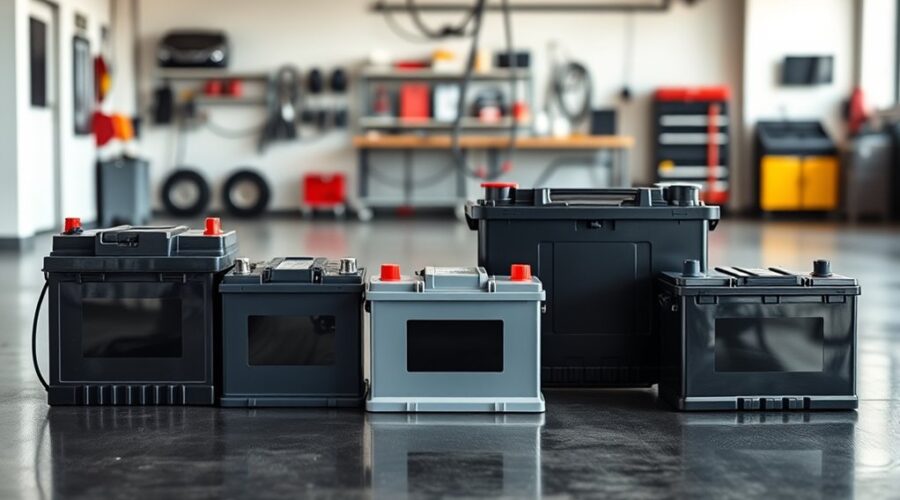
Choosing the right car battery for 2027 is not just about price. It is about fit, cold cranking power, warranty coverage, and long-term reliability. Options like the OPTIMA RedTop, ACDelco Gold 94RAGM, and Odyssey 34-PC1500T stand out for different reasons, but the best choice depends on the vehicle and how it is used. The details behind those differences matter more than most drivers expect.
OPTIMA RedTop AGM Starting Battery 800 CCA
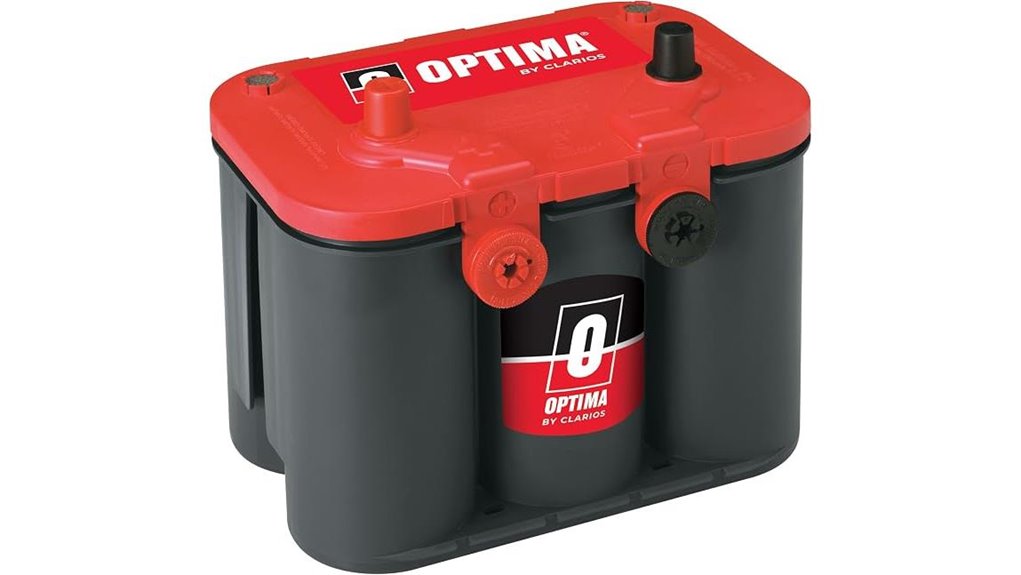
The OPTIMA RedTop AGM Starting Battery 800 CCA stands out as a strong choice for drivers who need dependable starting power and durability, especially in cars, trucks, SUVs, hot rods, and off-road vehicles. This 12-volt sealed AGM battery delivers 800 cold cranking amps, 50 amp-hours of capacity, and 100 minutes of reserve power. Its SpiralCell design uses 99.99% pure lead for efficient output, while vibration resistance is rated far above standard flooded models. The non-spillable, maintenance-free build supports flexible mounting, dual SAE and GM posts, and faster recharging.
Best For: Drivers who need a dependable, maintenance-free starting battery with strong cranking power and excellent vibration resistance for cars, trucks, SUVs, hot rods, and off-road vehicles.
Pros:
- 800 CCA provides strong starting performance in a wide range of vehicles.
- AGM SpiralCell design offers durability, faster recharging, and better vibration resistance.
- Non-spillable construction with dual SAE and GM posts allows flexible mounting and easy installation.
Cons:
- 50 Ah capacity may be limiting for vehicles with higher accessory or deep-cycle power needs.
- Premium AGM construction can cost more than standard flooded batteries.
- Best suited for starting applications, not heavy deep-cycle use.
ACDelco Gold 94RAGM (88864542) 36 Month Warranty AGM BCI Group 94R Battery
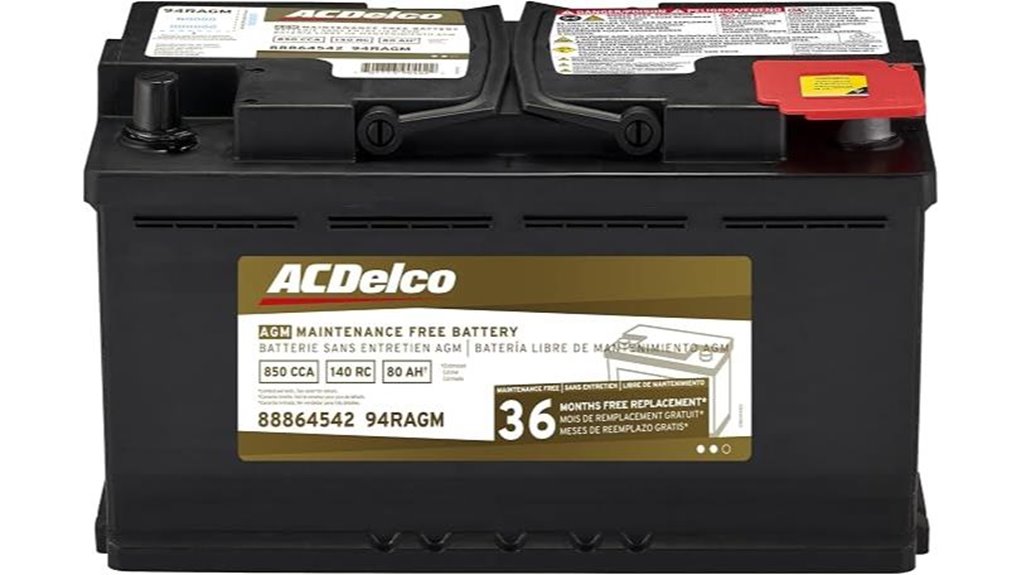
Built for drivers needing a reliable AGM Group 94 battery, the ACDelco Gold 94RAGM suits demanding vehicles. This 12-volt Silver-Calcium unit uses absorbed glass mat construction to deliver spill-proof, leak-resistant operation and maintenance-free performance. High-density negative paste, an enhanced life alloy, and a calcium lead positive grid support stronger conductivity, lower resistance, and longer cycle life. A robust envelope separator and precision-tested case improve durability, while oxygen recombination reduces water loss. It measures 6.9 by 12.4 by 7.5 inches, weighs 51.6 pounds, and includes a 36-month warranty.
Best For: Drivers who need a durable, maintenance-free AGM Group 94 battery for demanding vehicles and reliable all-weather performance.
Pros:
- AGM spill-proof, leak-resistant design with maintenance-free operation
- High-density negative paste, silver-calcium alloy, and calcium lead positive grid help improve performance and cycle life
- 36-month warranty and robust construction for added peace of mind
Cons:
- Heavy at 51.6 pounds, which can make handling and installation more difficult
- Higher-end AGM battery may cost more than standard flooded batteries
- Contains lead, so it requires careful handling and disposal
OPTIMA® Batteries High Performance D34/78 YELLOWTOP® Sealed AGM Battery
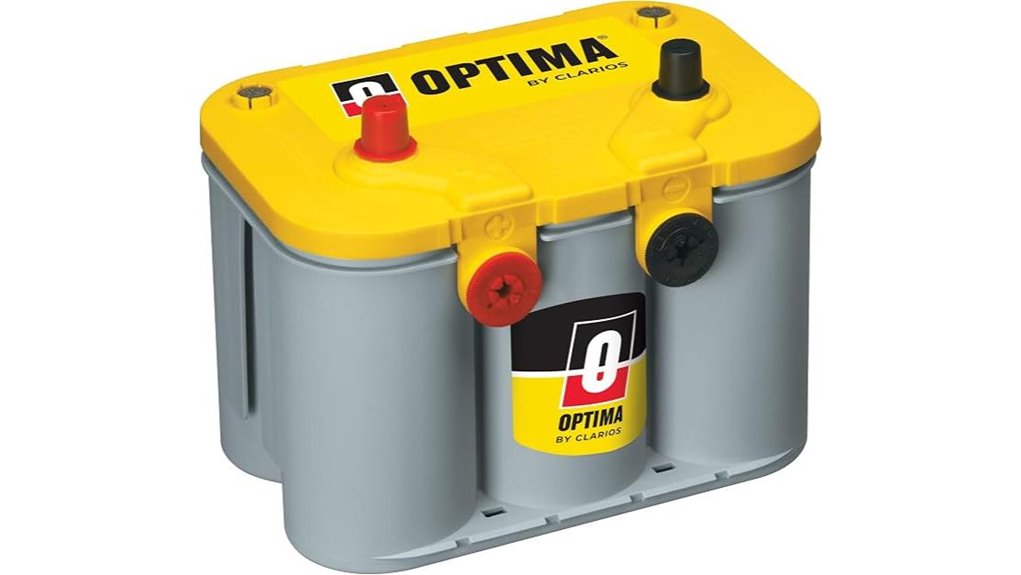
With 750 cold cranking amps, the OPTIMA D34/78 YELLOWTOP suits drivers who need strong starts and dependable power. This 12-volt AGM battery uses SpiralCell Technology with 99.99% pure lead to deliver consistent output and improved performance over conventional flat-plate designs. Its 55 Ah capacity and 120-minute reserve support high electrical demands, while faster charging helps keep systems ready. The sealed, maintenance-free construction adds convenience. Measuring 10 x 6 7/8 x 7 13/16 inches and weighing 43.5 pounds, it is built for harsh conditions, resists vibration, and may last up to three times longer than standard flooded batteries.
Best For: Drivers who need a high-performance, maintenance-free AGM battery with strong starting power, excellent vibration resistance, and reliable performance in harsh conditions.
Pros:
- 750 cold cranking amps provide strong starting power.
- SpiralCell Technology and 99.99% pure lead help deliver consistent performance.
- Maintenance-free, sealed design with long life and high vibration resistance.
Cons:
- Heavier than some comparable batteries at 43.5 pounds.
- May be more expensive than standard flooded batteries.
- Its specialized high-performance design may be more than needed for basic driving needs.
XS Power D3400 AGM High Output Battery
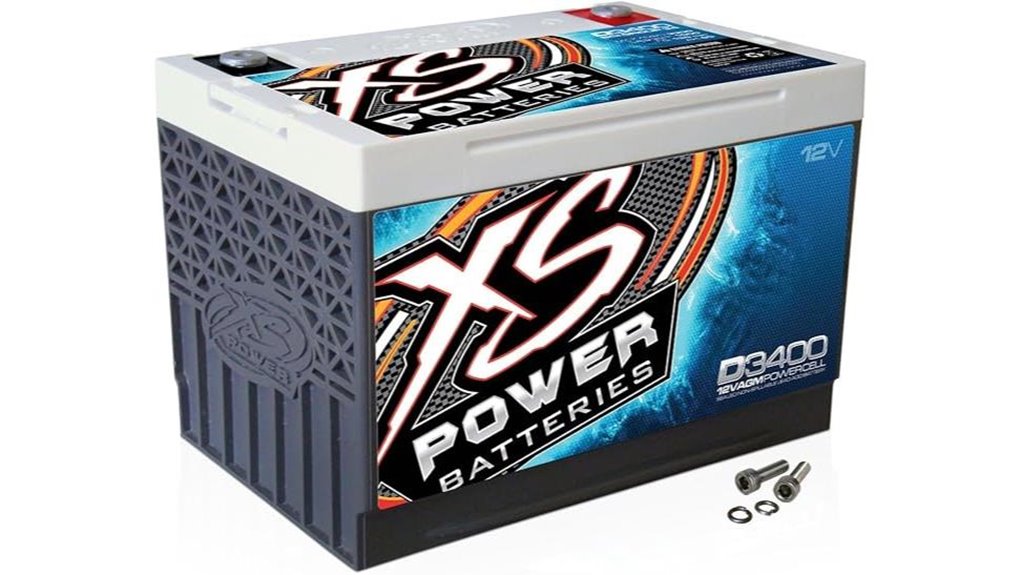
XS Power’s D3400 stands out for drivers needing serious output and rugged reliability. This 12-volt AGM lead-acid battery delivers 3,300 amps, with ultra-low internal resistance for strong performance demands. Its sealed, spill-proof, valve-regulated design helps resist vibration, while the 48-pound case and M6 terminals support versatile installation. Measuring 11 by 12 by 9 inches, it suits boats and passenger cars alike. The D3400 is also favored for high-performance audio and tested in salt flat, dirt track, circle track, drag racing, and boat racing applications. Amazon offers a 30-day return guarantee.
Best For: Drivers, boat owners, and car audio enthusiasts who need a high-output, vibration-resistant 12V AGM battery for demanding performance use.
Pros:
- Delivers strong 3,300-amp output with ultra-low internal resistance
- Sealed, spill-proof AGM design is vibration-resistant and versatile to mount
- Suitable for boats, passenger cars, and high-performance racing/audio applications
Cons:
- Heavy at 48 pounds, which may make handling and installation harder
- Larger size may not fit all battery compartments
- Premium performance battery may be more expensive than standard options
Odyssey Battery Odyssey 34-PC1500T Automotive and LTV Battery
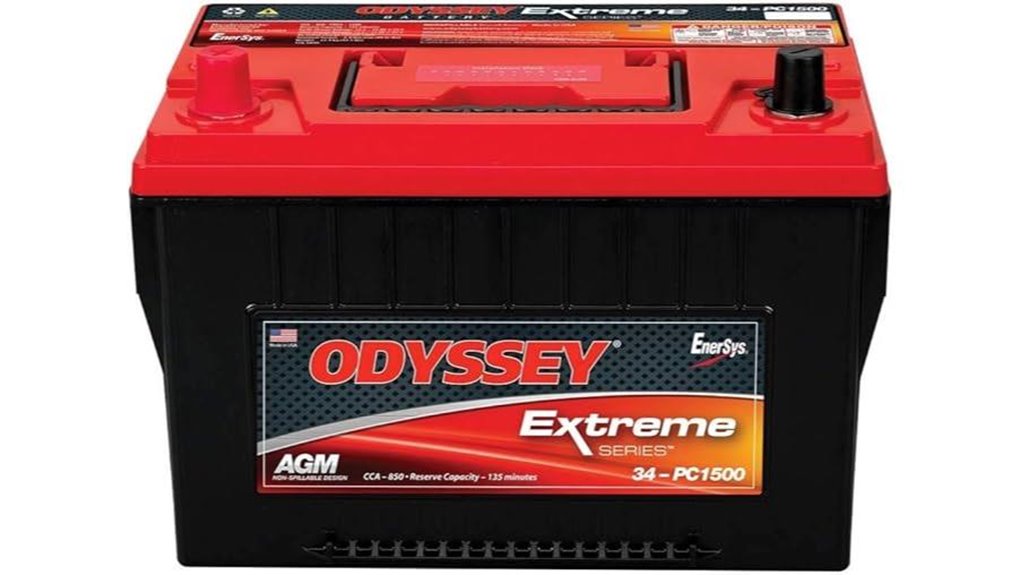
The Odyssey 34-PC1500T suits drivers who need strong starting power and fast recharge times. This 12-volt lead-acid battery delivers 850 cold cranking amps, making it well suited for passenger cars and light trucks with demanding starts. Its sealed design supports high recharge efficiency, reaching full charge in 4 to 6 hours. Odyssey rates its cycle life at up to 400 cycles at 80% depth of discharge, about 70% longer than conventional deep-cycle batteries. The unit measures 10.85 by 6.76 by 7.82 inches, weighs 49.5 pounds, and carries a 3- or 4-year full-replacement warranty.
Best For: Drivers of passenger cars and light trucks who want strong starting power, fast recharge times, and long battery life.
Pros:
- 850 CCA provides strong starting performance for demanding starts
- Fast recharge capability can reach a full charge in 4 to 6 hours
- Long cycle life with up to 400 cycles at 80% depth of discharge
Cons:
- Heavy at 49.5 pounds, which can make installation more difficult
- Higher-performance battery may be more expensive than standard options
- Fit is vehicle-specific, so it may not work for all cars or trucks
Factors to Consider When Choosing Car Batteries 2026: Where to Buy and What to Get
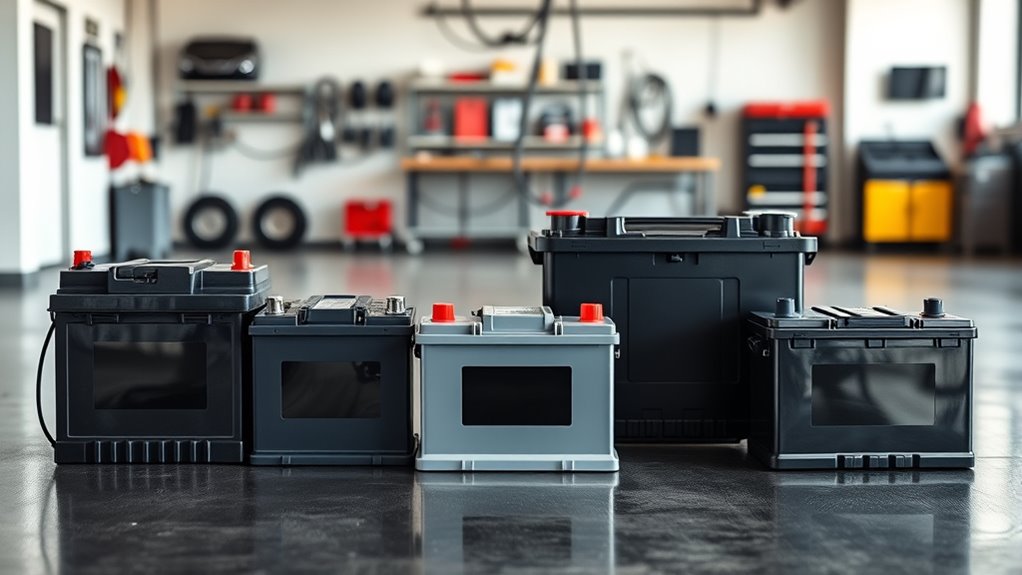
Choosing a car battery in 2026 starts with the basics: the right battery type, enough CCA and capacity, and a fit that matches the vehicle’s size requirements. Durability matters too, especially in models exposed to heat, cold, or vibration during daily use. Buyers also compare warranty terms and support options to decide where to buy and what level of reliability to expect.
Battery Type Basics
Car batteries generally fall into two main camps: lead-acid and lithium-ion. Lead-acid remains the most common choice because it is affordable and backed by long-established technology. Within that category, flooded batteries are the traditional option, while AGM models use absorbed glass mat construction to improve vibration resistance and charging speed. Some AGM designs, including SpiralCell technology, are built for tougher use and longer service. Lithium-ion batteries are less common in standard vehicles, but they represent a newer alternative. Battery choice often depends on how much durability, performance, and cost balance is needed. For demanding applications, AGM units can last up to three times longer than standard flooded batteries, making them a stronger fit where reliability matters most.
CCA And Capacity
Cold-weather starting power often comes down to CCA, or cold cranking amps, which measures how well a battery can start an engine in low temperatures. Higher CCA ratings, such as 800 CCA, generally give stronger cranking performance in harsh weather. Capacity, measured in amp-hours, shows how long a battery can supply current; for example, 50 AH can theoretically deliver 1 amp for 50 hours. Reserve capacity, listed in minutes, matters when the charging system fails, and 100 minutes can provide useful emergency support. Cycle life also affects value, since some batteries endure about 400 discharge and recharge cycles at 80% depth of discharge. Together, suitable CCA and capacity help deliver reliable starting and sustained electrical performance.
Fitment And Size
Beyond CCA and capacity, fitment and size determine whether a battery will actually work in a given vehicle. The battery’s physical dimensions must align with the vehicle’s tray and hold-down system; a common example is 10.06 inches long, 6.94 inches wide, and 7.88 inches high. Terminal layout matters just as much, since the wrong configuration can prevent a clean connection. Some batteries use dual SAE and GM posts, which improves compatibility across different setups. Weight also varies, often from 38.8 to 51.6 pounds, and that affects handling during installation. Fit type should be checked as well, because vehicle-specific designs better match mounting requirements and electrical system expectations. Even a strong battery is ineffective if it does not fit precisely.
Durability And Vibration
Durability often separates a battery that merely works from one that lasts, especially in vehicles exposed to heat, rough roads, or repeated start-stop use. Some batteries are engineered to deliver up to three times the service life of standard flooded models, making longevity a major advantage. Vibration resistance matters just as much, because certain designs can tolerate up to 15 times more vibration than conventional batteries. That resilience helps preserve performance on uneven roads and in heavy-duty driving. Maintenance-free construction further supports long-term reliability by reducing upkeep requirements. AGM technology improves both toughness and stability by holding electrolyte securely in place. Precision-made cases and sturdy separators also help prevent leaks, reduce internal damage, and strengthen overall resistance under demanding conditions.
Warranty And Support
After evaluating durability and vibration resistance, buyers should also weigh warranty and support, since long-term value depends on what happens if a battery underperforms or fails early. An extensive warranty can reduce risk, especially when it includes a 36-month free replacement period or another limited warranty that covers defects. Shoppers should read the terms carefully, noting how long coverage lasts, what conditions apply to replacement, and whether maintenance-free claims or cycle-life expectations are specifically addressed. Some manufacturers also provide a 30-day return guarantee, which adds flexibility if the battery is not the right fit. Detailed warranty documentation can clarify claim steps and support channels. Comparing these details helps identify batteries with dependable backing, not just strong specifications on paper.
Frequently Asked Questions
How Long Do 2027 Car Batteries Typically Last?
2027 car batteries typically last about three to five years in normal use, though some can reach six or seven with careful maintenance and mild climates. Lifespan depends on driving habits, heat, vibration, charging system health, and battery type. Short trips and frequent deep discharges shorten service life. Regular testing, clean terminals, and prompt replacement when starting becomes weak help avoid unexpected failure and preserve vehicle reliability over time.
Can I Install a Car Battery Myself Safely?
Yes, a car battery can often be installed safely by an owner, but only if the theory holds that careful preparation prevents mishaps. Picture a mechanic’s hands tracing a simple path: engine off, keys removed, terminals disconnected in the right order. Yet sparks, corrosion, and heavy batteries can turn routine into risk. If uncertainty exists, gloves, eye protection, and a professional’s help remain the wiser course.
What Signs Show My Car Battery Is Failing?
A failing car battery often shows slow engine cranking, dim headlights, frequent jump-starts, and a battery warning light. Corrosion on the terminals, a swollen case, or an odd smell can also indicate trouble. If electrical accessories act weak or the battery is older than three to five years, replacement may be near. A professional test can confirm whether the battery is weak, charging poorly, or nearing complete failure.
Do Electric Cars Use the Same Batteries as Gas Cars?
Different batteries serve different roles, and that is the key point here. Electric cars do not use the same 12-volt starter battery as gas cars for propulsion; instead, they rely on large high-voltage battery packs to power the motor. Gas cars still use lead-acid or AGM batteries mainly to start the engine and run accessories. Some EVs also include a small auxiliary battery for low-voltage systems.
How Should I Dispose of an Old Car Battery?
An old car battery should be taken to a recycling center, auto parts store, or hazardous waste facility, never placed in regular trash. Car batteries contain lead and acid, which can leak and harm people and the environment. Many retailers accept used batteries for free or offer a core refund. The battery should be kept upright, handled carefully, and transported in a secure container to prevent spills or short circuits.
Conclusion
In 2027, the best car batteries balance brute starting power, dependable durability, and worry-free maintenance. From OPTIMA’s RedTop and YellowTop to ACDelco, XS Power, and Odyssey, each option offers distinct strengths for different drivers and vehicles. Buyers should match battery size, CCA, warranty, and fitment carefully before purchase. Whether shopping online or at a local auto parts store, a well-chosen battery delivers dependable driving, durable performance, and daily peace of mind.