
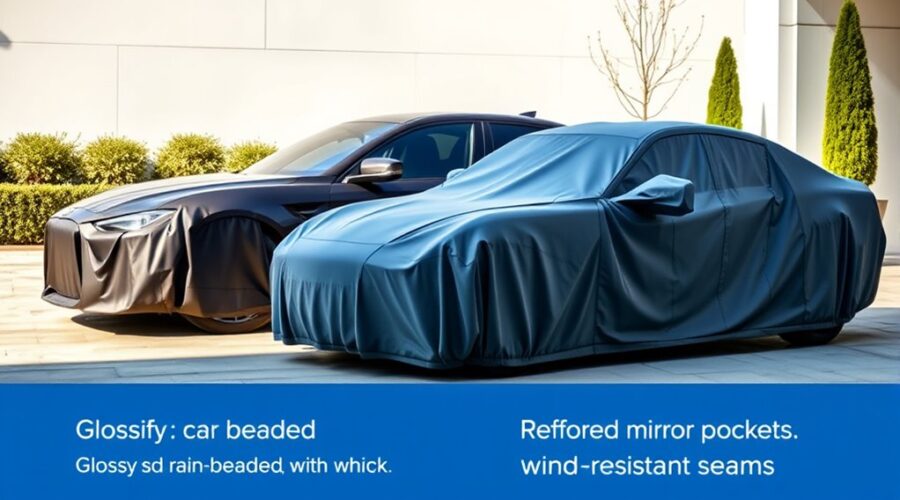
In 2027, two car covers stand out for all-weather protection: the Favoto Car Cover and the Covercraft Custom Fit Car Cover. One offers broad waterproof coverage with windproof straps and a soft lining for hatchbacks. The other is tailored for the Cadillac CTS, using WeatherShield HP fabric for a precise fit and strong moisture control. The real difference lies in how each handles fit, durability, and daily use.
Favoto Car Cover Waterproof All Weather Windproof for Hatchback 157-171’’
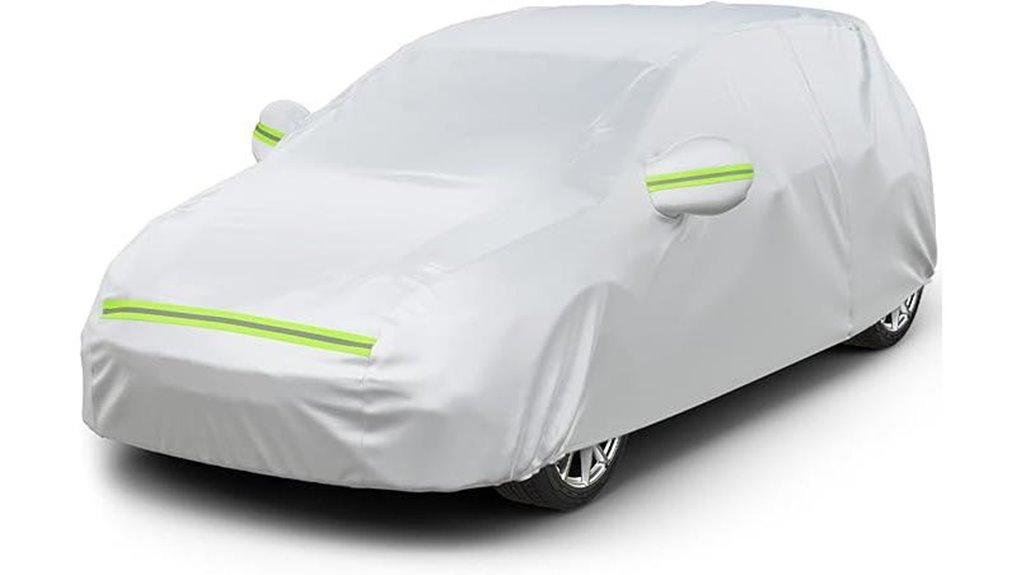
The Favoto Car Cover Waterproof All Weather Windproof is best suited for hatchback owners with vehicles measuring 157 to 171 inches, offering a tailored fit for everyday outdoor protection. Its design includes windproof straps, elasticized edges, and mirror pockets that help maintain position in strong gusts while supporting a close fit. The soft cotton lining reduces friction against paint, and the cover blocks rain, snow, UV rays, dust, bird droppings, sap, and leaves. A driver-side zipper allows access without full removal, while reflective strips improve nighttime visibility. A storage bag simplifies folding and transport.
Best For: Hatchback owners with vehicles measuring 157–171 inches who want a waterproof, windproof all-weather cover for outdoor parking and paint protection.
Pros:
- Multiple windproof straps, elasticized edges, and mirror pockets help keep the cover secure and fitted.
- All-weather protection shields against rain, snow, UV rays, dust, bird droppings, sap, and leaves.
- Soft cotton lining, driver-side zipper, reflective strips, and storage bag add convenience and usability.
Cons:
- Designed specifically for hatchbacks in the 157–171 inch range, so fit may be poor for other vehicle types or sizes.
- Requires checking the compatibility image carefully before purchase to avoid sizing issues.
- Best suited for outdoor protection, so users seeking a lightweight indoor dust cover may find it more feature-rich than necessary.
Covercraft Custom Fit Car Cover for Cadillac CTS
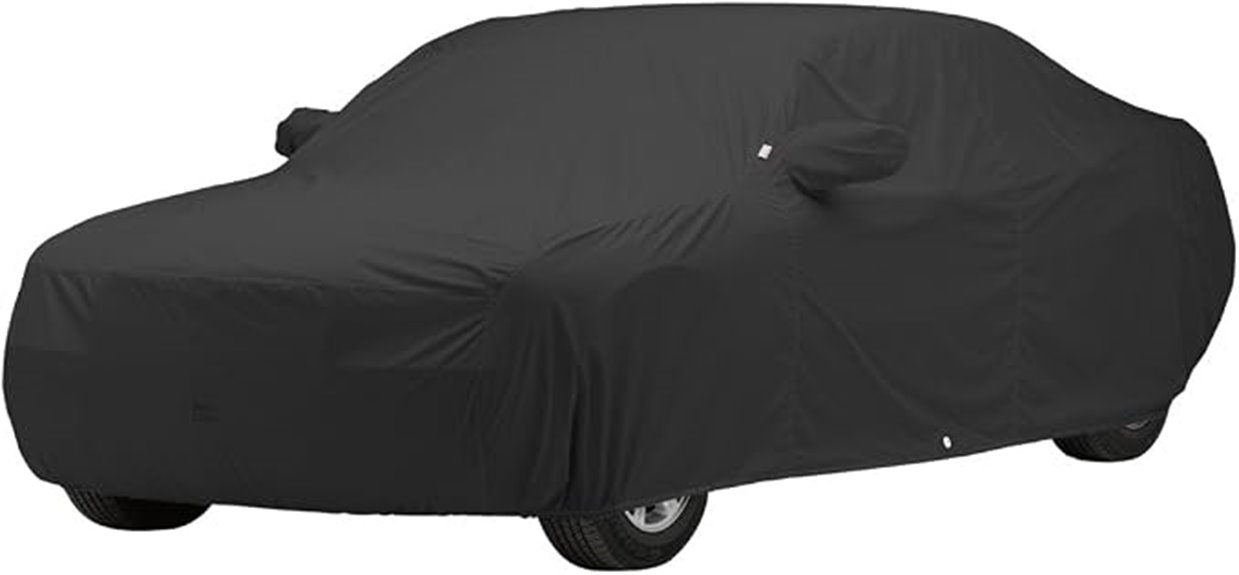
Designed for Cadillac CTS owners seeking year-round protection, this Covercraft cover delivers a tailored, secure fit. Made from WeatherShield HP Series fabric in black, it uses special encapsulated additives to reduce UV degradation. Silicone polymers give the surface a silky feel that is less abrasive than flannel. The material also lets heat, moisture, and condensation escape efficiently, helping limit trapped buildup. Custom-made to follow the vehicle’s contours, it includes sewn-in mirror pockets, bottom-edge elastic, grommets for a cable lock, and an extra grommet for the antenna.
Best For: Cadillac CTS owners who want a custom-fit, year-round car cover with UV protection, moisture release, and a secure, tailored fit.
Pros:
- Custom-made for the Cadillac CTS with sewn-in mirror pockets for a snug fit
- WeatherShield HP fabric helps reduce UV degradation and lets heat, moisture, and condensation escape
- Bottom-edge elastic plus grommets for a cable lock and antenna add security and convenience
Cons:
- Designed specifically for the Cadillac CTS, so it won’t fit other vehicles well
- Black color may absorb more heat than lighter-colored covers
- Premium custom-fit materials may come at a higher price than universal covers
Factors to Consider When Choosing Car Covers 2026: All-Weather Protection Picks
Choosing a car cover for 2026 begins with proper vehicle fit, since coverage must match the shape and size of the car closely. Weather resistance, fabric breathability, secure fastening, and surface protection also matter, as they help shield the vehicle from rain, sun, wind, moisture, and scratches. Each factor affects how well the cover performs in all-weather conditions.
Vehicle Fit
When selecting a car cover, vehicle fit should be treated as a primary concern because a cover that matches the car’s length and shape offers far better protection than one that sits loosely or strains against the body. Covers should align with the vehicle’s dimensions and be made for its specific profile rather than approximations. Mirror pockets can improve conformity to the car’s design, while elasticized edges and secure-fit construction help keep the cover in place. A stable fit reduces shifting that could lead to surface marks. Clear compatibility charts or model images also help confirm whether a cover suits a particular vehicle. Custom-fit options generally hug the contours more closely than universal styles, resulting in a neater fit and more dependable overall coverage.
Weather Resistance
Beyond fit, weather resistance determines how well a car cover protects a vehicle through changing conditions. An effective all-weather cover should block rain, snow, UV rays, dust, and bird droppings to limit surface damage. UV-resistant materials with added stabilizers help slow degradation and preserve the vehicle’s finish over time. Windproof details also matter; multiple straps and elasticized edges keep the cover anchored during gusts and reduce movement that can scuff paint. Moisture management is equally important, because trapped heat and condensation can encourage mold and mildew beneath the cover. A soft interior lining adds another safeguard, reducing friction and scratches during long-term storage. Together, these features create durable protection in demanding outdoor conditions.
Fabric Breathability
Fabric breathability is a key safeguard in all-weather car covers, helping heat, moisture, and condensation escape before they can collect underneath. This airflow limits mold and mildew growth, which can form when trapped humidity lingers against the vehicle. Breathable materials also help preserve a stable internal climate, reducing stress on paint and interior surfaces. Moisture-managing fabrics let residual dampness evaporate, supporting longer service life for both cover and car. By moderating temperature swings, they can lessen exposure to severe heat or cold that accelerates deterioration. Breathability further helps keep dust and debris from settling tightly against the finish, lowering the chance of fine scratches and gradual wear over time.
Secure Fastening
Secure fastening is essential for all-weather car covers because windproof straps, elasticized edges, and custom-fit details help keep the cover anchored during strong winds. A well-designed cover stays aligned when bottom-edge elastic and sewn-in mirror pockets create a snug fit that resists shifting in changing weather. Grommets for cable locks add another security option, making unauthorized removal more difficult when a vehicle is parked outdoors. Reflective safety strips improve nighttime visibility, which can be useful in dimly lit areas. Beyond security, a dependable fastening system helps extend cover life by limiting flapping and abrasion caused by repeated movement. For buyers comparing 2026 all-weather options, secure attachment remains a practical feature that supports reliability, convenience, and long-term value.
Surface Protection
Surface protection begins with how gently a car cover contacts the vehicle, since soft cotton linings can reduce friction and help minimize scratches on painted surfaces during storage. Beyond softness, effective covers manage moisture by allowing heat and condensation to escape, limiting trapped dampness that can foster mold or damage paint. All-weather protection also matters, because UV rays, rain, snow, and dust can gradually degrade exterior finishes when a car sits exposed. A stable fit further reduces risk: windproof elasticized edges and secure designs keep the cover from shifting and rubbing against the body. Custom-fit options with tailored panels and sewn-in mirror pockets improve contour alignment, helping prevent abrasions caused by excess movement and maintaining a cleaner, safer barrier for long-term storage.
Access Features
Access features can make a car cover far more practical in daily use, especially when quick entry or removal is needed. Driver-side zippers let the user reach the vehicle without fully exposing it, which is useful for brief stops. Mirror pockets also matter because they help the cover sit securely while keeping the fit aligned around key contours. Reflective safety strips improve visibility at night, reducing risk during access in dim conditions. Ease of securing the cover should not be overlooked; elastic edges and windproof straps can simplify installation and removal while keeping the cover stable in wind. Practical designs that include storage bags may also support straightforward handling, helping the cover remain easy to manage between uses and reducing frustration.
Storage Convenience
Storage convenience matters because a car cover should be easy to fold, carry, and put away when not in use. Models that include storage bags offer a practical way to keep the cover organized and portable between uses. Lightweight materials further reduce handling effort, making installation and removal less tiring. Compact designs are especially useful for drivers with limited space, since they can fit neatly in a trunk or garage without crowding other items. User-friendly details, such as driver-side zippers, also support quicker everyday access and less hassle during short stops. Easy cleaning and low-maintenance fabrics help preserve the cover during storage periods, avoiding unnecessary upkeep. A cover that stores well adds convenience without sacrificing protection or durability.
Frequently Asked Questions
Are Car Covers Safe for Newly Painted Vehicles?
Car covers can be safe for newly painted vehicles, but only after the paint has fully cured. If used too soon, trapped solvents or pressure can mar the finish. A soft, breathable cover with a clean inner lining is preferred once curing is complete. The surface should be completely dry and free of dust before covering. Any cover should fit loosely enough to avoid rubbing or imprinting the fresh paint.
How Do I Prevent Mold Under a Car Cover?
To prevent mold under a car cover, the vehicle should be fully dry before covering, and the cover should be breathable, not plastic. Any trapped moisture promotes mildew, so the car ought to be cleaned regularly and parked in a ventilated, shaded area. Desiccant packs can help in humid climates. If the cover gets wet, it should be removed and dried promptly to avoid mold growth and odor buildup.
Can Car Covers Protect Against Hail Damage?
A stitch in time saves nine: car covers can help against hail damage, but only to a point. Thin covers mainly guard against scratches and debris, while padded or hail-specific covers absorb some impact and reduce dents. No cover makes a vehicle fully hailproof, especially in severe storms. For better protection, parking under shelter or using a thick, multi-layer cover is the safer choice when hail is forecast.
Should I Cover My Car While It’s Still Wet?
It is generally unwise to cover a car while it is still wet. Moisture trapped under the cover can encourage mold, water spots, and paint abrasion if dirt is present. If covering is necessary, the vehicle should be dried first, especially on painted surfaces and seams. A breathable cover helps reduce risk, but it cannot fully prevent problems when applied over moisture.
How Often Should I Wash an Outdoor Car Cover?
Like a raincoat collecting mud, an outdoor car cover should be washed about every 1 to 3 months, or sooner if dirt, pollen, bird droppings, or road grime build up. A clean cover helps prevent trapped debris from scratching paint and lets the fabric breathe properly. Mild soap, cool water, and air drying are usually best. If the cover looks stained or feels gritty, it should be cleaned immediately.
Conclusion
Ultimately, the Favoto Car Cover and the Covercraft Custom Fit Car Cover stand out as strong all-weather choices in 2027. Favoto suits hatchbacks needing waterproof, windproof protection with gentle paint-safe lining, while Covercraft offers a tailored fit for the Cadillac CTS with breathable, UV-resistant WeatherShield HP fabric. For example, a daily driver parked outdoors through rain and summer heat could stay cleaner, drier, and better protected with either cover, depending on fit needs.