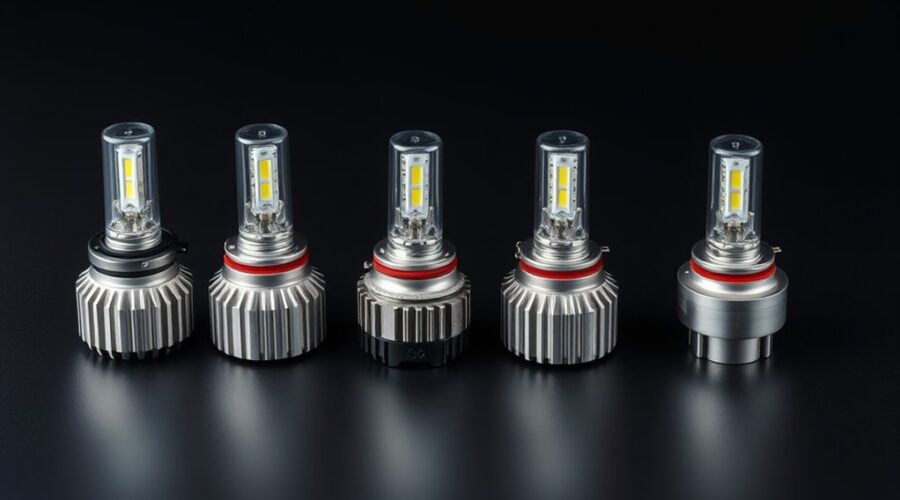
Choosing the right headlight bulb in 2027 is less about brand names and more about balance. Some drivers want stronger visibility, while others prefer a clean white beam or simple OEM-style reliability. The SYLVANIA H11 XtraVision, HELLA H7 Standard, Philips H7 CrystalVision Ultra, and Philips H11 Standard each serve a different need. The real question is which one fits the road, the car, and the driver best.
SYLVANIA H11 XtraVision Halogen Headlight Bulb, High or Low Beam, 2 Bulbs
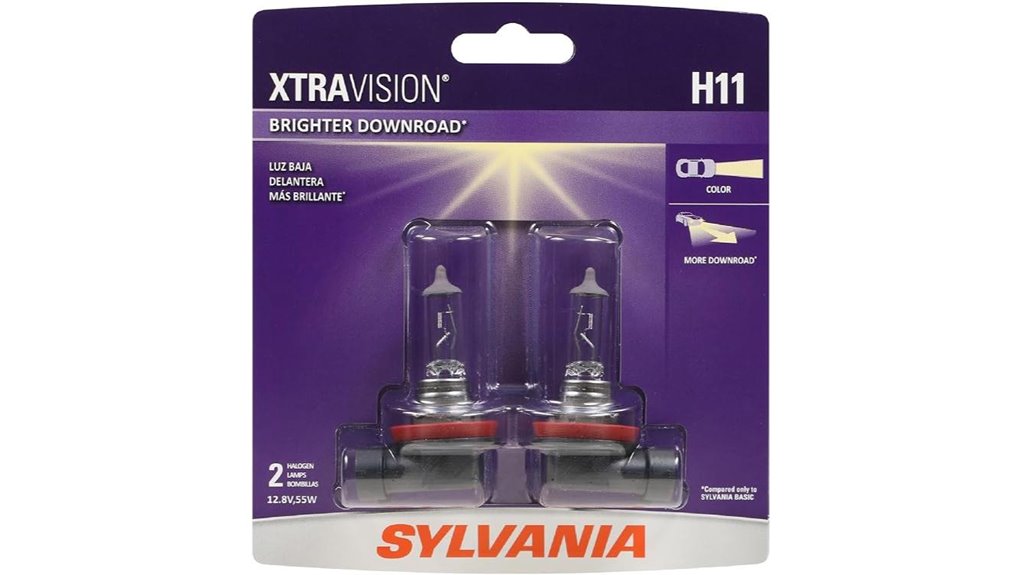
The SYLVANIA H11 XtraVision Halogen Headlight Bulb is a strong choice for drivers who want better down-road visibility without excessive glare, especially when replacing a worn high or low beam in pairs for balanced performance. It comes as a two-bulb set and is offered in multiple sizes, including H11, H7, H13, and others. The bulb’s robust filament and proprietary gas mixture support durability and consistent output. For the best fit, vehicle owners should verify the correct position and notes with Amazon Part Finder before installation. Its design favors reliable performance in varied driving conditions.
Best For: Drivers who want a reliable halogen headlight replacement with improved down-road visibility, low glare, and the convenience of a two-bulb set for matching performance.
Pros:
- Enhanced down-road visibility with minimal glare
- Comes as a 2-bulb set, making pair replacement easy and consistent
- Robust filament and proprietary gas mixture help support durability and dependable performance
Cons:
- Halogen bulbs typically do not last as long as some newer lighting technologies
- Fit must be verified carefully with Amazon Part Finder to avoid compatibility issues
- Performance upgrade is modest compared with higher-end headlight options
HELLA H7 Standard Halogen Bulb, 12 V, 55W
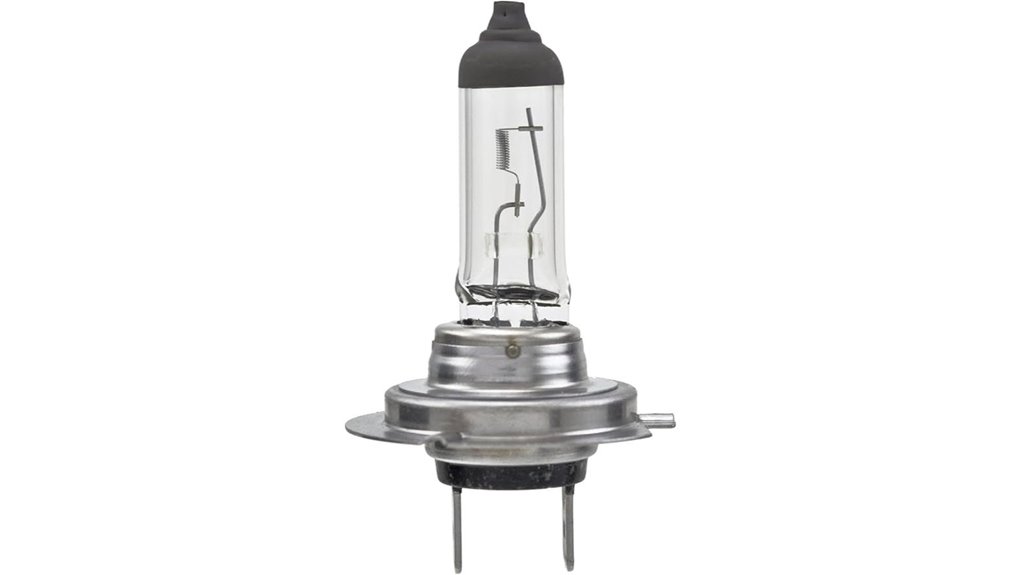
Built for drivers who want dependable, vehicle-specific lighting, the HELLA H7 Standard Halogen Bulb delivers a clear upgrade over basic bulbs. This 12 V, 55W halogen bulb produces a white beam that improves visibility and driving comfort while maintaining original equipment quality. Its vehicle-specific fit supports correct installation, reliable function, and long-term satisfaction. HELLA’s century-long automotive lighting expertise and ongoing research reinforce its reputation. The bulb is DOT, ECE, and INMETRO certified, though local rules should be checked. For balanced output, replacement in pairs and careful handling of the glass are recommended.
Best For: Drivers seeking a dependable, vehicle-specific H7 halogen replacement bulb that offers original equipment quality, improved visibility, and straightforward fitment.
Pros:
- Original equipment quality from a trusted automotive lighting brand with long industry experience
- Vehicle-specific fit helps ensure correct installation and reliable function
- DOT, ECE, and INMETRO certified for broad compliance confidence
Cons:
- Halogen bulbs typically don’t match the brightness or efficiency of newer LED options
- Should be replaced in pairs for the best symmetric beam, adding extra cost
- Requires careful handling to avoid touching the glass during installation
Philips H7 CrystalVision Ultra Upgraded Bright White Headlight Bulb, 2 Pack
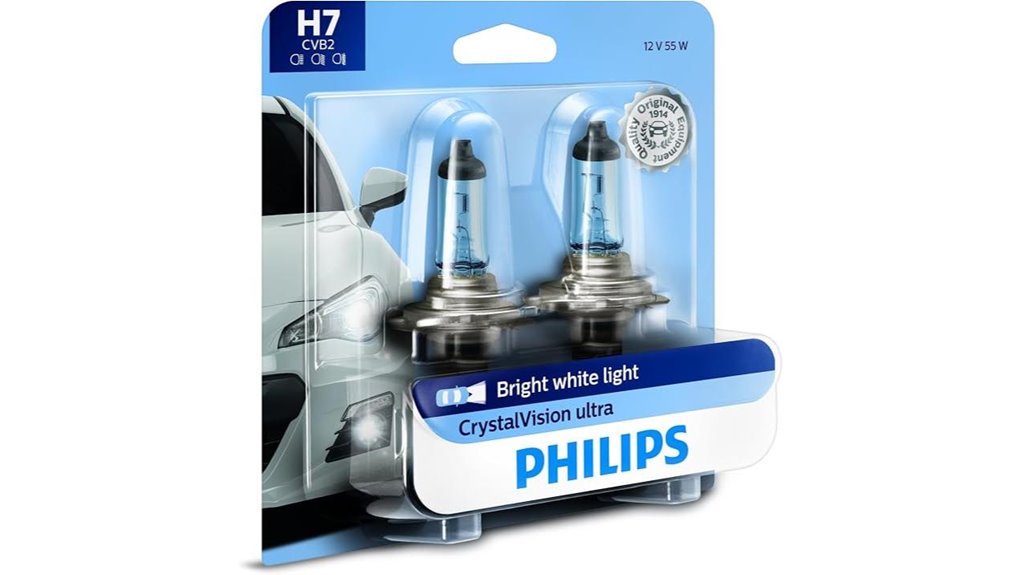
Philips H7 CrystalVision Ultra suits drivers wanting a bright white HID-like upgrade with easy installation. This 2-pack delivers a cool, white beam that can improve nighttime visibility while adding a sharper look in daytime reflector housings. Philips designs the bulb for original equipment quality, supporting dependable performance and durability across varied driving conditions. Installation is straightforward in compatible vehicles, making replacement quick. For drivers seeking a balance of style, visibility, and trusted brand assurance, this bulb offers a practical upgrade without complex modifications or unnecessary compromise.
Best For: Drivers who want a bright white, HID-like headlight upgrade with easy installation, dependable performance, and a cleaner daytime look.
Pros:
- Bright white beam with a stylish HID-like appearance
- Easy to install in compatible vehicles
- Trusted Philips brand with original equipment quality
Cons:
- May not be as bright as true HID or LED systems
- Cool blue daytime appearance may not suit all drivers
- Only works in vehicles compatible with H7 bulbs
Philips H11 Standard Halogen Headlight Bulbs (2 Pack)
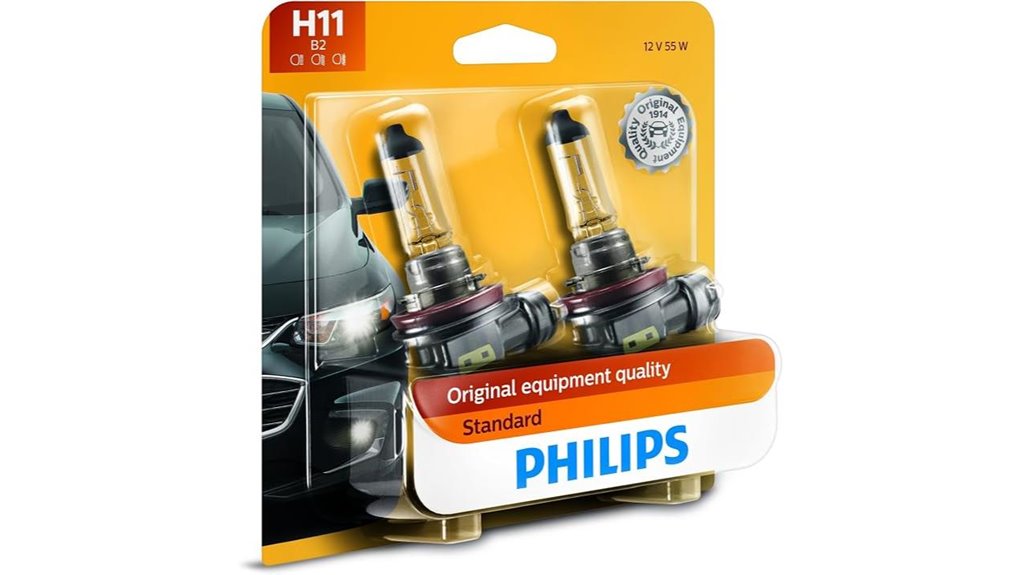
For drivers seeking OEM-quality replacement bulbs, these H11 halogens offer a reliable, two-pack solution. Philips Automotive Lighting H11 Standard Halogen Replacement Headlight Bulbs are designed for high beam, low beam, and fog light positions, depending on vehicle fitment. They meet Department of Transportation requirements, supporting OEM-quality confidence and reducing early failure risk through stricter manufacturing standards. The bulbs produce notably whiter light for improved visibility and comfort. Replacement in pairs is recommended to maintain symmetric beam output. During installation, the glass should not be touched; gloves or a paper towel help prevent damage. Compatibility should be confirmed with Amazon part finder.
Best For: Drivers looking for OEM-quality H11 halogen replacement bulbs for high beam, low beam, or fog light use, with reliable performance and improved visibility.
Pros:
- Meets Department of Transportation requirements for OEM-quality confidence
- Produces whiter light for better visibility and driving comfort
- Sold in a 2-pack, making pair replacement easy for symmetric beam output
Cons:
- Compatibility can vary by vehicle, so fitment must be checked carefully
- Halogen bulbs may have a shorter lifespan than some newer lighting options
- Installation requires care to avoid touching the glass and damaging the bulb
Factors to Consider When Choosing Headlight Bulbs 2026: Top Upgrades for Any Car
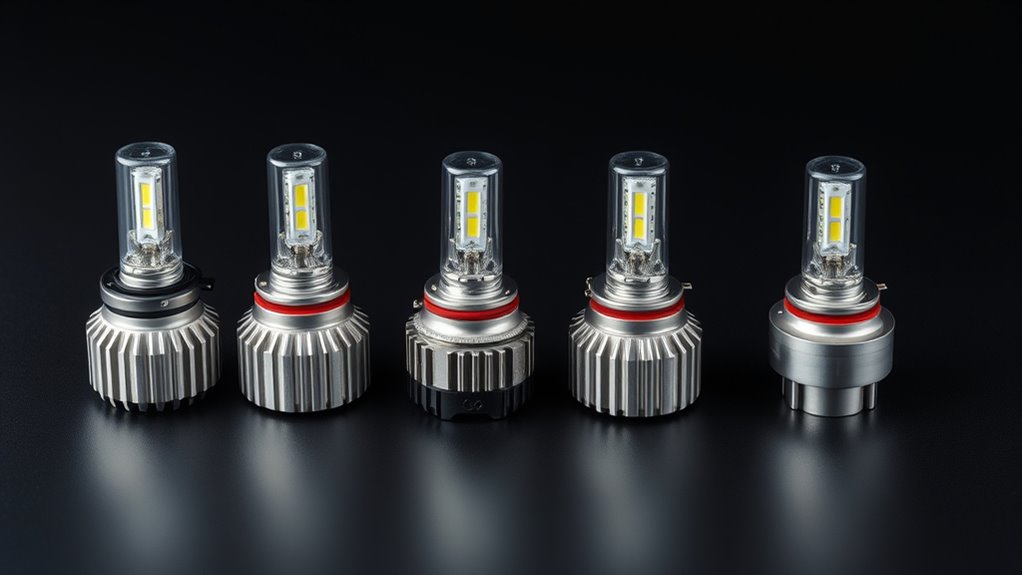
Choosing headlight bulbs in 2026 starts with checking bulb type compatibility and beam position fit to guarantee the upgrade matches the vehicle’s housing and aim. Light output level and color temperature also matter, since they affect visibility, glare, and the overall driving experience. Replacing bulbs in pairs is often preferred because it helps keep brightness and color consistent on both sides.
Bulb Type Compatibility
Bulb type compatibility is the first thing to verify, since headlight bulbs must match the vehicle’s exact specifications to fit and function correctly. Different vehicles may require specific sizes such as H11 or H7, and selecting the wrong base can prevent proper operation. Compatibility should also be checked for high and low beam positions, because some bulbs can serve either role in certain models. Electrical ratings matter as well; a bulb must match the vehicle’s voltage and wattage, such as 12V and 55W, to avoid strain on the system. Vehicle part finders help confirm fitment when multiple bulb positions exist. Any higher-performance upgrade should also be reviewed against local lighting regulations to guarantee legal use and compliance.
Beam Position Fit
After confirming bulb type compatibility, the next step is checking beam position fit, since headlights must match the vehicle’s specific high beam, low beam, or fog light requirements. Some vehicles use different bulb designs for each lighting function, so the correct choice depends on the exact position being serviced. Verifying fitment with a reliable tool, such as the Amazon Part Finder, helps match the bulb to the vehicle’s make and model. This step also supports safe, legal operation, because properly fitted bulbs are more likely to meet local lighting rules. In many cases, bulbs are replaced in pairs to preserve balanced performance across both sides of the vehicle. Confirming beam position fit prevents mismatched installation and keeps the lighting system correctly configured for road use.
Light Output Level
Lumens matter when evaluating headlight bulb performance, since higher light output generally means brighter road illumination and better visibility at night. Light output is usually measured in lumens, and the rating helps compare how much usable brightness a bulb can deliver. Standard halogen bulbs typically produce about 1,000 to 1,600 lumens, which suits routine driving and gives a familiar warm glow. Upgraded xenon or LED options often exceed 3,000 lumens, making dark roads, rain, and rural routes easier to read. However, more output is not always better if it creates excessive glare. A balanced choice should illuminate the road clearly while remaining considerate to oncoming traffic, supporting safer driving conditions without unnecessary strain on other drivers.
Color Temperature Choice
Color temperature, measured in Kelvin (K), plays a major role in how headlight bulbs look and perform on the road. Lower ratings near 3000K produce a warm yellow beam, while higher values up to 6000K create a cool white or slightly bluish appearance. For most drivers, the 4000K to 5000K range offers a balanced mix of visibility and comfort during nighttime travel. Cooler light can also sharpen contrast and improve depth perception, making road edges, signs, and obstacles easier to distinguish. Beyond function, color temperature affects the vehicle’s appearance, since whiter beams often resemble HID lighting. Local regulations should also be reviewed, as some areas limit headlight color or brightness. Choosing a compliant rating helps guarantee both performance and legality for everyday driving.
Pair Replacement Benefits
Replacing headlight bulbs in pairs helps keep the beam pattern symmetric and the brightness balanced across both sides of the vehicle. This approach supports safer night driving by reducing uneven illumination and improving overall road visibility. Because bulb output naturally declines with age, replacing only one side can leave the other noticeably dimmer, creating a mismatched appearance and inconsistent performance. Installing both bulbs at the same time also avoids the inconvenience of repeated maintenance and the risk of driving with one weak light. In addition, new paired bulbs share the electrical load more evenly, which can help them perform more consistently. Many manufacturers recommend pair replacement because wear on one bulb is often mirrored in its counterpart, making simultaneous replacement a practical choice.
Durability And Lifespan
Durability and lifespan matter just as much as brightness when choosing headlight bulbs, since well-built options are designed with stronger filaments and specialized gas mixtures that help them last longer under daily driving conditions. High-quality halogen bulbs are often engineered to resist heat, vibration, and changing road conditions, which lowers the chance of early burnout and keeps output steady over time. Selecting bulbs that meet Department of Transportation standards can also signal dependable construction and consistent performance. Because one bulb often wears at a similar rate to the other, replacing headlights in pairs helps preserve balanced illumination and avoids uneven aging. Proper installation and routine maintenance matter too; avoiding direct contact with the glass and handling bulbs carefully can extend service life and reduce premature failure.
Frequently Asked Questions
How Do I Know if My Car Uses H11 or H7 Bulbs?
A vehicle’s bulb type can be identified by checking the owner’s manual, the headlight housing label, or the existing bulb number printed on the base. H11 bulbs have a right-angle plastic connector and are single-beam, while H7 bulbs usually use a two-prong metal base and a retaining clip. If uncertainty remains, a parts catalog or dealership lookup using the VIN can confirm the correct fit quickly and accurately.
Are Halogen Bulbs Better Than LED Headlights in 2027?
Like a roadside lantern versus a white-blue beacon, neither option is universally better. In 2027, LED headlights usually outperform halogen bulbs in brightness, efficiency, and lifespan, especially for modern housings. Halogen can still be preferable for lower cost, easier replacement, and compatibility in older vehicles. The better choice depends on the car’s optics, legal rules, and driving needs, not the bulb type alone.
How Long Do Headlight Bulbs Usually Last?
Headlight bulbs usually last from about 500 to 1,000 hours for halogen types, while HID bulbs often reach 2,000 hours or more, and LEDs can last 15,000 to 30,000 hours. Lifespan depends on driving conditions, voltage stability, heat, and bulb quality. Frequent short trips, vibration, and moisture can shorten service life. When one bulb dims or fails, it is often wise to replace both sides together for consistent lighting.
Can I Replace Headlights Myself Without Tools?
Yes, sometimes; by chance, a driver may find the headlight assembly unfastened and the bulb reachable by hand, making a no-tool swap possible. Yet many vehicles hide clips, covers, or tight spaces that demand screwdrivers or sockets. A detached observer would note that consulting the owner’s manual first reduces frustration. If access is simple, the task can take minutes; if not, tools, patience, and care become necessary.
Do Brighter Bulbs Always Improve Nighttime Visibility?
Brighter bulbs do not always improve nighttime visibility. A higher output can create more glare, reduce contrast, and shorten bulb lifespan, especially if the beam pattern is poor or the headlight housing is not designed for it. Proper alignment, color temperature, and lens condition often matter more than raw brightness. In some cases, a well-focused, moderately bright bulb will let a driver see farther and more comfortably.
Conclusion
To sum up, the best headlight bulb depends on what matters most: stronger visibility, dependable OEM-style fit, a brighter white look, or simple everyday performance. The SYLVANIA H11 XtraVision, HELLA H7 Standard, Philips H7 CrystalVision Ultra, and Philips H11 Standard each offer a solid option for different driving needs. With the right choice, drivers can improve nighttime confidence without missing the mark on safety, style, or local road requirements.