
In 2027, the search for a car wax that lasts is still shaped by a few standout names. Meguiar’s Ultimate Liquid Wax, Hybrid Ceramic Wax Spray, Ethos Ceramic Wax Aerospace Coating, and Chemical Guys Blazin’ Banana Carnauba Spray Wax each offer a different balance of protection, shine, and ease. The real question is which one fits the needs of the driver best.
Meguiar’s Ultimate Liquid Wax, Durable Protection
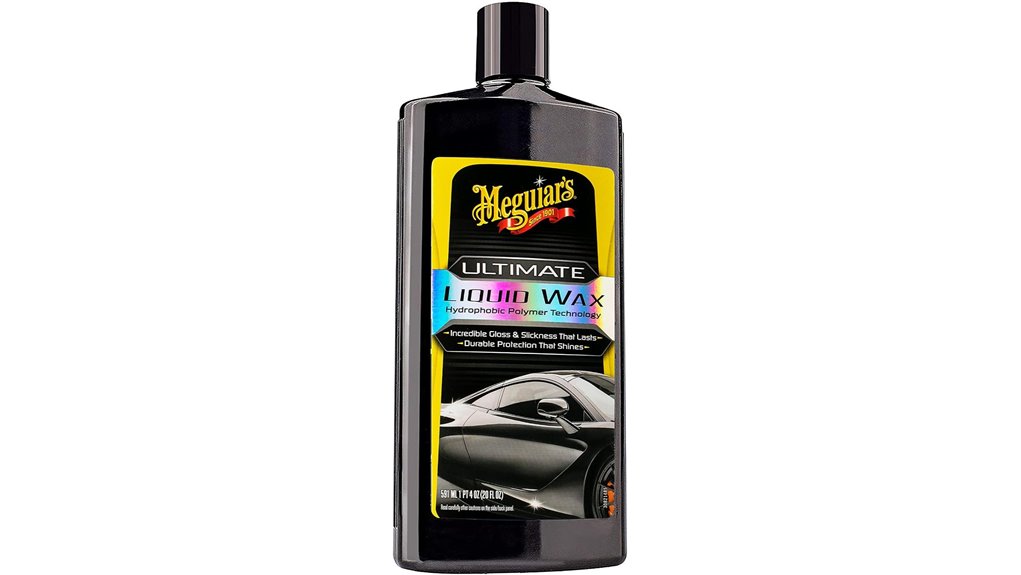
Meguiar’s Ultimate Liquid Wax is a strong choice for drivers who want durable protection with a high-gloss finish, especially those who value easy application without sacrificing performance. The 20-ounce formula uses advanced synthetic polymers to form a lasting barrier on glossy paint and clear coats. It spreads smoothly, wipes off easily, and remains workable in full sun. Applied by hand or with a dual action polisher, it boosts reflection, depth, and shine. Hydrophobic Polymer Technology improves water beading, helping surfaces shed moisture while maintaining a clean, polished appearance for extended periods.
Best For: Drivers looking for an easy-to-apply liquid wax that delivers durable protection, strong water beading, and a high-gloss finish on glossy paint and clear coats.
Pros:
- Spreads and wipes off easily, even in full sun
- Provides long-lasting synthetic protection with strong gloss and reflection
- Hydrophobic Polymer Technology helps improve water beading
Cons:
- Best suited for glossy paints and clear coats, not all surfaces
- Liquid wax may require more effort than a spray product for some users
- Protection and shine may still need periodic reapplication over time
Meguiar’s Hybrid Ceramic Wax Spray, 32 Oz
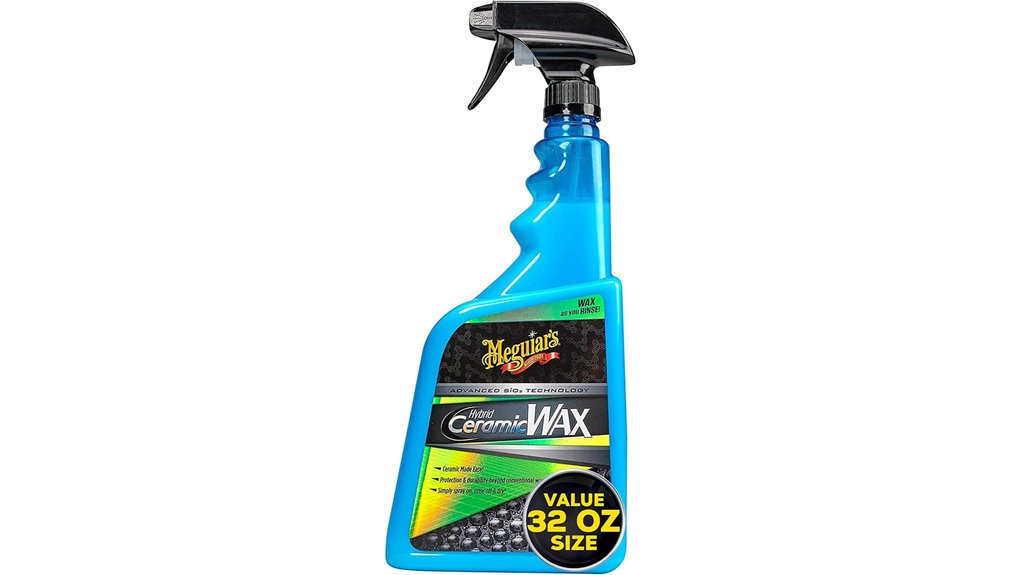
For drivers seeking effortless, durable protection, this spray wax stands out immediately. Meguiar’s Hybrid Ceramic Wax Spray, 32 Oz uses advanced SiO2 hybrid technology to deliver ceramic-like defense and strong water-beading performance. It is applied after washing: rinse the vehicle, shake the bottle, confirm the paint is cool, spray on the wax, rinse again, and dry. No buffing, rubbing, or curing is required. That simplicity makes it practical for routine maintenance while offering durability beyond conventional wax. The result is cleaner, more protected paint with minimal effort and mess.
Best For: Drivers who want an easy-to-use spray wax with ceramic-style protection, strong water-beading, and minimal effort after washing.
Pros:
- Simple spray-and-rinse application with no buffing or curing needed
- SiO2 hybrid technology provides durable, ceramic-like protection
- Helps deliver excellent water-beading and a cleaner finish with little mess
Cons:
- Must be applied after washing and while the paint is cool
- Less hands-on control than traditional paste or liquid waxes
- Requires an extra rinse step during application
Ethos Ceramic Wax Aerospace Coating Protection
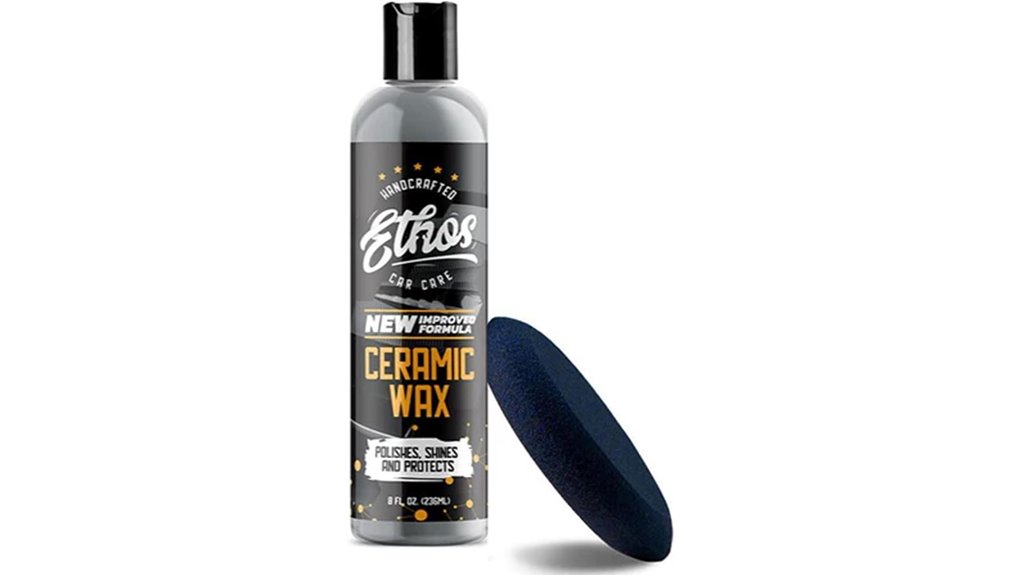
Ethos Ceramic Wax suits detailers seeking aerospace-grade protection with minimal effort. It is designed for paint, chrome, glass, boats, RVs, and motorcycles, giving it broad versatility. The wipe-on application remains straightforward for beginners and seasoned users alike, making exterior care faster. One application forms a durable barrier that outlasts conventional waxes and sealants while preserving a deep, mirror-like gloss. The coating also defends against dust, dirt, bird droppings, water spots, UV rays, road grime, and oxidation. Its slick hydrophobic finish promotes tight beading and easier cleaning.
Best For: Detailers and vehicle owners who want aerospace-grade, long-lasting paint protection with an easy wipe-on application for cars, trucks, boats, RVs, motorcycles, and other exterior surfaces.
Pros:
- Easy to apply, making it beginner-friendly and efficient for experienced detailers too.
- Delivers a durable, glossy, mirror-like finish with strong hydrophobic water beading.
- Helps protect against dust, dirt, bird droppings, UV rays, road grime, water spots, and oxidation.
Cons:
- May be more than some users need if they only want a basic, temporary wax.
- Results can depend on proper surface preparation and application technique.
- Not a substitute for regular washing and upkeep, especially in harsh conditions.
Chemical Guys, Blazin’ Banana Carnauba Spray Wax, High Gloss Shine, 16 oz
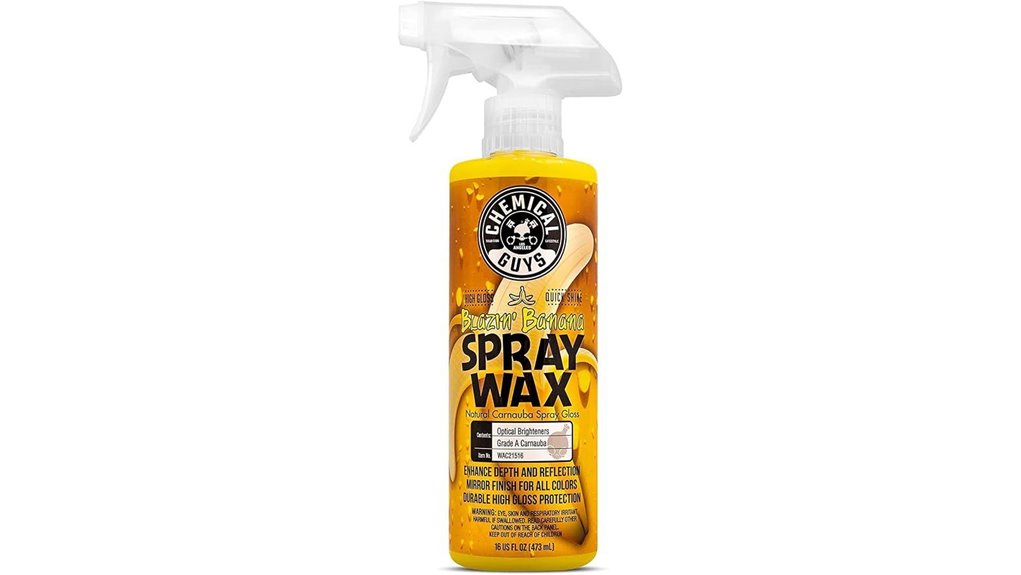
Chemical Guys Blazin’ Banana Carnauba Spray Wax suits drivers wanting fast, glossy protection with minimal effort. This 16 oz liquid uses a simple spray-and-wipe formula, letting users apply it to clean, dry surfaces without curing time. Premium carnauba helps deepen paint color, add gloss, and create a hydrophobic barrier that sheds water and light dirt. It works on clear coat, single-stage paint, metallic finishes, and gel coat, making it versatile for cars, trucks, motorcycles, RVs, and boats. The tropical banana scent adds a pleasant touch during detailing sessions.
Best For: Drivers who want a fast, easy spray wax that adds high gloss, carnauba shine, and light protection with minimal effort.
Pros:
- Quick spray-and-wipe application with no curing time.
- Delivers a glossy finish with carnauba-infused depth and shine.
- Safe for multiple surfaces, including paint, metallic finishes, and gel coat.
Cons:
- Not as durable as a traditional paste or sealant wax.
- Works best on clean, dry surfaces, so prep is still needed.
- The banana scent may not appeal to everyone.
Factors to Consider When Choosing Car Waxes 2026: Long-Lasting Shine and Protection
Selecting a car wax in 2026 depends on how well it balances durability, shine enhancement, and easy application. Strong water beading and dependable surface compatibility also matter, since they help protect the finish across different paint types and weather conditions. A careful comparison of these factors can reveal which wax offers the best long-lasting shine and protection.
Wax Durability
Wax durability depends largely on formulation, with synthetic waxes generally lasting longer than traditional carnauba options. Their engineered structures resist breakdown from UV rays, road grime, and water, helping maintain protection for extended periods. Hybrid formulas that incorporate SiO2 can further improve longevity by adding ceramic-like resilience, often exceeding the lifespan of conventional waxes. High-quality ceramic waxes also form a stronger barrier, reducing how often reapplication is needed. However, even durable products lose effectiveness when exposed repeatedly to harsh weather and contaminants. Proper surface preparation, careful application, and routine maintenance all help preserve the coating. For vehicle owners prioritizing long-term protection, durability should remain a primary selection criterion, since a longer-lasting wax supports more consistent defense for the paint over time.
Shine Enhancement
A quality car wax can greatly improve gloss and depth by using advanced formulations that boost reflection, creating a more vibrant finish. This enhancement often comes from ingredients designed to amplify light return, giving paint a deeper, more polished look. Waxes with hydrophobic technology add another advantage by repelling water and helping keep the surface cleaner, which supports sustained shine. Pure synthetic blends and natural carnauba-based formulas can also intensify richness, often producing a warmer, more vivid appearance than basic products. The best options preserve this effect with a durable protective layer, so gloss remains visible for longer periods. In 2027, shine enhancement depends on both optical clarity and contamination resistance, since a cleaner surface consistently reflects light more effectively.
Application Ease
Ease of application remains a major consideration when choosing car waxes, since user-friendly formulas let both beginners and experienced detailers achieve strong results with less effort. Modern products often use spray-on or wipe-on formats that reduce buffing and speed up the task. This can make routine maintenance less tedious and more accessible for users with limited time. Some formulas are engineered for full-sun use, which adds flexibility by removing the need to wait for ideal conditions. Hybrid waxes may further simplify the process by eliminating curing time altogether. Certain options can even be applied during rinsing, helping combine cleaning and protection in one efficient step. In practical terms, easier application improves consistency, saves effort, and encourages more regular waxing overall.
Water Beading
Water beading serves as a clear sign of a wax’s hydrophobic performance, showing how well it repels moisture and contaminants from the paint. Strong beading keeps the surface cleaner by allowing water to roll off instead of lingering, which can reduce washing frequency and preserve gloss. The beads themselves also reveal performance: smaller, rounder beads usually reflect greater surface tension and stronger protection. Advanced hybrid wax formulas often outperform traditional options, delivering tighter, more uniform beading. This behavior supports more than appearance alone, since persistent water repellency helps shield paint from UV exposure, road grime, and other environmental stressors. In evaluating waxes, consistent beading remains one of the most practical indicators of long-lasting shine and dependable protection.
Surface Compatibility
Beyond water beading, surface compatibility determines whether a wax can deliver its full shine and protection on a given vehicle. Different formulas are designed for clear coats, single-stage paints, metallic finishes, and gel coats, so matching the product to the finish is essential. An incompatible wax may still apply, yet its results often fall short, reducing gloss and leaving the surface less protected. Modern blends, including those using SiO2 technology, can adhere well across multiple surface types and support consistent performance. Manufacturer specifications should always be checked before application to confirm safety on the intended finish. Selecting a wax that suits both the vehicle’s surface and its environment helps preserve appearance, improve contaminant resistance, and maintain reliable beading.
Protection Technology
Protection technology is the core of a wax’s long-term value, because it determines how well the finish resists water, UV exposure, road grime, bird droppings, and oxidation. Advanced synthetic formulas with hydrophobic polymer technology form durable barriers that increase water beading and surface tension, helping contaminants slide off more easily. Ceramic waxes with SiO2 hybrid technology raise durability further, often extending protection and reducing how often reapplication is needed. High-quality carnauba waxes supply a natural shield that repels dirt and moisture while supporting paint depth. Protective coatings also help defend against environmental exposure, maintaining performance in harsh conditions. For added convenience, spray-and-wipe products can deliver this protection through a simpler application process without sacrificing results or reliability.
Gloss Retention
Gloss retention is a key measure of how long a wax preserves a vehicle’s polished, high-shine appearance. It indicates how effectively the product maintains reflective depth after exposure to daily use and environmental stress. Waxes with advanced synthetic formulas or natural carnauba often perform better because they form a durable, glossy barrier on painted surfaces. Hydrophobic properties also matter, since water and dirt are less likely to cling and cloud the finish. UV exposure, road grime, and weather can still reduce shine, so a wax should be selected for resistance to these conditions. Regular washing and periodic reapplication further support lasting gloss, helping the finish remain vivid and smooth over time without losing clarity or visual appeal.
Drying Conditions
Drying conditions play a major role in how well a car wax bonds and how long its shine lasts. Temperature and humidity shape both application and curing, affecting overall protection. Wax applied in full sun may dry faster, yet it can streak if it sets before buffing. For that reason, shaded areas and a cool panel are preferred, as they support smoother spreading and stronger adhesion. High humidity can slow drying, which may improve bonding, though excess moisture can also interfere with performance. Wind can speed evaporation, but it may carry dust and debris onto the finish. Careful timing and a controlled environment help the wax cure evenly, preserve clarity, and deliver a more durable gloss over time.
Frequently Asked Questions
How Often Should I Reapply Car Wax for Best Results?
Car wax should typically be reapplied every 6 to 12 weeks for the best results, though this depends on wax type, weather, washing habits, and vehicle storage. Frequent exposure to sun, rain, road salt, or harsh detergents can shorten protection. A simple water-beading test helps judge when coverage is fading. If water no longer beads well, the finish likely needs another application to restore shine and protection.
Can Car Wax Be Used on Matte Paint Finishes?
Car wax should generally not be used on matte paint finishes. It can add unwanted gloss, create uneven spots, and alter the flat appearance that matte surfaces are designed to maintain. Instead, a matte-specific sealant or protectant is usually recommended to preserve the finish without shine. If waxing has already occurred, the surface may need careful cleaning to reduce residue and restore the intended look of the paint.
Does Waxing Protect Against Bird Droppings and Tree Sap?
Waxing offers only limited protection against bird droppings and tree sap. It can create a slick barrier that helps contaminants sit on the surface and makes cleanup easier, but it does not prevent damage if messes remain too long. Bird droppings and sap are acidic or sticky enough to etch paint, so prompt removal is still necessary. A waxed finish buys time, not immunity, against these common hazards.
What’s the Best Way to Remove Old Wax Buildup?
Gentle, gradual glassing of grime is the best way to remove old wax buildup. A dedicated wax or polish remover should be applied with a soft microfiber cloth, then worked in small sections. If residue lingers, a clay bar or light detailing spray can help lift it cleanly. The surface should be rinsed and dried afterward, leaving the finish free of film and ready for fresh protection.
Can I Apply Wax in Direct Sunlight?
No, applying wax in direct sunlight is generally not recommended. Heat can cause the wax to dry too quickly, making it harder to spread evenly and remove cleanly. It may leave streaks, haze, or stubborn residue. A cooler, shaded surface produces better results and less wasted product. If sunlight is unavoidable, the panel should be cool to the touch before application, and small sections should be treated at a time.
Conclusion
In the grand theater of automotive devotion, these four waxes stand as the chosen guardians of vanity and velocity. Meguiar’s brings the solemn promise of durability; Ethos, the bravado of aerospace; Chemical Guys, the cheerful banana-scented flourish; and Hybrid Ceramic Wax, the modern convenience society demands. Together, they prove that in 2027, shine is not merely maintenance but a minor religion, and protection, naturally, a matter of tasteful obsession.