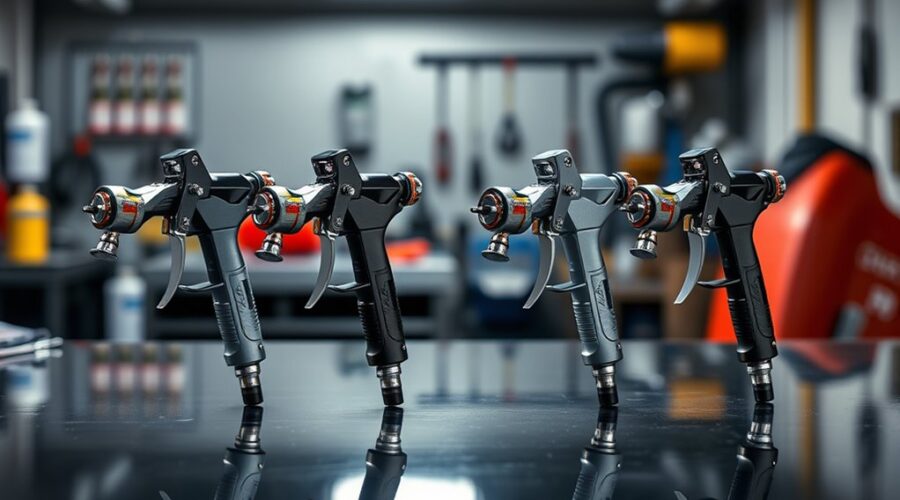
In 2027, choosing an automotive paint gun is less about brand recognition and more about matching the tool to the job. The 3M Performance Spray Gun Starter Kit, Campbell Hausfeld HVLP Gravity Feed Gun, Fuji Spray 2203G Semi-PRO 2, and NEIKO HVLP Mini Gravity Feed Gun each serve a different kind of user. Some prioritize speed, others control, and a few specialize in tight touch-up work. The key differences become clearer next.
3M Performance Spray Gun Starter Kit, 26778
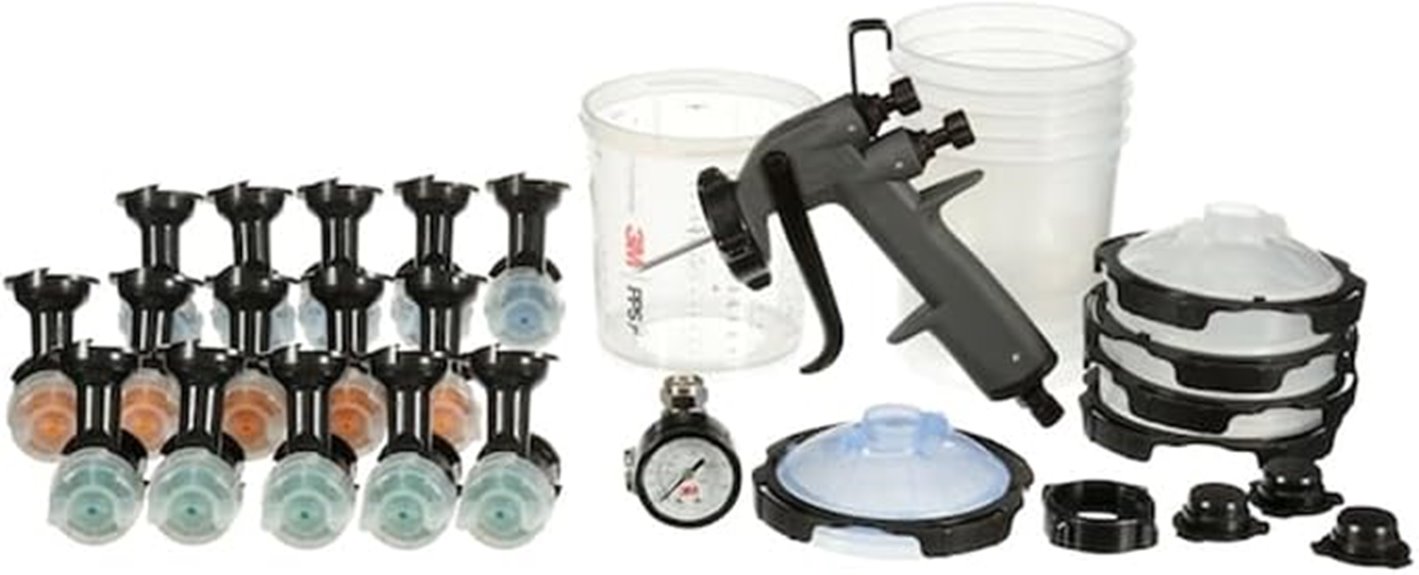
The 3M Performance Spray Gun Starter Kit, 26778, is a strong fit for industrial and occupational users who want efficient, consistent automotive finishes with less wasted material. It includes one spray gun, 15 Gravity HVLP atomizing heads, and a 3M PPS Series 2.0 spray cup with five lids and liners. The gun delivers excellent transfer efficiency, a large adjustable fan pattern, and a smooth trigger pull. Its wide coating compatibility covers solid colors, pearls, metallics, clearcoats, sealers, and primers. A stainless-steel reinforced composite body keeps weight down while improving durability and comfort.
Best For: Industrial and occupational users who need a lightweight, efficient spray gun kit for consistent automotive finishes with versatile coating compatibility.
Pros:
- Excellent transfer efficiency helps reduce wasted paint and improve coverage.
- Lightweight, durable composite construction improves comfort during extended use.
- Compatible with a wide range of coatings, including metallics, clearcoats, sealers, and primers.
Cons:
- Designed for industrial and occupational use only, not general consumer use.
- Starter kit may still require additional setup or accessories depending on the application.
- HVLP spray performance may have a learning curve for new users.
Campbell Hausfeld HVLP Gravity Feed Pneumatic Spray Gun, 600 mL, DH580000AV
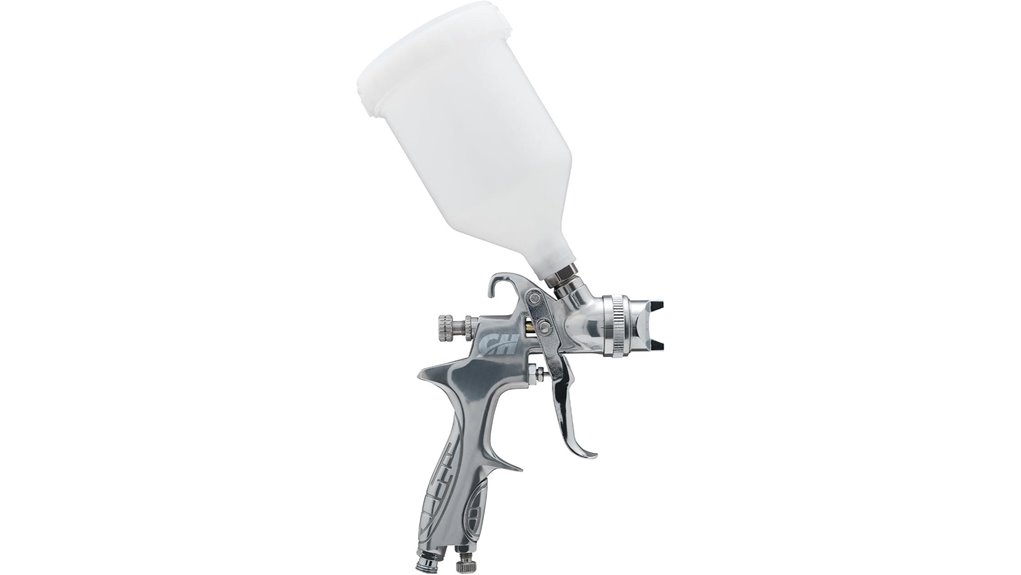
Campbell Hausfeld’s DH580000AV suits DIY painters seeking control without excessive overspray. Its 600 mL gravity-feed cup helps reduce waste and makes cleanup simpler, while the polished aluminum body supports easy maintenance. The adjustable tip creates a 1.5- to 9-inch fan pattern, and separate fluid, air, and spray controls aid precision. Requiring 4.0 SCFM at 40 PSI, it works with primers, enamels, lacquers, basecoat/clear coat systems, and polyurethane top coats. The gun fits automotive, furniture, and equipment refinishing, especially with light- to medium-viscosity materials for efficient project turnaround.
Best For: DIY painters and hobbyists who want an HVLP spray gun with good control, easy cleanup, and reliable results on automotive, furniture, and equipment projects.
Pros:
- Adjustable fluid, air, and spray pattern controls provide precise application.
- 600 mL gravity-feed cup helps reduce waste and simplifies cleanup.
- Compatible with primers, enamels, lacquers, basecoat/clear coat systems, and polyurethane top coats.
Cons:
- Requires an air compressor capable of 4.0 SCFM at 40 PSI.
- Best suited to light- and medium-viscosity materials, so thicker coatings may be harder to spray.
- 1-year limited warranty is fairly standard and not especially long.
Fuji Spray 2203G Semi-PRO 2 – Gravity HVLP Spray System
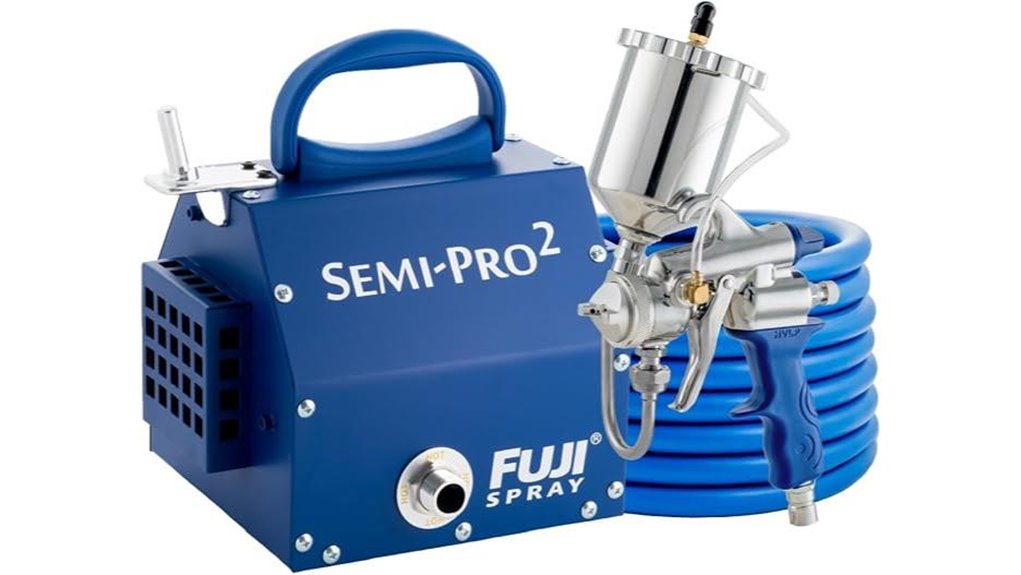
Fuji Spray’s 2203G Semi-PRO 2 suits users who want precise HVLP control. This professional non-bleed spray gun includes an adjustable pattern fan control and a 1.3mm air cap set already installed, supporting accurate atomization across varied automotive coatings. The 400cc gravity cup helps maintain steady material flow, while the metal turbine case adds durability. A 25ft hose, air control valve, wrench, and cleaning brush round out the system. The included holder improves storage, and the valve helps reduce overspray and bounce back. It is ideal for spray applications requiring consistent control.
Best For: Users who want a professional HVLP spray system with precise control for consistent automotive and general spray applications.
Pros:
- Adjustable pattern fan control for accurate spray coverage
- 1.3mm air cap and 400cc gravity cup support steady, controlled material flow
- Includes useful accessories like a 25ft hose, air control valve, wrench, and cleaning brush
Cons:
- May be more equipment than casual DIY users need
- Gravity cup design may require more frequent refills on larger jobs
- HVLP systems can have a learning curve for first-time users
NEIKO HVLP Mini Gravity Feed Spray Gun (1.0mm)
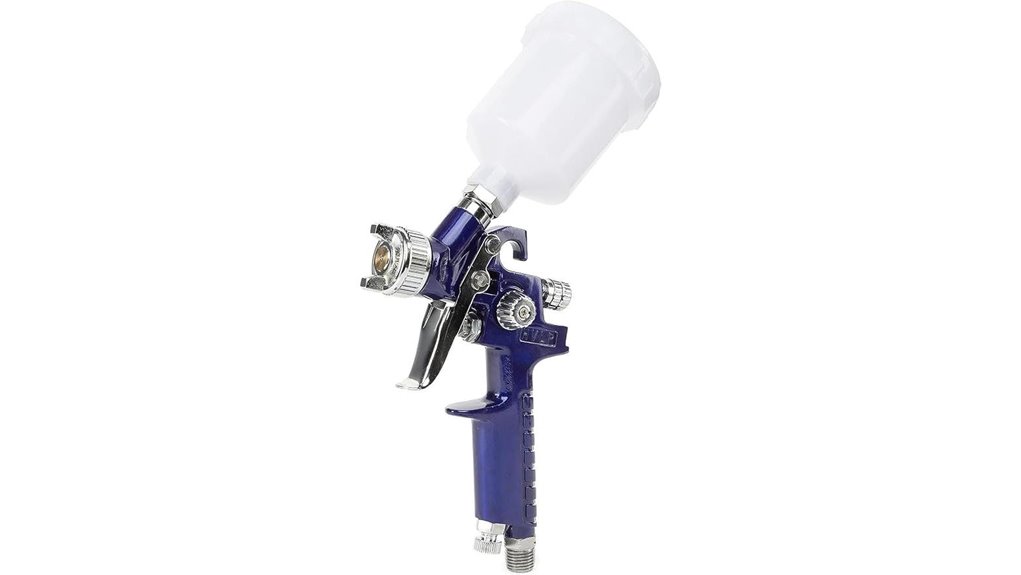
NEIKO’s 1.0mm HVLP mini spray gun suits small automotive touch-ups and detail work. The NEIKO 31207A uses a 125 cc gravity feed cup and a stainless steel nozzle and needle, supporting a range of paints and coatings. Its HVLP design helps reduce overspray, which can lower material waste during focused repair jobs. Three adjustable controls handle spray pattern, material flow, and air volume, allowing more precise setup. Running at 50 PSI with a 1/4 NPS inlet and 8.8 CFM demand, it delivers compact, even coverage and strong atomization for small-scale refinishing.
Best For: Small automotive touch-ups, detail refinishing, and other compact paint projects where precise control and low overspray matter most.
Pros:
- HVLP design helps reduce overspray and material waste.
- Three adjustable controls make it easy to fine-tune pattern, flow, and air volume.
- Compact 125 cc gravity feed cup and 1.0 mm stainless steel nozzle work well for detail jobs and a variety of coatings.
Cons:
- The small 125 cc cup may require frequent refills on larger jobs.
- 50 PSI and 8.8 CFM requirements may be more than some small compressors can comfortably handle.
- Best suited for small-scale work, so it’s not ideal for large surface painting.
Factors to Consider When Choosing Automotive Paint Guns 2026: Pro-Level Spray Picks
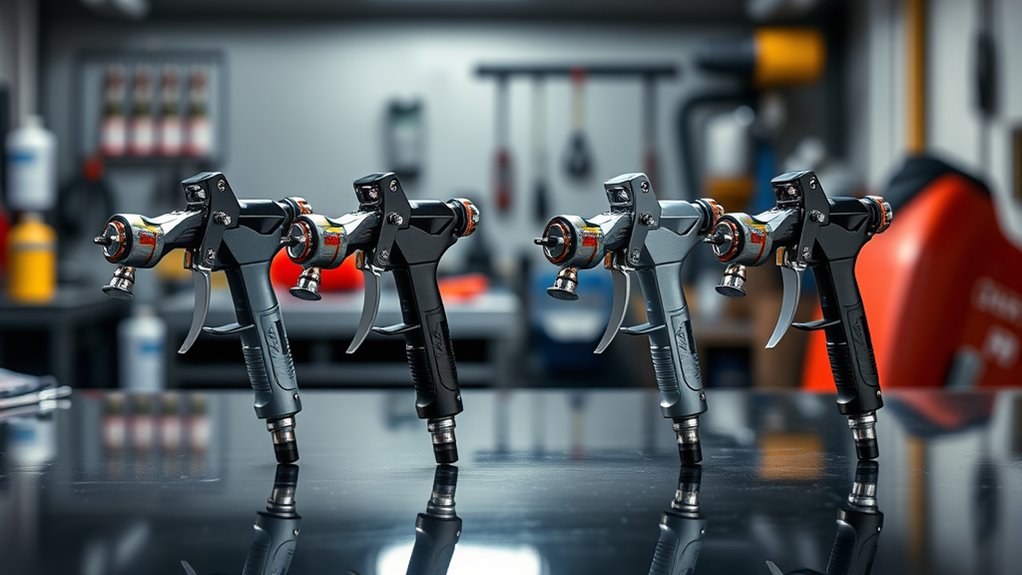
Choosing the right automotive paint gun in 2026 starts with the spray gun type, since gravity-feed, siphon-feed, and HVLP designs each affect application style and finish quality. Transfer efficiency, fan pattern control, and air pressure needs also shape how evenly coating is laid down and how much material is wasted. Coating compatibility remains essential, as the gun must match the paint or clear coat being used for reliable pro-level results.
Spray Gun Type
Spray gun type plays a major role in how efficiently and cleanly automotive paint is applied. HVLP guns are often favored for automotive work because they support careful material use and steady coverage. Gravity feed spray guns offer a consistent paint flow, giving users better control for detailed panels, trim, and refinishing tasks. Conventional spray guns can still be useful when a higher output is needed, but they usually create more overspray and demand extra cleanup. Air-assisted airless spray guns suit larger automotive projects, combining strong atomization with a smoother finish. Mini spray guns are best for touch-ups, spot repairs, and narrow areas where full-size tools may be awkward. Choosing the right type helps match the gun to the job.
Transfer Efficiency
Beyond the spray gun type, transfer efficiency is another key factor that shapes real-world painting results. It measures how much coating reaches the surface instead of becoming overspray, so higher percentages mean less waste and better coverage. In practice, a high-efficiency gun can lower material consumption while still delivering an even finish, which helps when budgets and project consistency matter. Many modern automotive spray guns now achieve transfer efficiencies above 65%, a level that supports cleaner application and better paint utilization. Design also influences results: atomizing heads and other engineered features help the gun place more material where it belongs. Over time, strong transfer efficiency can reduce paint purchases and cut cleanup time, improving overall operating costs for professional refinishing shops.
Fan Pattern Control
Fan pattern control is a critical setting in automotive paint guns because it lets the user adjust spray width from narrow to wide based on the job at hand. This adjustment supports precise coverage on small repairs, broad panels, and other varied automotive tasks. A well-tuned fan pattern promotes even paint distribution, helping reduce runs, striping, and uneven surfaces during application. Many high-quality spray guns include adjustable tips that create fan patterns from about 1.5 inches to more than 9 inches, adding useful versatility. Matching fan size to the project also improves paint transfer efficiency, so less material is wasted and coverage remains consistent. Understanding how fan pattern size interacts with spray distance can further improve technique, reduce overspray, and enhance final finish quality.
Air Pressure Needs
Air pressure is one of the most important setup factors in automotive paint guns because it directly affects atomization, finish quality, and material usage. Most guns perform within a 40 to 60 PSI range, though the exact need depends on gun design and paint viscosity. HVLP models work at much lower tip pressure, often around 10 PSI, to reduce overspray and improve transfer efficiency. Higher pressure can create finer atomization, but it also increases waste if pushed too far. Matching the compressor’s SCFM output to the gun’s demand is essential for steady delivery and consistent coverage. Adjustable controls help users fine-tune airflow and pressure for specific project needs, allowing better control over spray behavior without sacrificing efficiency or surface quality.
Coating Compatibility
Coating compatibility determines how well a paint gun handles different automotive materials, from primers and enamels to lacquers and clear coats. A versatile gun should also spray solid colors and metallic finishes cleanly, since both demand different atomization behavior and finish control. HVLP systems are often preferred because they reduce overspray and material waste while still accommodating many coating types. Nozzle size and air cap design matter as well, because they influence how effectively thicker or thinner materials break up into a uniform pattern. Matching these parts to coating viscosity helps preserve surface quality and limit defects. Drying time and other material-specific requirements should also guide selection, ensuring the gun supports the intended application rather than forcing the paint to compensate for poor setup.
Weight And Comfort
Weight and comfort often decide how long a painter can work with control intact, especially during full-panel or all-day refinishing jobs. Lighter spray guns reduce fatigue, and stainless-steel reinforced composite models can weigh up to 50% less than traditional metal units. Polished aluminum also offers a practical balance of low weight and easy maintenance. Beyond mass, ergonomic trigger pull and an optimized body shape improve the spraying experience, letting the user maintain steadier motion with less hand strain. A well-balanced gun further protects the wrist and arm, which supports finer control over each pass. Adjustable spray pattern and material flow settings can also reduce physical effort by helping the operator match output more precisely to the task.
Cup Capacity
Cup capacity also shapes how smoothly an automotive paint gun handles extended work, since a larger cup reduces refill stops and keeps the spray pattern more consistent during long passes. In practice, cup sizes vary widely, from about 125 cc on mini guns to 600 mL on standard models. Larger capacities suit broad projects such as full panels or car bodies, where uninterrupted spraying improves efficiency. Smaller cups fit detailed work, spot repairs, and touch-ups, because they are lighter and easier to manage around tight areas. Cup design matters too. Gravity-feed cups often deliver steadier paint flow and better control across different sizes, while siphon-feed setups may favor specific applications. Selecting the right capacity means matching the gun to the task, not overloading it.
Frequently Asked Questions
How Do I Clean a Paint Gun After Use?
A paint gun is cleaned by emptying leftover material, then flushing the cup and passages with the proper solvent or water-based cleaner. The nozzle, needle, air cap, and fluid tip are removed and scrubbed gently with a brush. Remaining residue is wiped away, parts are dried, and the gun is reassembled. Finally, a small amount of cleaner is sprayed through it to confirm clear flow before storage.
What Air Compressor Size Do Paint Guns Need?
Around 30 to 60 CFM is often needed for many paint guns, making compressor size a key factor. Paint guns need a compressor that can deliver enough CFM at the required PSI, not just a large tank. Most HVLP guns perform well with 20 to 30 CFM at 25 to 40 PSI. A 60-gallon compressor is often a practical minimum for steady spraying and fewer pressure drops.
Can I Spray Clear Coat With a Paint Gun?
Yes, a paint gun can spray clear coat if it is properly matched to the coating’s viscosity and the spray tip or nozzle is appropriate. A clean, well-adjusted gun helps produce even coverage and a smooth finish. It should be used with correct air pressure and technique to avoid runs or orange peel. HVLP and LVLP guns are commonly suitable for clear coat application on automotive surfaces.
How Often Should Spray Gun Nozzles Be Replaced?
Spray gun nozzles should be replaced when wear causes uneven atomization, fan distortion, dripping, or inconsistent flow, often after heavy use rather than on a fixed schedule. In professional settings, inspection after each job is wise, with replacement occurring every few months to a few years depending on coating type, cleaning habits, and usage intensity. Regular maintenance can extend life, but performance changes signal that replacement is due.
Are Paint Guns Compatible With Water-Based Paints?
Yes, many paint guns are compatible with water-based paints, provided they use corrosion-resistant internal parts and seals suited to waterborne coatings. Compatibility depends on the gun’s materials, nozzle size, and atomization design. Some models perform better than others, especially when the paint is properly thinned and filtered. The user manual should always be checked, since not every spray gun is intended for water-based products.
Conclusion
Ultimately, these four paint guns cover the full spectrum of automotive finishing needs, from the 3M Performance Spray Gun Starter Kit’s industrial efficiency to the NEIKO HVLP Mini’s precision touch-up work. The Campbell Hausfeld model suits DIY users who want control, while the Fuji Spray 2203G remains a standout for professional detail. In 2027, choosing the right tool means matching performance to task, not chasing hype. That old-school rule still drives modern results.