
The best windshield washer fluid depends on your winters: a winter-rated ready-to-use jug like Prestone AS250 suits cold regions, while a concentrate such as SONAX Clear View or Sanco Aqua Charge gives the most fluid per dollar.
Disclosure: As an Amazon Associate we earn from qualifying purchases. If you buy through links on this page we may earn a commission at no extra cost to you.
The five picks below cover both routes, plus a water-beading additive. Details come from manufacturer and retailer listings, not hands-on testing, so check each current listing and your vehicle manual before buying.
Quick answer: Cold winters: Prestone AS250 (listed to -34°F) or Rain-X RX68106 de-icer. Best value per litre: SONAX Clear View (1:100) or Sanco Aqua Charge. Better rain visibility: add Rain-X Washer Fluid Additive to whatever fluid you already use.
Windshield washer fluid comparison
| # | Product | Best for | Link |
|---|---|---|---|
| 1 |
 |
Compact 1:100 concentrate for year-round use | Check price on Amazon |
| 2 |
 Sanco Industries Aqua Charge Windshield Washer Fluid Concentrate |
Ultra-concentrate for fleets and high-volume users | Check price on Amazon |
| 3 |
 Prestone AS250 De-Icer / Winter Windshield Washer Fluid, 1 Gallon |
Ready-to-use winter fluid rated to -34°F | Check price on Amazon |
| 4 |
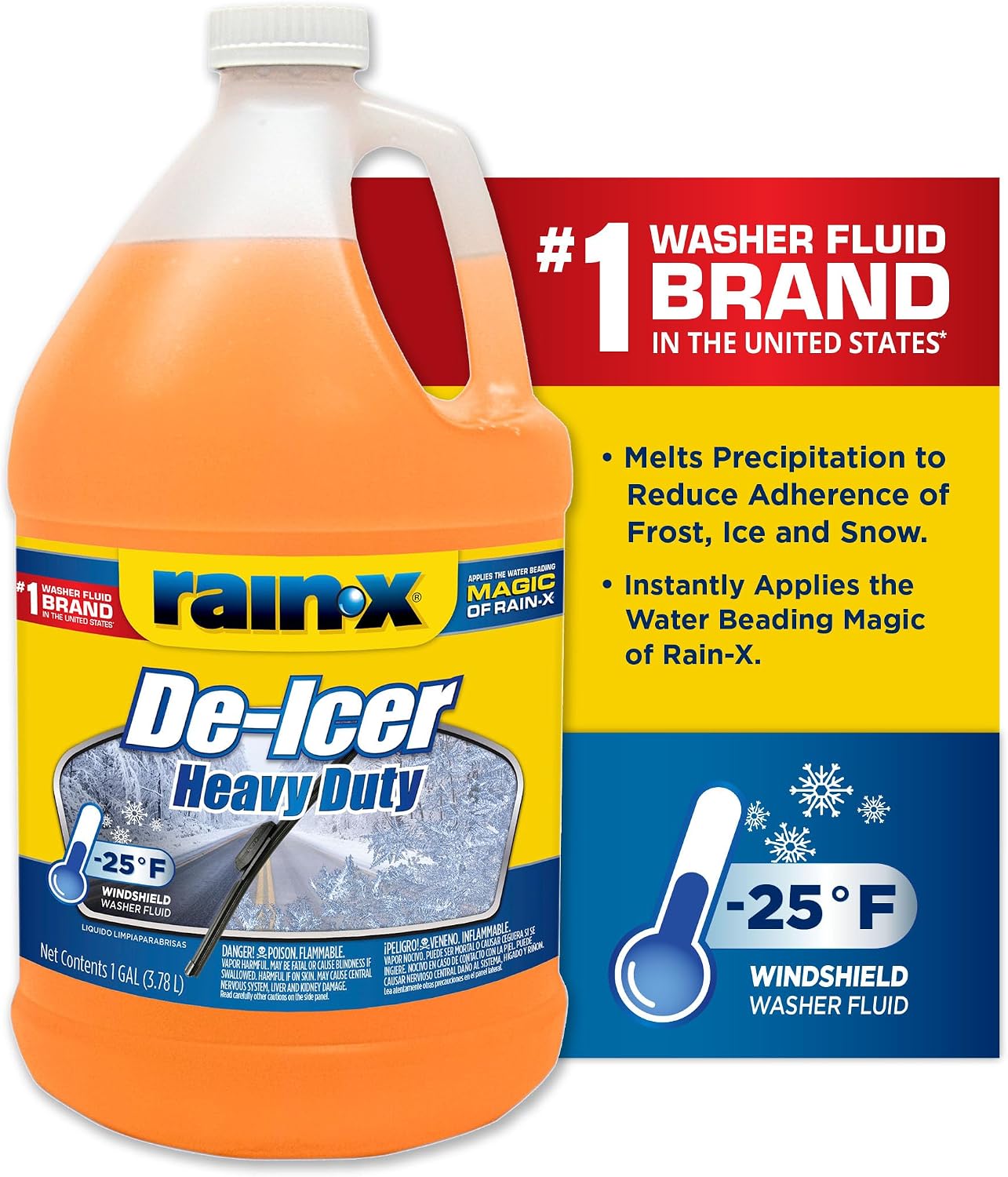 |
Ready-to-use de-icer with bug and road-spray cleaning | Check price on Amazon |
| 5 |
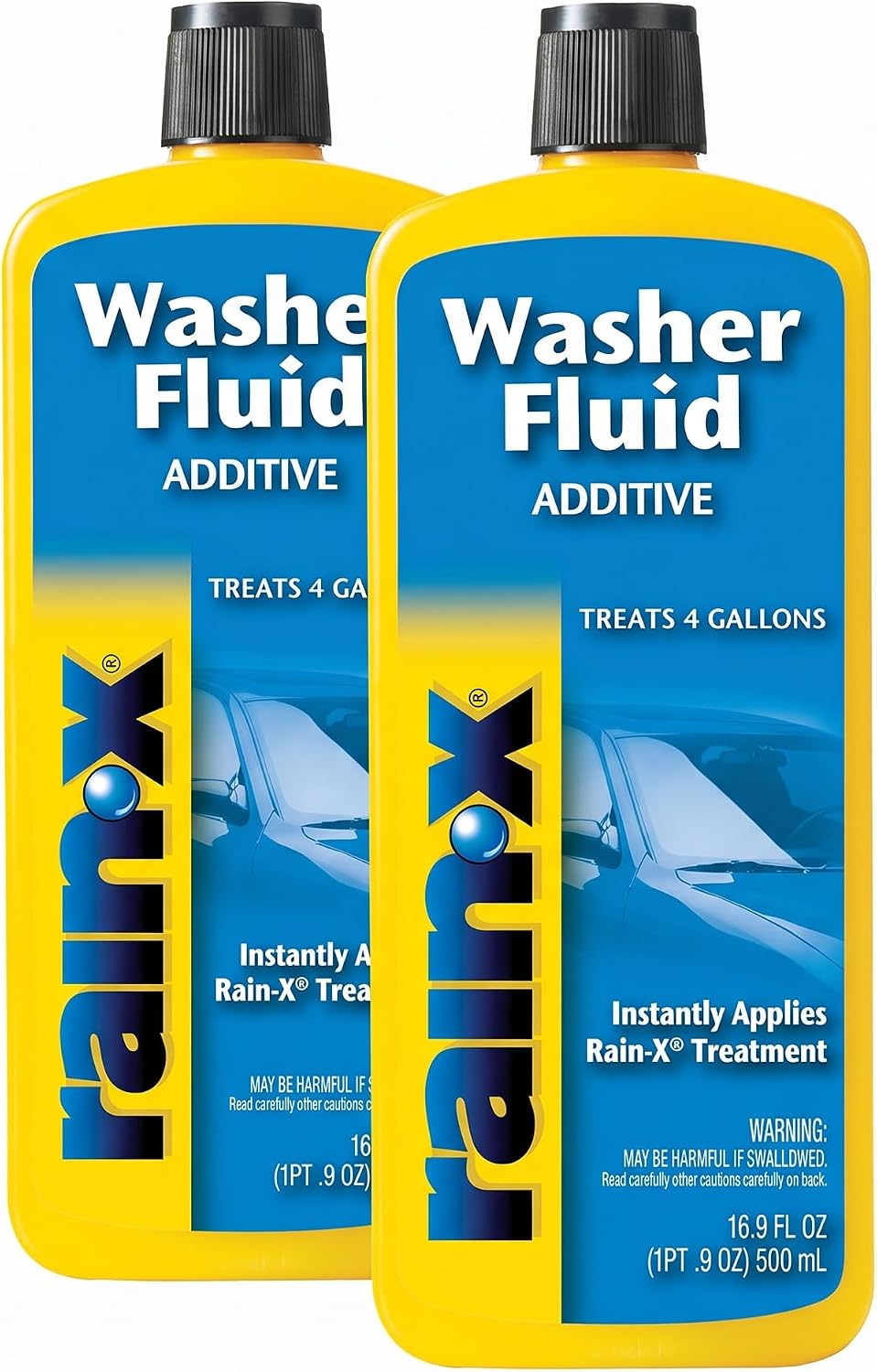 |
Adds water beading to your existing fluid | Check price on Amazon |
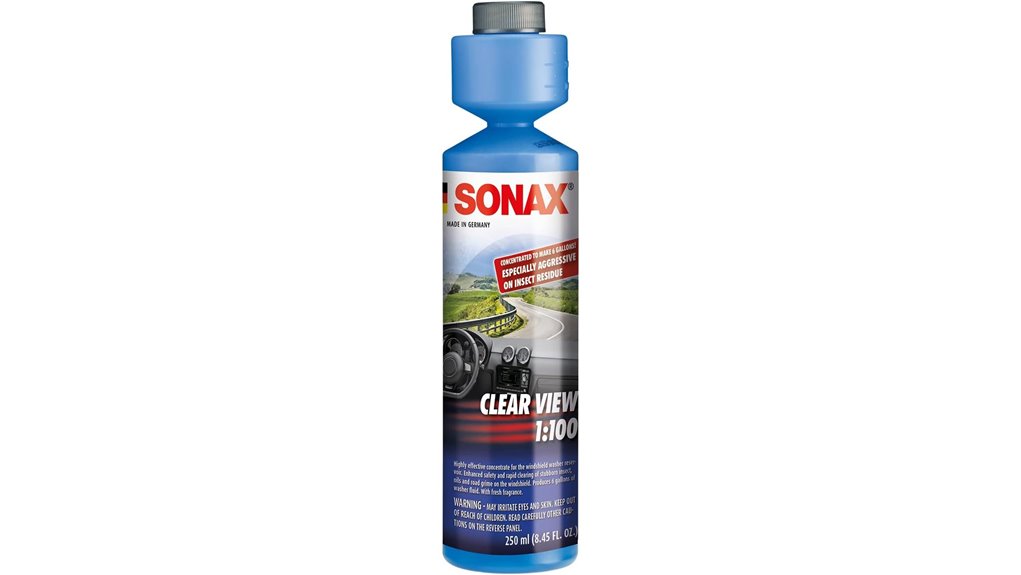
SONAX Clear View Windshield Cleaner Concentrate, 250ml
SONAX Clear View is a 1:100 concentrate, so the 250 ml bottle makes roughly 25 litres of washer fluid when diluted as directed. SONAX says it is compatible with plastics and will not cause stress cracks or dull spots on headlamp diffusers, and the Fresh variant carries a fresh scent.
- Format: 250 ml concentrate, 1:100 dilution (about 25 L of finished fluid)
- Season: Summer-style cleaner; the maker lists no freeze protection, so winter use needs a separate antifreeze product or a winter fluid
Best for: Drivers who want a compact, low-cost summer or three-season washer cleaner.
Pros
- About 25 litres of finished fluid from one small bottle
- Aimed at bugs, oily films and road grime
- Listed as safe for plastics and headlamp diffusers
Limitations
- Must be mixed, so it is less convenient than ready-to-use fluid
- No freeze protection listed, so it is not a winter fluid on its own
- Results depend on mixing the correct ratio
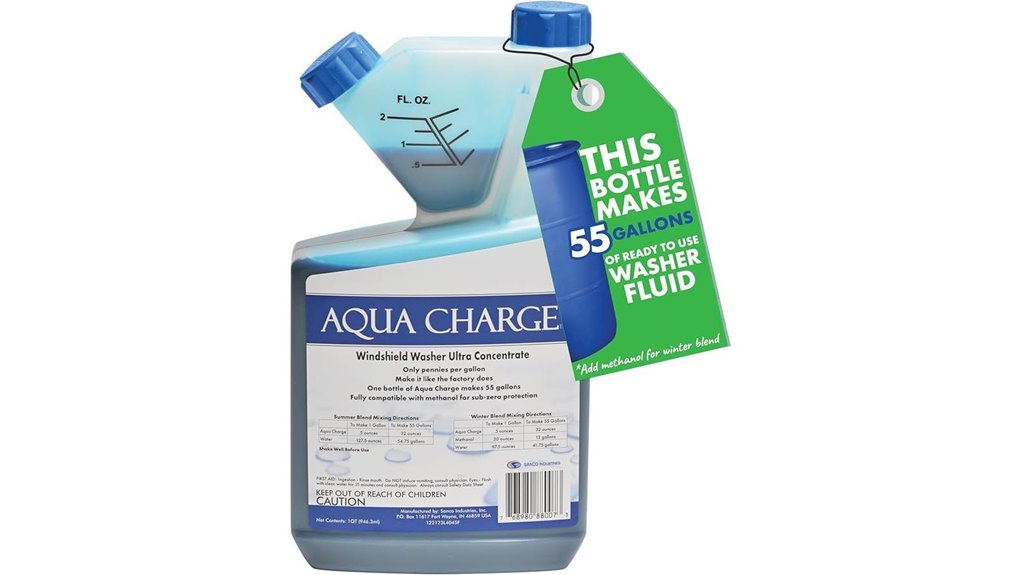
Sanco Industries Aqua Charge Windshield Washer Fluid Concentrate
Sanco Aqua Charge is an ultra-concentrate aimed at people who go through a lot of fluid. The listing says one 32 oz bottle makes 55 gallons and targets bug residue, road film, bird droppings and tree sap.
- Size: 32 oz concentrate; listing says it makes 55 gallons
- Freeze point: Listing says 32°F as mixed; adding methanol is described for lower temperatures, so follow the label
Best for: Fleets, shops and drivers who want the lowest cost per gallon.
Pros
- Very high yield per bottle, per the listing
- Intended for bugs, road film, bird droppings and sap
- Factory-style colour, per the listing
Limitations
- Not winter-ready as mixed; low-temperature use needs added antifreeze
- Methanol is toxic and flammable, so handle it carefully and follow the label
- You have to mix it yourself
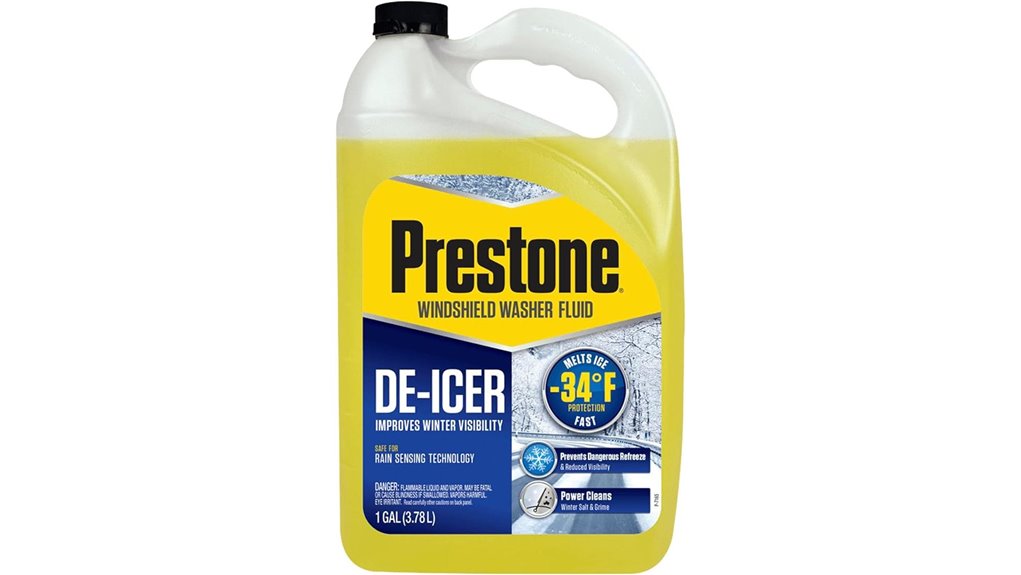
Prestone AS250 De-Icer / Winter Windshield Washer Fluid, 1 Gallon
Prestone sells this 1 gallon de-icer as a ready-to-use winter fluid. Retail listings rate it to -34°F (about -37°C) and say it melts ice and frost and helps prevent refreezing after application.
- Size: 1 gallon, ready to use
- Temperature rating: -34°F (about -37°C) per retailer listings
- Model: AS250 (some retailers list the -34°F version under a nearby model number, so match the label)
Best for: Drivers in regions with regular frost and snow.
Pros
- Rated for deep cold per retailer listings
- Ready to pour, no mixing
- Meant to help prevent refreeze on the glass
Limitations
- Winter product, so it is unnecessary in mild weather
- Gallon jugs add up if you refill often
- Check the label for rain-sensor and paint compatibility
Rain-X RX68106 Premium De-Icer Washer Fluid
Rain-X RX68106 is a ready-to-use de-icer washer fluid. The listing describes it as streak-free, effective on bugs and road spray, and safe for all finishes.
- Format: Ready-to-use de-icer fluid
- Temperature rating: Check the bottle; the rating is not confirmed here
Best for: Cold-climate drivers who prefer a Rain-X formula.
Pros
- Ready to use
- Winter de-icer formula
- Aimed at bugs and road spray
Limitations
- Seasonal fluid
- Not a concentrate, so you pay for the water weight
Rain-X Washer Fluid Additive (2-Pack)
This is not a standalone fluid. You add it to the reservoir and it brings water-beading action to the washer spray, which can help in rain. The listing is a pack of two 16.9 fl oz bottles.
- Pack: 2 x 16.9 fl oz bottles
- Use: Added to existing washer fluid; follow the label dose
Best for: Drivers who like the beading look and already have a fluid they trust.
Pros
- Works with the fluid you already use
- Easy to add to the reservoir
- Two bottles per pack
Limitations
- Additive only, with no cleaning or antifreeze on its own
- Needs topping up as you refill the reservoir
How to choose the best windshield washer fluid
Start with your climate, then decide between ready-to-use and concentrate.
- Freeze rating: pick a fluid rated at least as cold as your usual winter lows. A plain summer mix can freeze in the lines.
- Concentrate or ready-to-use: concentrates cost less per litre but need correct mixing; jugs are simpler.
- Compatibility: check the label for rain-sensor, paint and plastic compatibility.
- Water quality: if your tap water is hard, distilled water helps avoid nozzle build-up when mixing.
Using washer fluid safely
- Never use engine coolant or household cleaners in the reservoir.
- Store concentrates sealed, away from children and pets; methanol-based products are toxic.
- Do not mix a concentrate into a ready-mixed fluid without allowing for the dilution, or you may lose freeze protection.
- If the spray weakens, check the nozzles and wiper blades before blaming the fluid.
Windshield washer fluid FAQ
Can I use plain water instead of washer fluid?
In warm weather water works for light dust, but it does not cut bug residue or oily film well. In freezing weather it can freeze in the lines and damage the pump, so use a fluid rated for your lowest temperatures.
What temperature rating do I need in Canada?
Choose a fluid rated at least as cold as your regional winter lows. Winter fluids such as Prestone AS250 are listed to -34°F (about -37°C); always confirm the rating printed on the bottle.
Can I mix different washer fluid brands?
Usually yes, because most are alcohol-based, but mixing can dilute freeze protection or cleaning strength. Do not mix a diluted concentrate with a winter-rated fluid if you rely on the low-temperature rating.
Is washer fluid safe for ceramic-coated or tinted glass?
Most standard fluids are fine on factory glass and coatings, but check the label and your coating maker’s guidance. Avoid abrasive additives and harsh solvents on coated surfaces.
Do concentrates need distilled water?
Not necessarily, but distilled or soft water reduces mineral deposits in hard-water areas. Follow the dilution ratio printed on the bottle.
Bottom line
Match the fluid to your climate: Prestone AS250 or Rain-X RX68106 for cold winters, SONAX Clear View or Sanco Aqua Charge for low-cost mixing, and the Rain-X additive if you want water beading. Listings are on Amazon.com, so confirm availability and shipping to Canada before ordering.
Related reading
- Best windshield wipers for any weather
- Best car window cleaners for streak-free glass
- Best windshield repair kits




[…] your washers working with our washer fluid picks, make sure your wipers are fit for winter, and see the portable jump starter guide for cold-morning […]