Porsche will end gasoline Macan production in summer 2026, closing a chapter for one of its most successful compact SUVs. Since its 2013 debut, the model has sold more than one million units and helped define Porsche’s modern lineup. The 2026 range still includes gas and electric versions, with familiar performance and newer EV technology. That overlap raises a practical question for buyers: which Macan still makes the most sense?
What the Gas Macan Ending Means for Buyers
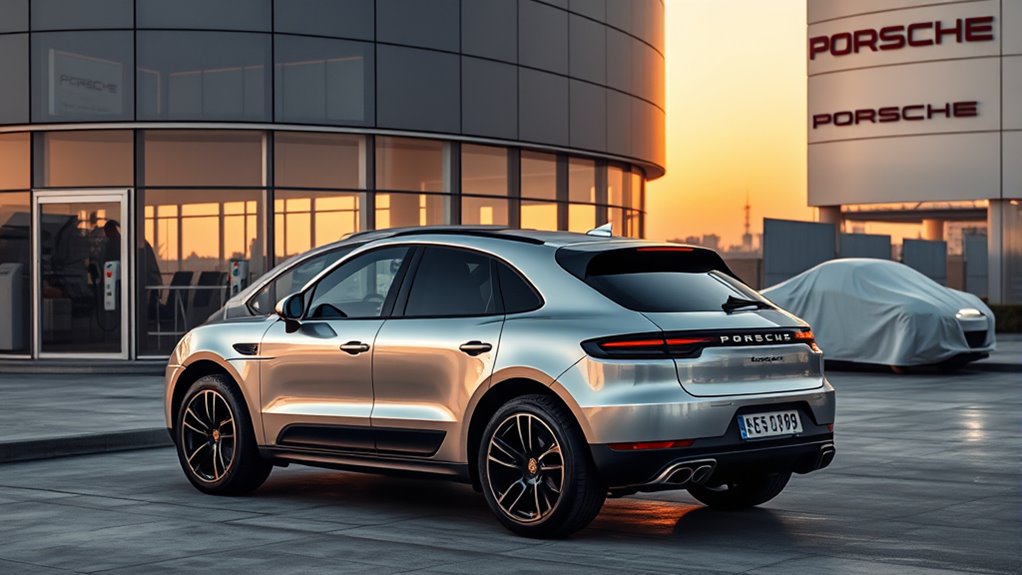
As Porsche prepares to end gasoline Macan production, buyers interested in a gas-powered version will need to move quickly, since the last model is expected to leave the line in July 2026 and no new gasoline Macans are planned until 2028.
For many shoppers, the change narrows choice and increases urgency. Limited allocations are expected, so inventory may tighten before production ends.
The gas-powered Macan remains relevant for buyers who want the familiar engine note, responsive acceleration, and a towing capacity of up to 4,409 lbs.
The gas-powered Macan still appeals with its engine note, quick response, and 4,409-lb towing capacity.
Pricing also shapes decisions: the 2026 Macan T starts at $71,100, while the Macan S begins at $78,900. These figures place the remaining gas models in a premium segment, where availability and specification may matter as much as cost.
Buyers who prefer the traditional driving experience may want to secure a vehicle now rather than wait for later electric offerings.
Macan History: From 2013 to One Million Built
Introduced in 2013, the Porsche Macan quickly became a core part of the brand’s SUV lineup.
By early 2023, production had surpassed one million units, reflecting more than a decade of strong demand.
Its success helped cement the model’s role in Porsche’s modern history and broader financial turnaround.
Macan Launch In 2013
Porsche launched the Macan in 2013 as a compact luxury SUV, adding a more practical model to its lineup without abandoning the brand’s performance focus.
Macan Production began with a clear aim: combine everyday usability, premium materials, and Porsche driving character in one package. The formula quickly resonated with buyers seeking autonomy over utility choices without giving up speed or refinement.
Positioned below larger SUVs, the Macan broadened Porsche’s reach and became a core part of its market presence. Its compact dimensions, responsive handling, and upscale cabin helped establish early momentum.
The model’s launch marked a strategic expansion, showing that performance brands could offer freedom of use, not just track-oriented identity, while preserving a distinct and disciplined design language.
One Million Built
More than one million Macans have been built since the model’s debut in 2013, underscoring how quickly it became one of Porsche’s strongest sellers.
The Macan gained traction by combining performance, practicality, and luxury in a format that matched everyday needs without sacrificing brand identity. This balance helped it attract buyers across multiple markets and sustain high demand.
The model also became an important pillar in Porsche’s lineup, much as the Cayenne had done earlier. Its production volume reflects broad acceptance in the luxury SUV segment and a durable market position.
With gasoline Macan production scheduled to end in summer 2026, the milestone also marks a turning point for a successful nameplate that shaped Porsche’s modern sales profile.
A Decade Of Success
Launched in 2013, the Porsche Macan quickly established itself as one of the company’s most successful models and a major driver of sales growth.
The Gas-powered Porsche Macan reshaped Porsche’s presence in the compact luxury SUV segment, combining brand identity with broad market appeal. More than one million units have been built, reflecting sustained demand over a decade of production.
The model’s last refresh arrived in 2022, extending its relevance before the planned halt in summer 2026. Its impact can be summarized clearly:
- Strong sales performance
- Segment transformation
- Lasting brand influence
As Porsche shifts toward electric vehicles, the Macan leaves a legacy of commercial success and strategic importance.
2026 Macan Lineup: Gas and Electric Models
For 2026, the Macan lineup spans both gasoline and electric powertrains, giving buyers four combustion models—Macan, Macan T, Macan S, and Macan GTS—alongside five EVs: Macan Electric, Macan 4 Electric, Macan 4S Electric, Macan GTS Electric, and Macan Turbo Electric.
The range is structured to offer a clear evolution from traditional performance to electric mobility, with the Macan Electric serving as the entry EV.
Gasoline versions use a 2.0-liter turbo inline-four or a 2.9-liter twin-turbo V6, while electric variants pair battery power with rapid charging and an EPA range of 288 to 315 miles.
Pricing begins at $65,400 for the base Macan and $80,300 for the Macan Electric, then rises to $94,200 and $112,700 at the top of each respective lineup.
This dual offering reflects Porsche’s controlled shift toward greater choice and autonomy in powertrain selection.
2026 Macan Engine and AWD Specs
The 2026 Macan gasoline lineup offers a 2.0L turbo inline-4 in the base model and 2.9L twin-turbo V6 engines in the S and GTS trims, paired with a 7-speed PDK dual-clutch transmission.
Porsche Traction Management all-wheel drive is standard, supporting traction and performance across the range.
The electric Macan variants add different powertrain output, while the gasoline models retain towing capacity of up to 4,409 lbs.
Gasoline Engine Options
Porsche’s gasoline Macan lineup spans six engine-and-trim configurations, led by the 261-hp 2.0-liter turbocharged inline-four in the Macan and Macan T. This is followed by the 375-hp Macan S with a 2.9-liter twin-turbo V6 and the 434-hp Macan GTS with the same V6 tuned for higher output.
These gasoline engine options pair with Porsche’s 7-speed PDK and PTM all-wheel drive, giving each model a clear performance role.
- Macan and Macan T: 261 hp, 0-60 mph in 6.0 seconds
- Macan S: 375 hp, up to 376 miles of range
- Macan GTS: 434 hp, 0-60 mph in 4.3 seconds, towing up to 4,409 lbs
The result is a compact SUV lineup built for choice, control, and liberated motion.
Electric Powertrain Output
Replacing the gasoline Macan, the electric lineup now spans five power outputs across rear- and all-wheel-drive variants, beginning with the Macan Electric RWD at 355 hp and 315 miles of EPA range, and moving up through the Macan 4 Electric’s 402 hp and 308-mile range.
The Macan 4S Electric’s 509 hp and 3.9-second 0-60 mph time, and the Macan GTS Electric’s 563 hp and $105,300 starting price. The top-spec Macan Turbo Electric raises electric power to 630 hp, cuts the sprint to 3.1 seconds, and lists at $112,700.
Across the range, output climbs steadily while range remains competitive, with the 4S, GTS, and Turbo all balancing acceleration and distance in a package aimed at drivers seeking a cleaner path to performance.
PTM All-Wheel Drive
Beyond the electric lineup’s performance figures, the outgoing gasoline Macan was defined by Porsche Traction Management (PTM) all-wheel drive across the range, giving each model added grip and stability in varied conditions.
PTM continuously distributes torque to support traction, confidence, and control. Paired with a 7-speed PDK dual-clutch transmission, it helps the Macan respond quickly and cleanly.
- Base Macan: 2.0L turbo inline-4, 261 hp, 0-60 mph in 6.0 seconds.
- Macan S: 2.9L twin-turbo V6, 375 hp, 0-60 mph in 4.6 seconds.
- Macan GTS: 2.9L twin-turbo V6, 434 hp, 0-60 mph in 4.3 seconds.
This setup gave drivers a practical route to sharper acceleration and freedom on mixed roads.
Daily Driving in the Gas Macan
For daily driving, the gas Macan combines quick responses with practical flexibility. The gas Macan uses a 7-speed PDK dual-clutch transmission and PTM all-wheel drive, helping it feel composed in traffic, rain, and mixed pavement.
The base 2.0L turbo inline-4 produces 261 hp and reaches 60 mph in 6.0 seconds, giving daily driving enough urgency for passing and merging without strain. Its shorter wheelbase and sharpened dynamics support agile cornering response, which suits crowded city routes and open suburban roads alike.
The cabin setup keeps routines straightforward, while the available 416-mile EPA-estimated range reduces the need for frequent stops on longer commutes or weekend escapes.
That mix of pace, control, and flexibility gives the gas Macan a practical appeal for drivers who want freedom from compromise. It remains a compact performance SUV with everyday usability and clear road manners.
Gas Macan Cargo, Range, and Ground Clearance
Gas Macan models add practical utility to their performance focus with 53.1 cubic feet of maximum cargo capacity and 17.2 cubic feet of space behind the rear seats. This layout supports hauling, commuting, and spontaneous travel without surrendering the compact SUV profile.
Range figures also strengthen independence from frequent fuel stops.
- Maximum cargo volume: 53.1 cubic feet
- Rear-seat cargo space: 17.2 cubic feet
- Ground clearance: 8.0 inches
The EPA-estimated total range reaches up to 416 miles, while the Macan S delivers an estimated 376 miles. That range can ease planning on longer routes and widen mobility options for drivers seeking autonomy.
The 8.0-inch ground clearance further adds versatility, improving clearance over rough pavement and mild trail conditions. Together, these figures show a balanced package: usable storage, long-distance capability, and added underbody height, all within a performance-oriented format.
Macan Electric: Power, Range, and Charging
The electric Macan shifts the focus from range and utility to power delivery and charging speed, with a rear-wheel-drive model rated at 355 hp and the Macan 4 Electric producing 402 hp.
In the Macan Electric lineup, power scales further with the 4S Electric, which reaches 60 mph in 3.9 seconds, and the Turbo Electric, rated at 630 hp with a 3.1-second sprint.
EPA range is rated at 315 miles for the rear-drive version and 308 miles for the all-wheel-drive model, giving drivers room to move with less dependence on stops.
A 95 kWh battery supports the system, while DC fast charging at 270 kW-plus stations can restore the pack from 10% to 80% in about 21 minutes.
That combination of range and charging efficiency supports a more flexible ownership experience. The result is an electric SUV designed to reduce constraint and expand daily freedom.
Gas Vs. Electric Macan: Which Fits You Best?
Choosing between the gasoline and electric Macan comes down to priorities. In the gas vs. electric Macan decision, the gasoline model favors long-range freedom and familiar controls, while the electric version emphasizes quicker acceleration and stronger towing.
The gas model can travel up to 416 miles, start at $65,400, and use tactile hard buttons. The electric Macan begins at $80,300, offers 563 hp in GTS form, and brings a cabin centered on a 12.6-inch cluster and 10.9-inch screen.
- Range: gasoline, up to 416 miles; electric, about 315 miles.
- Performance: gasoline Macan S, 375 hp and 4.6 seconds to 60; electric GTS, 3.6 seconds.
- Utility: gasoline, 4,409 lbs towing; electric AWD, up to 5,500 lbs.
For drivers seeking established range and lower entry cost, gasoline remains practical. For those drawn to quicker response, higher towing, and a digital cockpit, electric fits better.
New Vs. CPO Macan: What Makes Sense Now
With the gasoline Macan nearing the end of production, buyers now face a different decision: whether to pay more for a new 2026 Macan S or save with a CPO 2023 Macan S.
The new model starts at $78,900 and brings a 4-year/50,000-mile warranty, while the CPO example is often around $65,000 and carries a 6-year/unlimited-mileage warranty from original sale.
The new model starts at $78,900 with 4-year/50,000-mile coverage, while CPO examples often run about $65,000 with longer warranty protection.
For a buyer seeking immediate liberation from higher upfront cost, the CPO route can be the clearer value. For one wanting a fresh new account with full factory coverage and the latest condition, the 2026 car has appeal.
Limited gas production through Q3 2026 may support future resale values for both, especially among enthusiasts.
Range also matters: the Macan S offers an EPA-estimated 376 miles, unlike electric alternatives with roughly 250 to 280 miles.
In practical terms, the choice turns on price, warranty coverage, and how long the vehicle will be kept.
What Porsche Has Planned for the Next Macan
Porsche is already mapping out the next Macan, and it is expected to return in 2028 as a gas-powered successor built on the Premium Platform Combustion architecture. The plan centers on pure-gas and hybrid powertrains, a move designed to preserve familiar Macan traits while adapting to a market shifting toward electrification.
The Macan Electric will remain in production after gasoline versions end in summer 2026, keeping Porsche’s SUV range active during the shift.
- PPC-based replacement due in 2028
- Gas and hybrid options for broader appeal
- Styling and technology updates likely
This strategy signals a deliberate reordering of Porsche’s SUV lineup. The next Macan is expected to carry forward successful proportions, driving dynamics, and everyday utility, while adding newer systems and possibly revised styling.
For buyers seeking autonomy from outdated powertrains, the plan offers a clearer path: an electric Macan now, and a combustion successor later, aligned with changing consumer expectations.
Frequently Asked Questions
What Car Is Replacing the Macan?
Porsche’s gasoline Macan is being replaced by a new 2028 successor on the Premium Platform Combustion, offering gasoline and hybrid versions. The Macan Electric remains during Electric Shift, leaving a temporary market gap.
Which Porsche Macan to Stay Away From?
The base Macan is the one to stay away from. Model Reliability and value favor the Macan T, S, or GTS, which offer stronger performance and better long-term appeal for drivers seeking liberation from compromise.
Is the Porsche Macan Just an Audi Q5?
No, the Macan is not just an Audi Q5. It shares Volkswagen Group MLB hardware, yet the Porsche brings sharper tuning, distinct styling, PTM all-wheel drive, and a stronger Performance Comparison focused on driving engagement.
Why Are They Discontinuing the Macan?
They are discontinuing the Macan to accelerate Electric Evolution, redirecting resources toward battery-powered models, emissions compliance, and future product planning. The move frees Porsche to phase out combustion dependence while sustaining performance-focused market relevance.
Conclusion
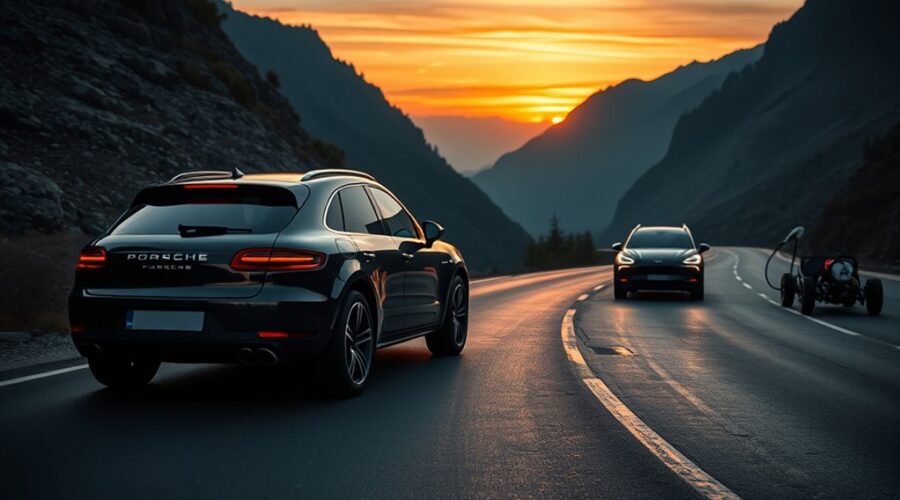
Porsche’s decision to end gasoline Macan production in summer 2026 closes a highly successful chapter for the compact SUV. For buyers, the remaining gas models offer familiar performance and broad usability, while the electric Macan points to Porsche’s next phase. The choice now comes down to priorities: proven combustion convenience or EV technology and efficiency. In visual terms, the lineup is split between a fading left lane and a faster, quieter right lane.