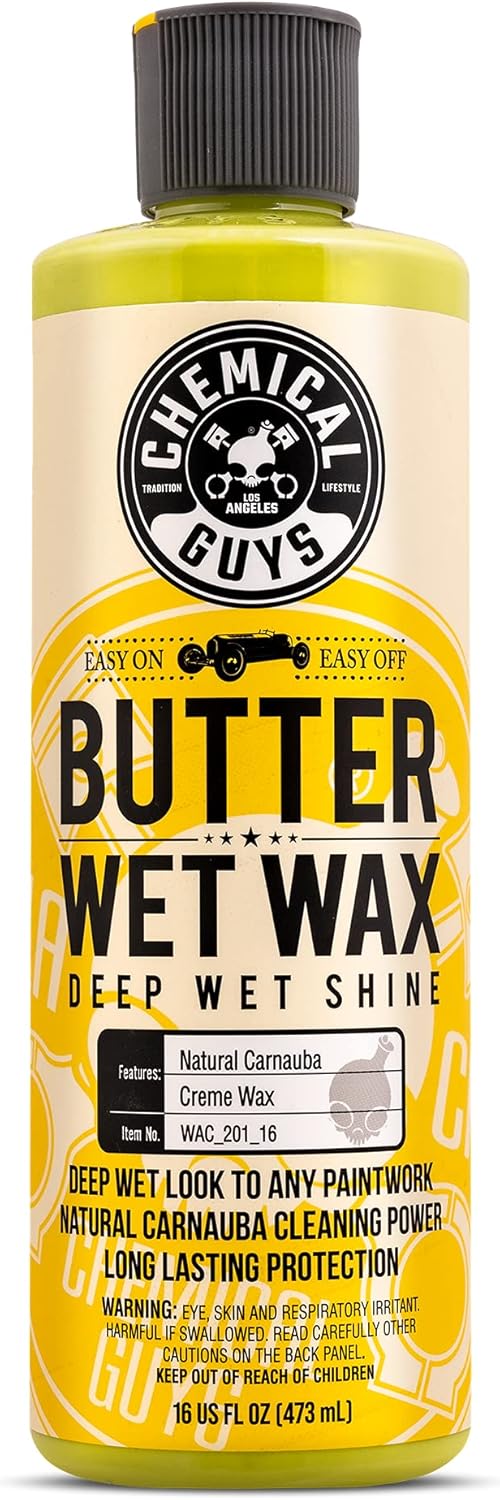
Car scratch removers are no longer one-size-fits-all, and the best options for 2026 reflect that shift. Meguiar’s Quik Eraser Kit offers quick results for minor marks, Chemical Guys VSS balances cutting and polishing, and Mothers California Gold targets paint correction with more precision. Each serves a different need, but the real question is which one delivers the best finish for the least effort.
Meguiar’s Quik Eraser Kit, Car Scratch Remover, 4 Piece Kit

Meguiar’s Quik Eraser Kit is a strong choice for drivers who want a fast, DIY way to handle light scratches, scuffs, and paint transfer on glossy paint and clear coats. The four-piece set uses ScratchX micro-abrasive technology with a standard electric drill, making cleanup more efficient than hand polishing. Its clear coat-safe formula suits most glossy finishes without added risk. The kit includes the key tools needed for spot correction, including a drill pad and microfiber towel. For added durability and shine, a wax follow-up is recommended after treatment.
Best For: Drivers looking for a fast, DIY solution to remove light scratches, scuffs, and paint transfer from glossy paint and clear coats.
Pros:
- Uses ScratchX micro-abrasive technology for effective light scratch and scuff removal.
- Drill-activated system makes the process quicker and easier than hand polishing.
- Clear coat-safe and includes useful accessories like a drill pad and microfiber towel.
Cons:
- Requires a standard electric drill to use, so it’s not fully hands-on or tool-free.
- Best suited for light surface damage, not deeper scratches or severe paint defects.
- Works best with a wax follow-up, so it may require an extra step for lasting protection.
Chemical Guys VSS Scratch & Swirl Remover
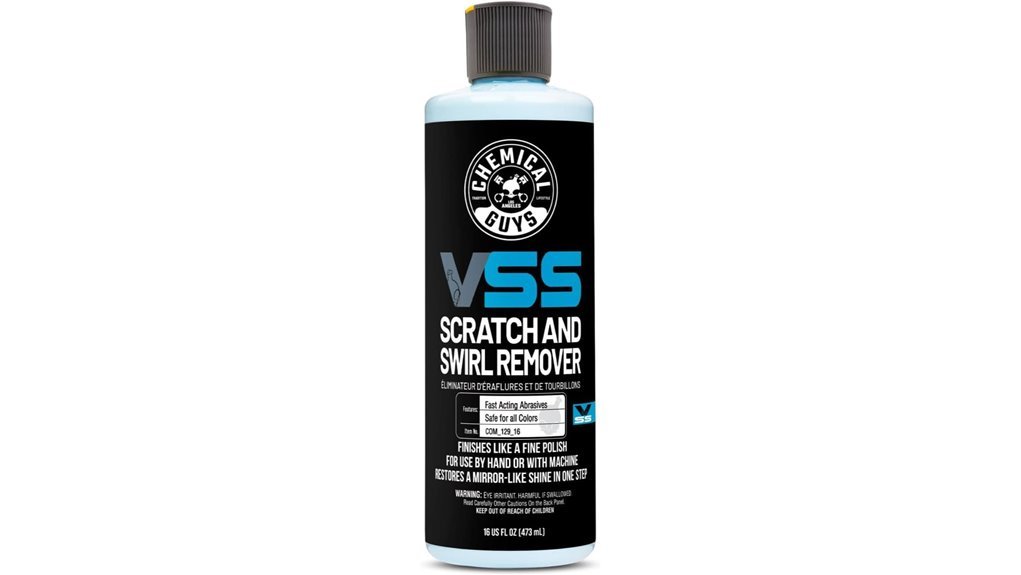
Chemical Guys VSS One-Step Scratch & Swirl Remover suits detailers who want fast, one-step correction. This 16 oz cut-and-polish formula combines cutting power and finishing polish to reduce light to moderate scratches, swirls, oxidation, and holograms. It is designed to restore gloss and clarity while leaving a smooth, high-gloss finish without extra polishing. Safe for clear coat, single-stage, and ceramic-coated finishes, it can be applied by hand or machine polisher. Its silicone-free formula makes it suitable for body shop work, repainting, touch-ups, and efficient professional detailing.
Best For: Detailers and DIY car owners who want fast, one-step correction of light to moderate paint defects with a glossy finish.
Pros:
- Combines cutting and polishing in one step, saving time
- Restores gloss and clarity while reducing swirls, scratches, and oxidation
- Safe for clear coat, single-stage, and ceramic-coated finishes
Cons:
- May not remove deeper scratches or severe paint defects
- Results can vary depending on pad, machine, and user technique
- 16 oz size may be limited for larger or frequent detailing jobs
Mothers California Gold Ceramic Paint Correction, 12 oz. (01712)
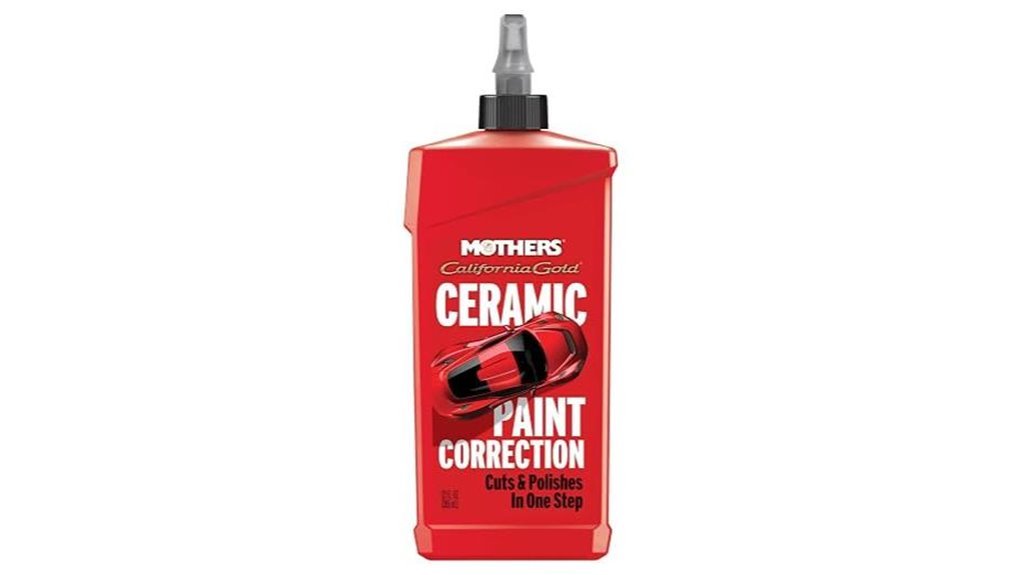
Mothers California Gold Ceramic Paint Correction is best for drivers seeking a refined, defect-free finish before ceramic protection. This 12 oz. formula cuts, polishes, and restores paint by reducing scratches, swirls, oxidation, water spots, towel marks, hazing, and holograms. It also refines the surface for a smooth, high-clarity appearance. As a prep step, it leaves a corrected, contamination-free finish that supports strong bonding with ceramic coating, sealant, or wax. It revives color, gloss, depth, and clarity on weathered paint. Suitable for hand use or machine polishing, it serves both enthusiasts and professionals.
Best For: Drivers, enthusiasts, and professionals looking to correct paint defects and prep a vehicle for ceramic coating, sealant, or wax with a smooth, high-clarity finish.
Pros:
- Cuts, polishes, and restores paint by reducing scratches, swirls, oxidation, water spots, towel marks, hazing, and holograms.
- Refines the surface for improved clarity, gloss, depth, and color on weathered paint.
- Can be applied by hand or with a polishing machine for flexible use.
Cons:
- Requires additional protection afterward since it is a paint correction/prep product, not a protective coating itself.
- May be less effective on severe paint defects that need more aggressive correction.
- Results can vary depending on the condition of the paint and application method used.
Factors to Consider When Choosing Car Scratch Removers, Tested 2026
Choosing a car scratch remover in 2026 starts with matching the product to the scratch severity, since light marks, deeper abrasions, and clear coat damage each require different levels of correction. Paint compatibility and the application method also matter, because some formulas work best on specific finishes or with machine application rather than hand use. Finish quality and protection needs should round out the decision, as the best option should leave a clean result while helping shield the paint afterward.
Scratch Severity
Scratch severity is the first factor to assess when selecting a car scratch remover, since light, moderate, and deep marks require different levels of correction. Light scratches usually affect only the clear coat and are often addressed with products that use micro-abrasive technology to gently refine the surface. Moderate scratches penetrate deeper into the paint layer and may call for a dual-function formula that cuts away damage while also polishing to restore gloss. Deep scratches are more serious, often reaching primer or metal, and typically need touch-up paint or professional repair rather than a standard remover. Matching the product to the scratch depth matters, because the wrong choice can worsen the blemish or leave a weak, uneven finish.
Paint Compatibility
After evaluating scratch depth, the next step is confirming that the remover matches the vehicle’s paint system. Clear coat compatibility matters because many modern finishes rely on that protective layer, and an aggressive formula can dull or mar it. The product should also align with the car’s paint structure: single-stage systems combine color and protection, while multi-stage systems use separate layers that may react differently. Ceramic-coated vehicles require added caution, since some removers can weaken those coatings. Finish type is equally important; gloss, matte, and satin paints each need products that preserve their intended appearance. Manufacturer guidelines remain the safest reference, helping avoid finish damage and possible warranty complications. Choosing by paint compatibility narrows options to those suited to the specific vehicle.
Application Method
Application method can strongly influence how well a scratch remover performs, with manual and machine options each serving different needs. Hand-applied products often give the most control, which helps with small blemishes, tight panels, and careful spot correction. They also suit users who prefer a simple, low-effort process. Drill-activated systems, by contrast, can speed up work on larger areas or deeper scratches because power tools increase abrasion efficiency. Ease of use remains important, especially for DIY enthusiasts and first-time users who want predictable results without a steep learning curve. Compatibility also matters, since the chosen method should work safely on clear coat and ceramic finishes. The best option balances speed, precision, and user comfort while matching the vehicle’s surface and the severity of the mark.
Finish Quality
Finish quality is the true test of a scratch remover, showing whether it restores gloss and clarity or merely masks damage. Strong products leave paint smooth and reflective, often delivering a high-gloss appearance without extra polishing. The best formulas pair cutting power with a finishing polish, letting them reduce light to moderate scratches and swirl marks while improving overall visual depth. Effective removers should revive color richness and produce a showroom-like brilliance rather than a hazy temporary fix. Compatibility also matters, since clear coat and ceramic-coated finishes each require a careful approach to avoid dulling the surface. Consistent results depend on easy application by hand or machine, helping both enthusiasts and professionals achieve an even, impressive finish across the panel.
Protection Needs
Protection needs matter because a scratch remover should do more than clear defects; it should also preserve the paint after correction. Compatibility with the vehicle’s finish is essential, especially on clear coats and delicate repaints, where an aggressive formula can cause more harm than benefit. A good product should leave the surface ready for wax or sealant, allowing the owner to add gloss and extend protection. Ease of use also affects safety, since products needing special pads or tools may increase application errors. The best options remove scratches while restoring clarity and shine, keeping the finish visually balanced. Silicone-free or body shop-safe formulas are often preferred because they support safer touch-ups and maintain protective qualities without leaving unwanted residue.
Related Reading
Frequently Asked Questions
What Scratch Remover Works on Clear Coat Damage?
A clear coat-safe scratch remover typically works best on light to moderate clear coat damage, especially when the scratch has not reached the color layer. Products with fine abrasives or polishing compounds can restore gloss and reduce visibility. For deeper damage, a compound alone will not suffice, and touch-up paint or professional repair may be needed. A test on a small area is usually recommended before broader application.
Can Scratch Removers Fix Deep Key Scratches?
No, scratch removers usually cannot fix deep key scratches. They can reduce the appearance of light clear-coat marks and minor surface blemishes, but a scratch that cuts into primer or bare metal typically needs sanding, filling, repainting, or professional repair. If a fingernail catches firmly in the groove, the damage is likely too deep for a simple remover to restore fully.
How Often Should I Use Scratch Remover?
Scratch remover should be used only when needed, not on a routine schedule. For light scuffs or fresh marks, occasional application is appropriate, but repeated use can thin clear coat over time. A detached recommendation is to inspect the paint first and reserve scratch remover for visible surface scratches. If damage reappears often, the issue may be washing technique, parking habits, or a deeper paint defect requiring professional attention.
Do Scratch Removers Work by Hand or Machine?
Scratch removers work with either hand or machine, depending on the product and the damage. By hand, they act like a gentle eraser, suited to light marks and small areas. A machine can provide faster, more even results, especially on wider panels or deeper swirls. The chosen method usually depends on the remover’s abrasiveness, the surface condition, and the user’s comfort with polishing tools.
Will Scratch Remover Affect My Car’s Wax Coating?
Scratch remover can affect a car’s wax coating, often stripping or thinning it where applied. Mild hand-applied products may only reduce wax slightly, while abrasive compounds used with machines are more likely to remove it entirely. After treatment, the surface usually needs fresh wax or sealant for protection and gloss. The outcome depends on product strength, application method, and how much pressure is used during correction.
Conclusion
In the end, the best car scratch remover often meets the driver at the exact moment a flaw appears, almost by coincidence. Meguiar’s Quik Eraser Kit offers quick fixes, Chemical Guys VSS balances cutting and polishing, and Mothers California Gold suits those preparing for ceramic protection. Each stands out for ease of use and dependable results, proving that the right product can turn an unexpected scratch into a surprisingly simple repair.