
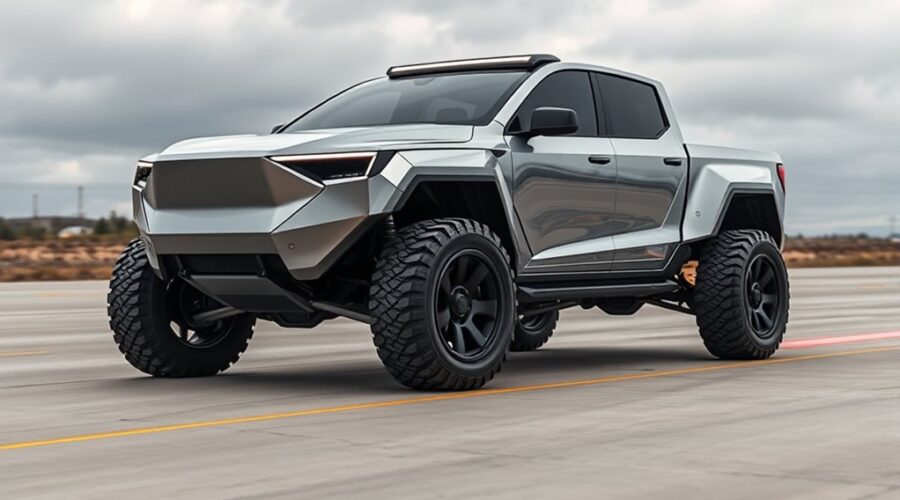
A Tesla Cybertruck odometer reset raised questions about mileage accuracy and resale impact, but the vehicle’s core specifications remain notable. It is offered with single-, dual-, and tri-motor setups, reaching up to 834 hp and 0-60 mph in 2.6 seconds. At 18 feet 8 inches long and about 3,100 kg, it combines size, towing capacity, and stainless steel durability in a way that warrants closer inspection.
Tesla Cybertruck Odometer Reset: What Happened?
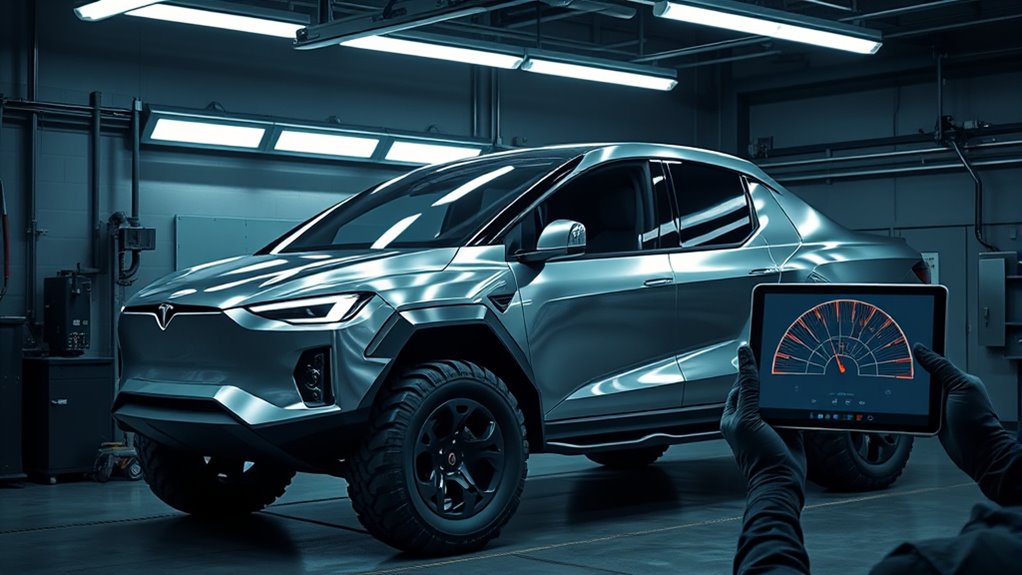
After a service visit intended to correct panel gaps and an ABS fault, the Tesla Cybertruck’s odometer reportedly reset to zero, even though the owner had previously logged 26,000 miles.
The discrepancy was later reflected in the Tesla app, confirming that the odometer reading no longer matched prior usage data. The service visit also included installation of a new left body controller, suggesting that the vehicle underwent more than routine inspection.
The Tesla app later showed the odometer mismatch, while service replaced the left body controller.
Alongside the mileage anomaly, the owner reported connectivity failures with the phone key and installation errors that affected exterior alignment and finish.
These outcomes indicate a broader service integrity issue, not an isolated display error. Tesla has not provided a clear explanation, leaving the owner without technical clarification or corrective guidance.
For a vehicle marketed on precision and control, the reset odometer raises questions about system reliability, record integrity, and the right of owners to transparent, accountable maintenance.
How the Mileage Glitch Affected the Owner
The odometer reset to zero after service, erasing a recorded 26,000-mile history and disrupting the vehicle’s mileage records.
The Tesla app corroborated the discrepancy, creating a documentation gap that could trigger a “True Mileage Unknown” designation.
That outcome introduces direct resale value concerns, especially for a high-value vehicle such as the Cybertruck.
Odometer Reset To Zero
A Tesla Cybertruck owner saw the vehicle’s odometer unexpectedly reset to zero following a service visit, despite having documented 26,000 miles beforehand.
The odometer reset was not a cosmetic display fault; it signaled a data integrity failure in the vehicle’s mileage accounting. The Tesla app later confirmed the discrepancy, showing that recorded distance and the instrument reading no longer aligned.
Such a mismatch can trigger the label True Mileage Unknown, a designation that weakens market confidence and may depress resale value.
The owner also reported frustration over Tesla’s limited communication, leaving the anomaly unresolved in practical terms.
For drivers seeking autonomy and transparent records, this incident underscores a basic requirement: service systems must preserve verified mileage without compromise.
Mileage Records Disrupted
Although the service visit was intended to resolve routine vehicle issues, it instead left the Cybertruck’s mileage records internally inconsistent: the owner had documented 26,000 miles before the appointment, yet the odometer later showed zero.
The Tesla app corroborated the reset, indicating that the error was not merely a display anomaly. Such a discrepancy compromises the integrity of mileage records and introduces the possibility of a True Mileage Unknown designation, a status that signals unverifiable use history.
From an analytical standpoint, the event exposes a fragile data chain between service operations and vehicle telemetry.
The owner reported frustration with Tesla’s limited communication, including unresolved additional issues. For a customer seeking transparency and autonomy, the episode demonstrates how a single service event can distort core vehicle data and undermine trust in institutional recordkeeping.
Resale Value Concerns
From a resale perspective, the odometer reset materially weakened the Cybertruck’s marketability by erasing documented mileage and creating an internal record that could be interpreted as True Mileage Unknown.
The owner’s 26,000 miles vanished after service, and that loss of provenance directly threatens resale value. Buyers typically discount vehicles when miles per history cannot be verified, because pricing models rely on reliable use data, not assumptions.
For a steel body electric truck, the discrepancy also raises questions about service integrity and recordkeeping. Tesla’s limited communication amplified uncertainty, making the truck harder to place in the market.
Even if the drivetrain remains sound, an ambiguous odometer state can suppress offers, deter inspection, and shift the vehicle from a transparent asset into a risk-adjusted liability.
Cybertruck Powertrain and Trim Options
Tesla’s 2026 Cybertruck lineup is organized around three distinct powertrain configurations: a 321-hp single-motor rear-wheel-drive setup, a 593-hp dual-motor all-wheel-drive system, and an 834-hp tri-motor Cyberbeast.
This powertrain structure gives buyers clear trim options, with each configuration aligning to different priorities in performance, traction, and utility. The dual-motor AWD trim replaces the prior rear-wheel-drive model, indicating a shift toward greater control and broader capability.
Clear trim options align with distinct priorities in performance, traction, and utility, while AWD broadens capability and control.
All variants use steer-by-wire technology, a technical feature that reduces mechanical compromise and supports precise maneuvering. For users seeking autonomy from conventional truck constraints, the lineup balances efficiency, capability, and range of use.
Towing capacity also reflects trim differentiation: the Premium All-Wheel Drive and Cyberbeast are rated to tow up to 11,000 pounds, reinforcing their utility-focused positioning.
Cybertruck Performance and Acceleration
The Cybertruck’s performance profile is defined by its powertrain output, with horsepower ranging from 321 in the rear-wheel-drive model to 834 in the Cyberbeast.
In its Tri-motor configuration, it reaches 0–60 mph in 2.6 seconds, placing it in a high-performance acceleration class.
Real-world utility remains substantial, as all variants exceed 300 miles of full-charge range while retaining efficiency for extended use.
0-60 Performance
Acceleration figures place the Cybertruck among the quickest production pickups, with the tri-motor Cyberbeast reaching 100 km/h in 2.7 seconds and producing 845 HP. That level of performance gives drivers a measurable escape from conventional limits, even in a high school parking lot fantasy of speed.
The dual-motor all-wheel drive model remains substantially rapid, combining a 593 HP output with strong launch consistency and controlled traction. The base single-motor rear-wheel drive version still delivers credible acceleration at 321 HP, serving buyers prioritizing efficiency and accessible capability.
Across variants, steer-by-wire contributes to agile turn-in and stable directional changes during hard acceleration. For users considering Full Self-Driving, the chassis response remains relevant because precise low-speed control supports a more liberated, technically coherent driving experience.
Horsepower Output
Power output defines the Cybertruck’s performance envelope, with the single-motor variant rated at 321 HP, the dual-motor version at 593 HP, and the top-end Cyberbeast delivering up to 845 HP.
This horsepower output gives the steel-bodied pickup a distinctly forceful performance profile, moving it from utility truck to rapid electric machine. In the tri-motor configuration, acceleration reaches 0 to 100 km/h in 2.7 seconds, a figure that places it among the quickest pickups in production.
The steer-by-wire system supports precise control, allowing the driver to channel that power with minimal mechanical delay. Across the lineup, the calibrated powertrain strategy emphasizes controlled thrust, measurable response, and liberated mobility without sacrificing towing capability or structural seriousness.
Real-World Range
Although the Cyberbeast’s performance is headline-grabbing, its real-world range is more modest, with the tri-motor 2026 Cybertruck reaching 0 to 60 mph in 2.6 seconds while returning an estimated 293 miles under typical conditions.
That figure reflects controlled use, not idealized freedom from physical limits. In practice, real-world range can fall toward 250 miles when speed rises, temperatures shift, or traffic becomes aggressive.
Higher cruising speeds increase battery consumption sharply, reducing the distance available for autonomous movement between charges. The vehicle’s onboard computer estimates remaining miles and battery percentage in real time, enabling disciplined trip planning.
For drivers seeking liberation through mobility, the data show that performance remains exceptional, yet range management depends on restraint, conditions, and route strategy.
Cybertruck Dimensions, Weight, and Garage Fit
Measured against conventional pickup proportions, the Tesla Cybertruck presents an overall length of 18 feet 8 inches, placing it firmly in the full-size electric truck category. Its stainless steel body, with 2–3 mm wall thickness, defines the dimensions as both structurally assertive and visually uncompromising.
The weight reaches 3,100 kg, a mass that supports planted handling and a high degree of stability under load and on pavement. For owners seeking practical freedom, garage fit remains a critical constraint: the truck requires at least 21.5 feet of parking space to accommodate its length with usable clearance. That requirement makes planning essential, especially in compact urban settings.
Yet the vehicle’s proportions still preserve everyday utility, balancing unconventional form with functional use. The result is a machine engineered for autonomy in use, while demanding disciplined spatial awareness from the operator.
Cybertruck Range, Charging, and Battery Life
The Cybertruck’s projected driving range varies by configuration and operating conditions, with the full-charge estimate reaching 480 km while real-world testing has produced lower figures, including roughly 250 miles in demanding use and about 293 miles for the Cyberbeast.
Charging intervals on long trips are typically 30 to 45 minutes, and cost can differ sharply between Level 3 public charging at about $34.72 from 9% to 88% and Level 2 home charging at roughly $13.50 for the same energy window.
Battery management is supported by onboard real-time range and state-of-charge displays, which assist in planning stops and maintaining battery health through controlled charge cycles.
Driving Range Estimates
Range estimates for the 2026 Tesla Cybertruck vary by trim and usage, with maximum rated distance reaching about 480 km, or 298 miles, on a full charge.
Across the new base Dual Motor and Tri-motor Cyberbeast, the quoted figure assumes controlled conditions; road speed, load, terrain, and climate can reduce actual distance below 300 miles, and in some cases toward 250.
The light bar and other body details do not alter battery capacity, but efficiency still depends on aerodynamics and driving discipline.
After four years of development, Tesla’s onboard computer now reports state of charge and predicted range in real time, supporting independent trip planning.
For battery preservation, operating between 20 and 80 percent remains the most conservative practice, balancing usable range with long-term cell health and reducing range anxiety.
Charging Stops And Costs
Charging logistics for the Cybertruck remain a central planning variable on long trips, with real-world consumption often reducing the nominal 480 km rating to well under 300 miles depending on speed, weather, and route conditions.
| Event | Time | Cost |
|---|---|---|
| First stop | 3.5 h | — |
| Level 3 charge | 30–45 min | $34.72 |
| Home Level 2 | same segment | $13.50 |
Such charging strategies align with liberty through efficient routing: pauses can be synchronized with meal and bathroom breaks, reducing dwell-time friction. Cost comparisons show one trip totalled $120.27, still below gasoline F-150 fueling. Tesla’s 20–80% guidance supports practical travel tips, preserving usable range while limiting unnecessary top-end charging.
Battery Care Tips
Battery care becomes the next planning variable after charging stops and trip costs are mapped out, because the Cybertruck’s usable distance depends not only on charger access but also on how the pack is managed day to day.
Battery maintenance tips center on avoiding routine extremes: the preferred operating window is 20-80%, which reduces stress and supports longevity. Charging frequency guidelines should reflect actual use rather than habit; frequent top-offs to 100% are unnecessary for most trips.
Real-world range is often under 300 miles, and can fall near 250 miles, so onboard state-of-charge and remaining-mile estimates should guide route decisions.
Temperature effects are material, since weather and ambient conditions alter both range and performance. Managed this way, the pack remains a more reliable instrument of mobility and autonomy.
Cybertruck Towing, Payload, and Bed Size
The Tesla Cybertruck’s hauling specification varies by trim, with the Premium All-Wheel Drive and Cyberbeast models rated to tow up to 11,000 pounds, while the base Dual Motor version is limited to 7,500 pounds.
The Cybertruck’s towing varies by trim, with top models rated up to 11,000 pounds.
These towing capabilities support demanding use cases, from trailers to equipment transport, while preserving a liberated, utility-first operating profile.
All trims deliver up to 2,500 pounds of payload, a figure that underscores notable payload advantages for heavy materials, tools, or recreational gear.
The six-foot-by-four-foot cargo bed provides measured cargo versatility, and the hidden underfloor compartment adds secure storage without sacrificing deck space.
- Maximum tow rating: 11,000 pounds
- Maximum payload: 2,500 pounds
- Bed size: 6 feet by 4 feet
Off-road geometry further extends practical loading confidence, with 35-degree approach and 28-degree departure angles improving access on uneven terrain.
Cybertruck Steering, Handling, and Rear-Wheel Steering
Steer-by-wire architecture gives the Cybertruck a distinctly modern control interface, reducing mechanical linkage complexity while sharpening steering response. This electronic setup delivers notable steering responsiveness, translating small inputs into immediate directional changes with limited effort.
By decoupling the wheel from conventional hardware, the system supports handling precision that feels deliberate rather than delayed. Rear-wheel steering further extends maneuverability enhancement, tightening the turning radius and easing low-speed corrections in confined spaces.
In urban traffic, that capability improves placement control; on rough ground, it supports cleaner line selection and more confident pivots. The result is a chassis character that remains agile without appearing fragile.
Such calibration suits a vehicle designed for independence, where controlled motion and adaptable behavior matter more than traditional steering heft. Overall, the Cybertruck’s steering and handling package combines electronic sophistication with practical agility, reinforcing a driving experience that is precise, responsive, and structurally liberated.
Cybertruck Interior, Screen Controls, and FSD
Inside the Cybertruck cabin, a minimalist layout places nearly all vehicle functions on a single 18.5-inch touchscreen, reducing reliance on physical controls while centralizing access to core systems. This architecture shapes the interior materials, which emphasize durability and a clean, uncluttered presentation.
Touchscreen usability is consequently central to the user experience, with climate, navigation, media, and drive settings consolidated in one interface.
Touchscreen usability is central to the experience, consolidating climate, navigation, media, and drive settings into one interface.
- Premium and Cyberbeast trims add heated and ventilated seats for more adaptable seating comfort.
- An additional rear touchscreen extends control options for passengers and improves cabin utility.
- Full Self-Driving capability integrates advanced automation, reinforcing Tesla’s software-first approach.
Rear headroom is generous, though taller occupants may find the space constrained by the cabin geometry.
The infotainment system omits Apple CarPlay and Android Auto, yet it retains advanced native functions intended to support a more autonomous, liberated driving environment.
Cybertruck Stainless Steel Body and Durability
Built from stainless steel panels roughly 2 to 3 mm thick, the Cybertruck is engineered for high dent resistance and long-term structural durability, with Tesla also describing the exterior as bulletproof, though that claim has not been verified in real-world conditions.
The material choice supports a rigid shell intended to reduce deformation under impact and preserve body integrity over time. Its faceted form and pyramid-shaped bed also contribute to aerodynamic efficiency, linking function with the truck’s angular visual identity.
However, stainless steel maintenance is not trivial. The unpainted surface can show fingerprints and marks, requiring careful cleaning to retain its finish.
Although the metal improves resistance to everyday damage, it introduces repair challenges because damaged sections may be harder to restore than conventional painted panels.
In practical terms, the design favors durability and a sense of material autonomy, yet it also demands specialized service methods and realistic expectations regarding bulletproof claims.
Frequently Asked Questions
Why Can’t You Wash a Cybertruck in Sunlight?
It cannot be washed in sunlight because rapid evaporation leaves water spots and soap streaks, while fingerprints and smudges become more visible. Cybertruck washing tips favor shade for exterior care and to avoid Sunlight damage.
Why Can’t You Resell a Tesla Cybertruck?
About 50,000 miles of warranty, the Cybertruck’s resale is constrained by odometer resets, true-mileage uncertainty, and polarizing design. Tesla Resale Value weakens as Cybertruck Market Trends lag broader Electric Vehicle Demand, depressing buyer confidence.
How Fast Can a Cybertruck Go From 0 to 60 Mph?
The Cybertruck reaches 0 to 60 mph in 2.6 seconds in Cyberbeast form, 4.4 seconds dual-motor, and roughly 6.5 seconds rear-wheel drive, reflecting strong Cybertruck acceleration features, Electric truck performance, Speed comparison metrics.
Can a Tesla Last 500,000 Miles?
Yes, a Tesla can reach 500,000 miles if battery longevity remains strong, maintenance tips are followed, and mileage tracking is accurate. With disciplined charging, tire care, and software updates, durability can approach that threshold.
Conclusion
The Cybertruck’s odometer reset incident may raise resale concerns, but it does not alter the underlying specification set that defines the vehicle. With 321 hp, 593 hp, and 834 hp powertrain options, up to 0-60 mph in 2.6 seconds, and a stainless-steel structure measuring 18 feet 8 inches and 3,100 kg, it remains a highly capable pickup. For buyers focused on performance, durability, and utility, the mileage anomaly is a market issue, not an engineering one.