Choosing the right car buffer or polisher can shape the final result as much as the product used on the paint. In 2026, the field includes cordless power tools, entry-level kits, and professional-grade machines built for different skill levels and detailing goals. Some favor speed and correction, while others focus on control and comfort. The differences are not always obvious, which makes the next comparisons worth a closer look.
Milwaukee M18 FUEL 15mm Random Orbital Polisher Kit
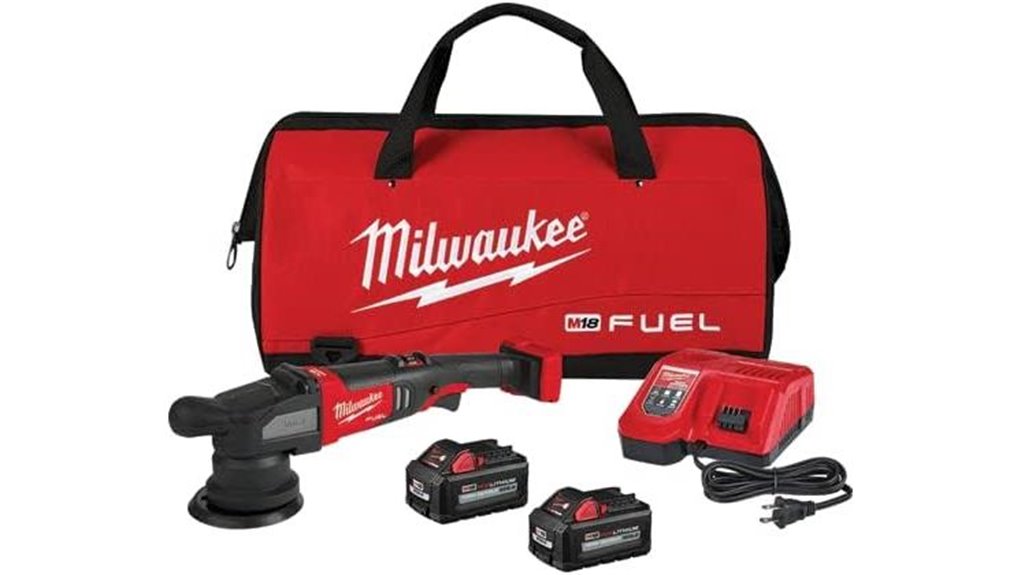
The Milwaukee M18 FUEL 15mm Random Orbital Polisher Kit is a strong choice for detailers who need cordless power for correcting heavy defects. Model 2684-22 includes the polisher, two M18 HIGH OUTPUT XC6.0 batteries, and an M18/M12 rapid charger. Its 15mm orbit, 5-inch pad capacity, and 2,650 to 5,100 RPM range support controlled correction. An 8-speed dial, variable trigger, and motor feedback help maintain precision under load. The balanced, ergonomic design, lock-on switch, and 2.21-inch battery clearance improve comfort. It works with all M18 batteries and chargers.
Best For: Detailers and car enthusiasts who want a cordless, high-power polisher for correcting heavy defects with precise control.
Pros:
- Strong cordless performance with M18 battery compatibility and included high-output batteries
- 15mm orbit, 8-speed dial, and variable trigger provide controlled polishing
- Ergonomic, balanced design with lock-on switch helps reduce fatigue during long sessions
Cons:
- Battery-powered operation may require charging breaks during extended use
- Larger 5-inch pad capacity may be less ideal for tight or intricate areas
- Premium kit price may be higher than basic corded or entry-level polishers
Chemical Guys, TORQX Random Orbital Polisher Kit, Pads & Polishes, 12-Piece
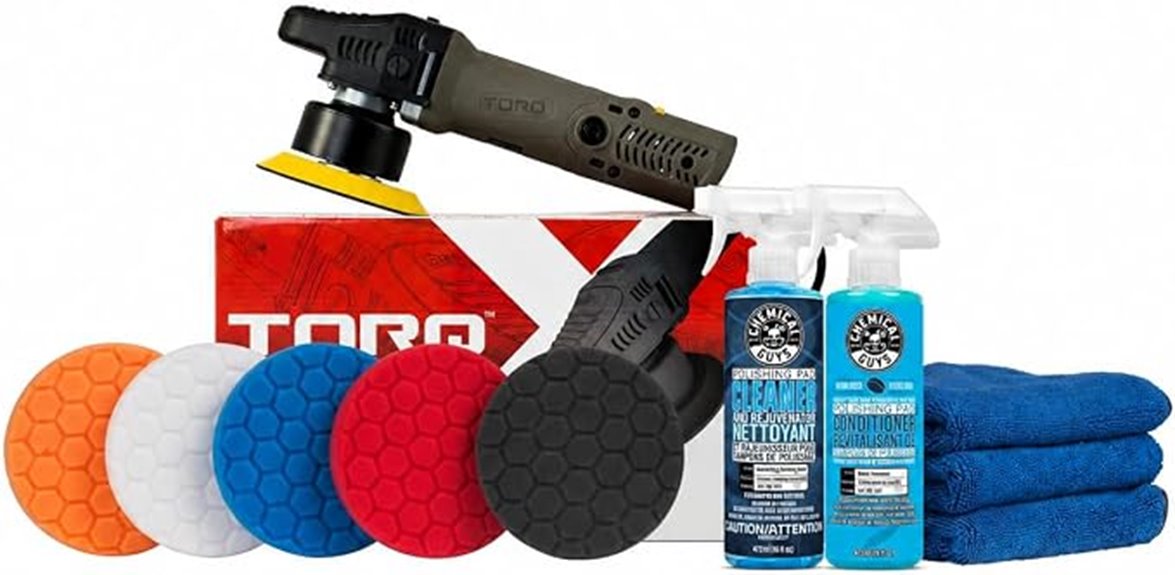
Chemical Guys’ TORQX kit suits beginners wanting a complete, easy-to-use detailing setup. The 12-piece package includes the TORQX random orbital polisher, pads, pad cleaner, pad conditioner, and microfiber towels, giving it a ready-to-detail appeal. Its 9 mm throw and 800W motor provide enough power for paint correction while remaining manageable for newer users. It can address light scratches, swirls, oxidation, and haze on paint, clear coat, headlights, and wheels. The ergonomic, balanced design supports extended sessions, and the simple controls help deliver a glossy, professional-looking finish without extra purchases.
Best For: Beginners and DIY detailers who want a complete, easy-to-use polishing kit for light paint correction and gloss enhancement.
Pros:
- Includes everything needed to start detailing, with the polisher, pads, cleaners, conditioner, and microfiber towels.
- 9 mm random orbital throw and 800W motor offer effective correction while staying beginner-friendly.
- Works on multiple surfaces like paint, clear coat, headlights, and wheels.
Cons:
- May not be aggressive enough for heavily damaged paint or deep scratches.
- The 12-piece kit is great for starters, but advanced users may want more specialized pads and compounds.
- Random orbital polishers can take longer than rotary tools for major correction jobs.
Adam’s Polishes Swirl Killer 15mm Polisher Kit
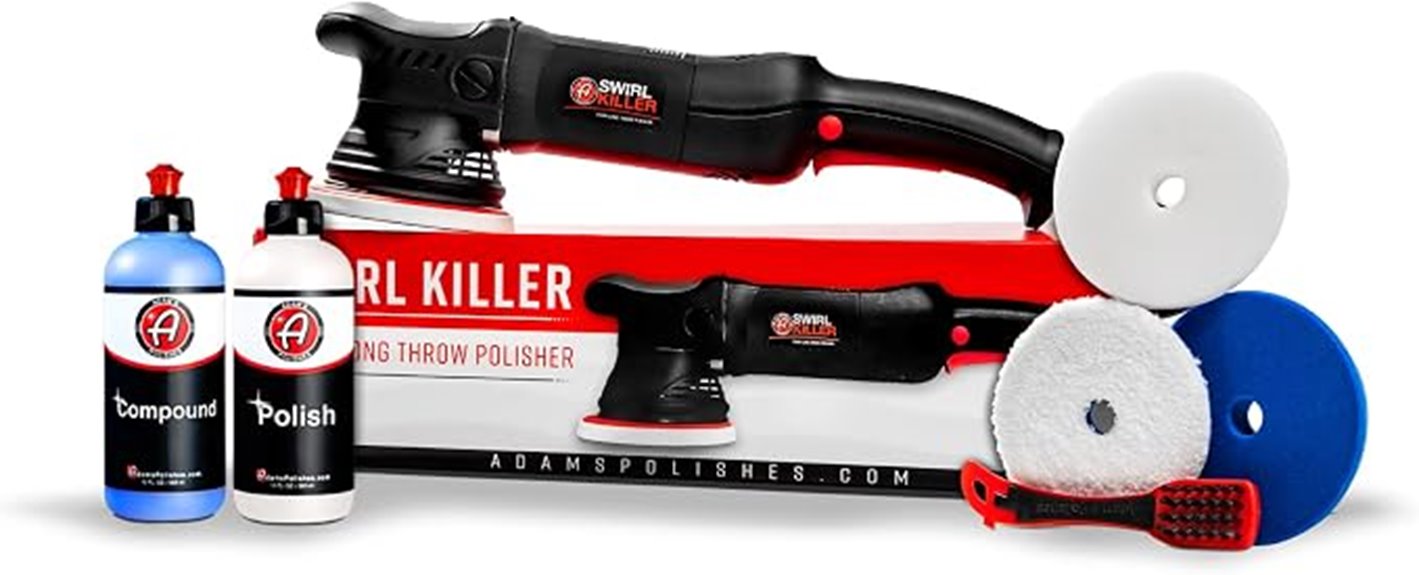
Adam’s Polishes Swirl Killer 15mm Polisher Kit suits detailers who want strong correction with finish-safe control. This dual action buffer polisher is designed to remove swirls effectively while reducing the risk of finish damage. The seven-piece kit works with car polish, polishing compound, and car scratch remover, and it pairs well with Adam’s 5.5 and 6.5 pads. Made by Adam’s Polishes, part number VAR_15_SWIRL, it first appeared on September 2, 2022. Buyers note a 4.2-star rating from eight reviews, plus a 30-day voluntary return guarantee.
Best For: Detailers and car owners who want strong swirl correction with finish-safe control on a dual action polisher.
Pros:
- Effectively removes swirls while helping protect the finish
- Compatible with car polish, polishing compound, and car scratch remover
- Works well with Adam’s 5.5 and 6.5 pads
Cons:
- Only 8 reviews, so the rating is based on limited feedback
- Kit may be more than casual users need for occasional polishing
- Warranty details are available only upon request
Milwaukee M18 FUEL 15mm Random Orbital Polisher
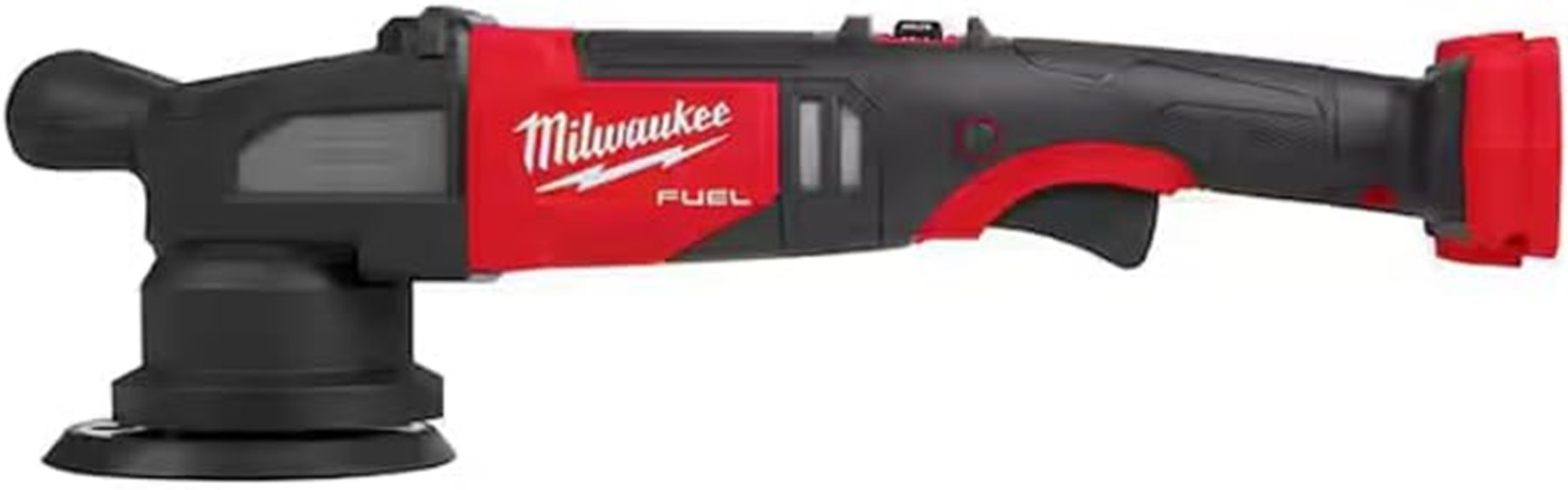
Built for cordless mobility, the Milwaukee M18 FUEL 15mm Random Orbital Polisher suits detailers needing controlled power. This bare tool, model 2684-20, runs on Milwaukee M18 batteries and weighs 6 pounds, keeping movement easy around vehicles. Its 8-speed dial spans 2,650 to 5,100 RPM, while a variable speed trigger adds precision for polishing and heavy correction. Premium electronic feedback helps maintain speed under load. A 5-inch pad capacity, balanced design, and lock-on switch support comfort during longer sessions. Cordless operation removes cable drag. Amazon offers a 30-day return guarantee.
Best For: Detailers and DIY users who want a cordless, battery-powered polisher with controlled speed, good ergonomics, and strong correction capability.
Pros:
- Cordless M18 platform adds mobility and eliminates cord drag.
- 8-speed dial plus variable trigger give precise control for polishing and correction.
- Premium electronic feedback and balanced design help maintain performance and comfort.
Cons:
- Bare tool only, so battery and charger are sold separately.
- 6-pound weight may feel tiring during long polishing sessions.
- 5-inch pad capacity may be limiting for users wanting larger coverage.
Adam’s Polishes Swirl Killer 15mm Car Polisher
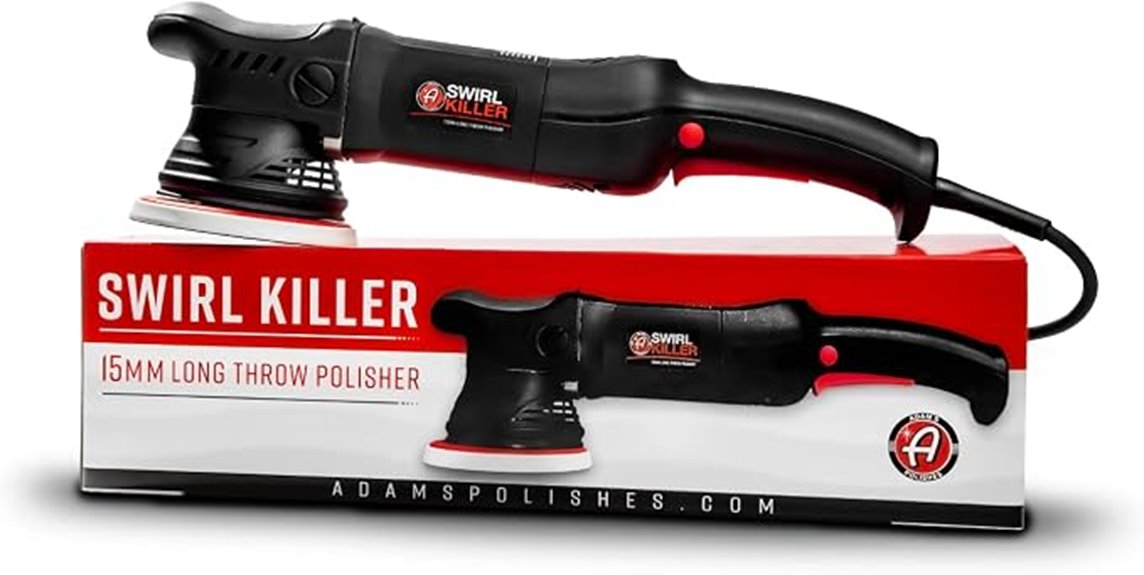
The Adam’s Polishes Swirl Killer 15mm suits detailers seeking strong swirl removal with low vibration. This corded dual action buffer polisher is built for controlled correction on paint, making it suitable for polishing compound, car scratch remover, clay bar prep, and ceramic coating work. Its 15mm action delivers solid correcting ability while helping protect the finish. The aluminum body and smooth design support comfortable operation. It pairs well with Adams 5.5 and 6.5 pads, runs at 2250 RPM, and weighs 3.52 kg. A 30-day Amazon return guarantee adds buyer confidence.
Best For: Detailers and car enthusiasts who want strong swirl removal, low vibration, and controlled correction for polishing and paint prep work.
Pros:
- Effective 15mm dual action correction helps remove swirls without being overly harsh on the finish.
- Low-vibration, smooth aluminum design makes it comfortable to use.
- Compatible with Adams 5.5 and 6.5 pads for flexible detailing use.
Cons:
- Corded electric design limits mobility compared with cordless models.
- At 3.52 kg, it may feel somewhat heavy during longer polishing sessions.
- Best results depend on using compatible pads and the right polishing technique.
RUPES LHR21 Mark III BigFoot Orbital Polisher
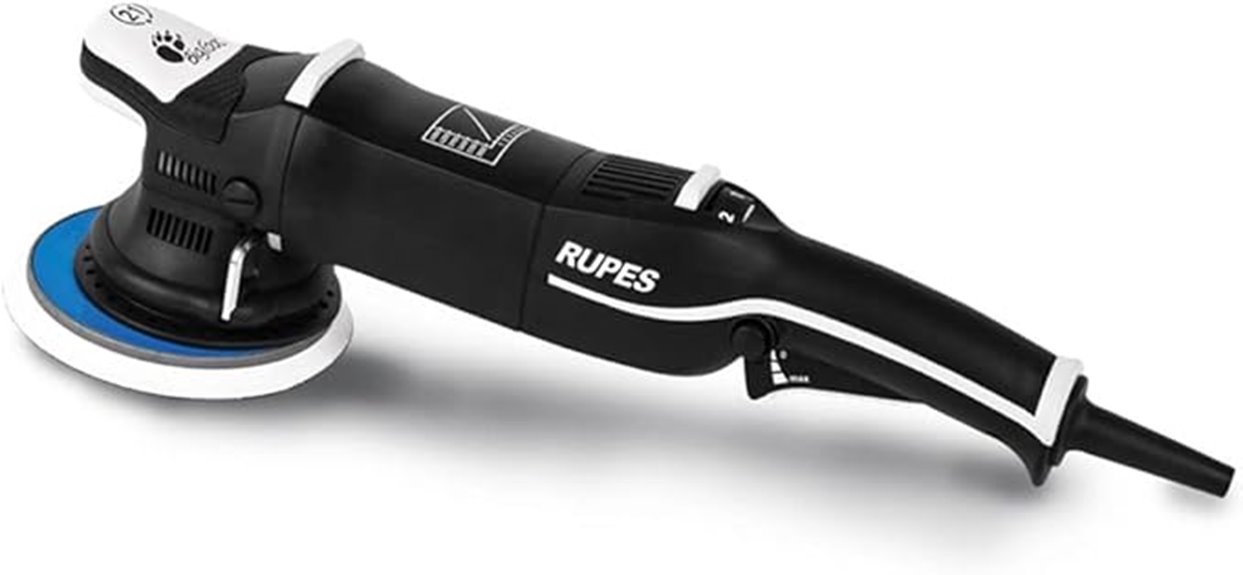
With 21 mm orbital action, the RUPES LHR21 Mark III delivers deep, glossy finishes for serious detailers. This corded, 500-watt random orbital polisher reaches up to 4,500 rpm and weighs 8.7 pounds, balancing power with manageable control. Its anti-spinning design helps reduce scratch risk, while variable speed settings support tailored correction on different paint systems. The side handle and switch lock improve comfort during longer sessions. Built for automotive polishing, it can remove swirls, scratches, and defects, and it also works on furniture, ceramic, wood, and metal.
Best For: Professional and serious DIY detailers who want a powerful, low-risk orbital polisher for achieving deep gloss and correcting swirls, scratches, and other paint defects.
Pros:
- 21 mm orbital action delivers strong polishing performance and a glossy finish
- Anti-spinning design and variable speed control help reduce damage risk and improve precision
- Ergonomic side handle and switch lock make it more comfortable for longer sessions
Cons:
- At 8.7 pounds, it may feel heavy during extended use
- Corded electric design limits mobility compared with cordless options
- Built for serious polishing, so it may be more tool than casual users need
DEWALT Buffer Polisher (DWP849X)
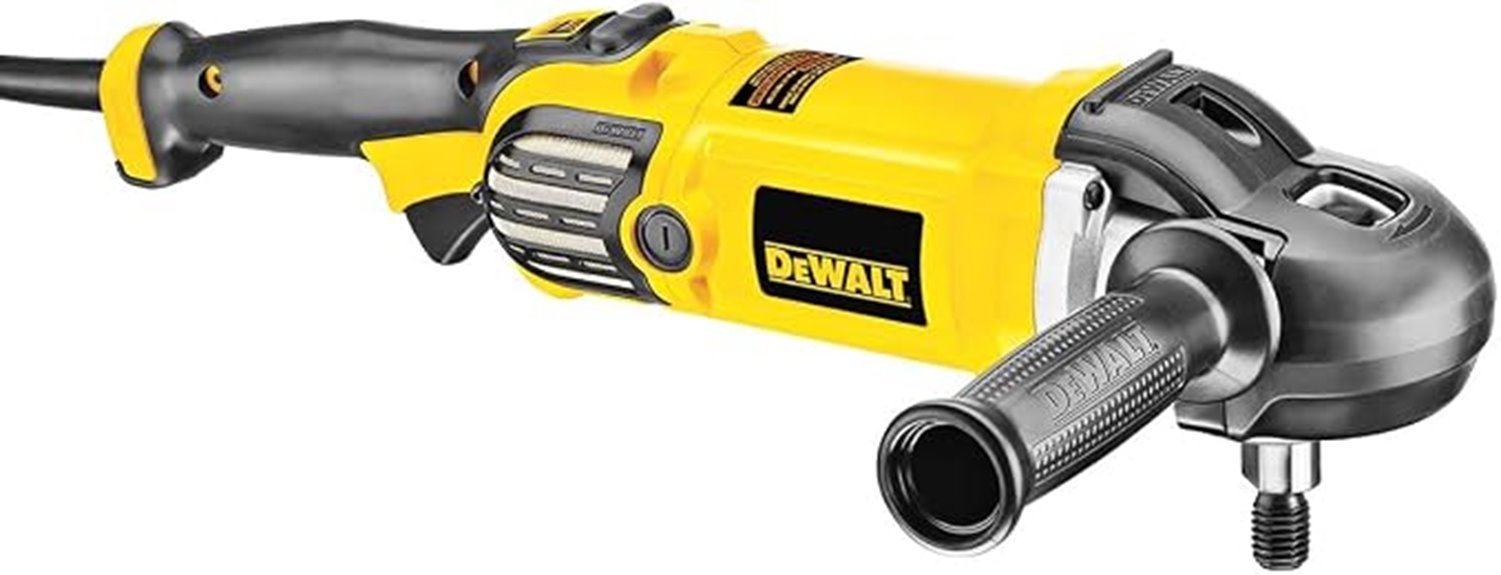
DEWALT’s DWP849X suits detailers who want strong, controlled polishing power. This 12-amp buffer accepts 7-inch and 9-inch pads, with a variable speed dial from 0 to 3,500 RPM and a soft start for smoother engagement. All ball-bearing construction, precision-cut steel gears, and a rubber overmoulded gearcase support durability and grip. A variable speed trigger helps match output to pressure. Safety features include a no volt release switch and replaceable wool ingestion shield. Pop off brushes, a spindle lock, included handles, and a 3-year warranty round out the package.
Best For: Detailers and car enthusiasts who want a powerful, durable buffer polisher with precise speed control for controlled polishing and buffing.
Pros:
- 12-amp motor with variable speed control up to 3,500 RPM for versatile polishing tasks
- Soft start, variable speed trigger, and no volt release switch improve control and safety
- Durable build with all ball-bearing construction, steel gears, and a 3-year warranty
Cons:
- Larger 7-inch and 9-inch pad size may be less ideal for tight or delicate areas
- Heavier-duty design may feel bulky for casual or beginner users
- Wool ingestion shield and accessories are useful, but some users may need to buy additional pads separately
Chemical Guys TORQX Random Orbital Polisher (BUF503)
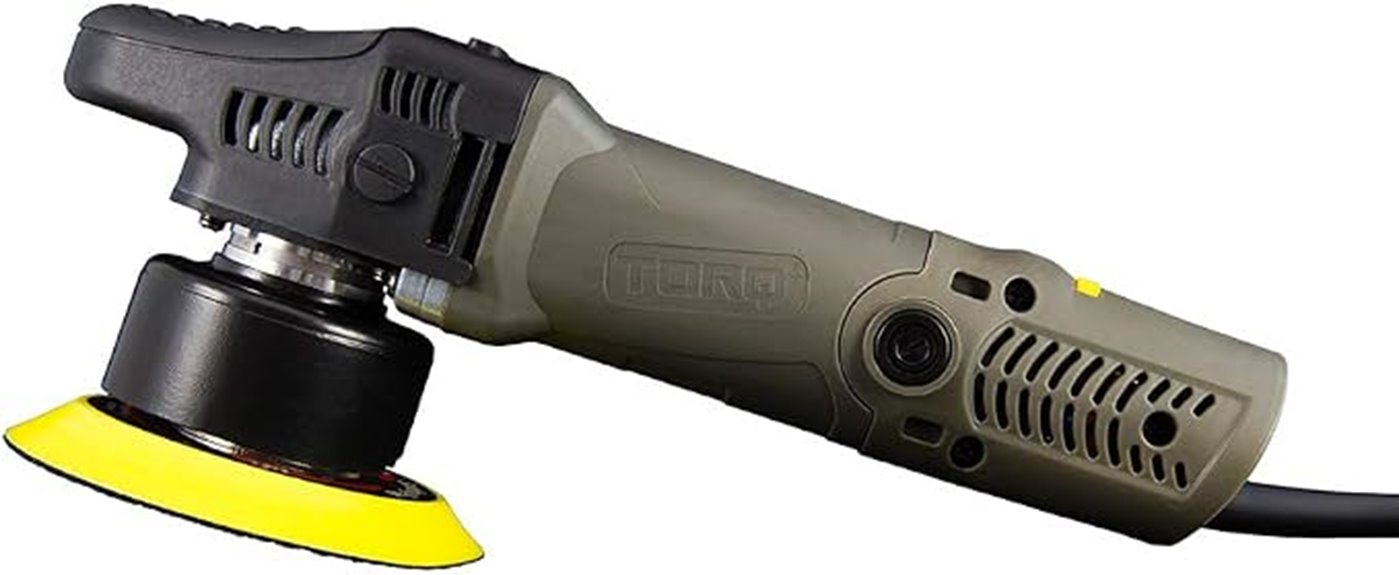
Chemical Guys’ TORQX BUF503 suits detailers who want beginner-friendly paint correction. This 4.7-pound corded dual action polisher uses a 700W motor and 8mm orbit to remove swirls, scratches, oxidation, and water spots while reducing burn and hologram risk. Its random orbital motion gives controlled defect removal and helps restore gloss and depth on painted panels. Compatible with polishing, compounding, and finishing pads, it also applies compounds, polishes, glazes, sealants, and waxes. Metal construction, 120-volt power, and a compact 20.1 x 8 x 8-inch footprint support practical workshop use.
Best For: Beginner and professional detailers who want a safe, easy-to-control dual action polisher for correcting paint defects and enhancing gloss.
Pros:
- 700W motor with 8mm orbit provides effective defect removal while maintaining control
- Random orbital action helps reduce the risk of burns and holograms
- Works with polishing, compounding, and finishing pads for versatile detailing tasks
Cons:
- Corded design limits mobility compared with cordless models
- At 4.7 lb, it may feel a bit heavy during longer polishing sessions
- May be more machine than casual users need for very light detailing jobs
Factors to Consider When Choosing Car Buffers and Polishers 2026: Tested Detailing Picks
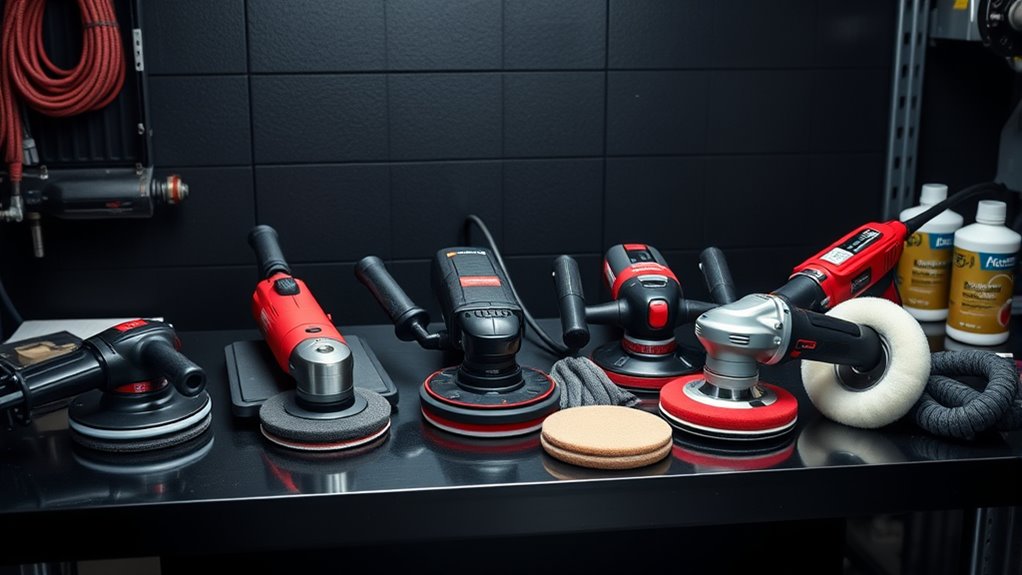
Choosing a car buffer or polisher in 2026 starts with practical basics such as power source options, orbit size, and the range of speed control available. Pad compatibility also matters, since the right machine should match different pads and detailing tasks without added hassle. Ergonomic handling can determine how comfortable and effective the tool feels during longer polishing sessions.
Power Source Options
When evaluating power source options for car buffers and polishers, the main tradeoff is between consistent output and mobility. Corded electric buffers deliver steady power for long detailing sessions, since they do not need recharging, but their reach depends on nearby outlets. Battery-powered models provide greater portability and allow freer movement, making them useful for mobile detailing or jobs away from power access, though runtime and recharge needs can interrupt workflow. In either case, variable speed control remains essential for matching RPM to the task and improving precision during polishing or correction. Power ratings, such as watts or amps, help indicate output potential, while battery models should also be checked for compatibility with existing packs and chargers to guarantee convenience and seamless operation.
Orbit Size Matters
Orbit size plays a major role in how a polisher performs, with larger throws such as 21mm removing paint defects faster by covering more surface area per pass, while smaller 8mm units offer tighter control for precise detailing and lower risk of paint damage. A 21mm machine is well suited to deeper scratches and broader imperfections because each orbit reaches farther across the panel. By contrast, an 8mm design favors delicate work, where accuracy matters more than speed. A 15mm orbit sits between these extremes, giving enough correction power for heavier work while still remaining manageable for finer finishing. Selection should match the intended job and the user’s experience level, since larger orbit machines can be harder to control effectively during demanding detailing tasks.
Speed Control Range
Speed control range is a key factor because it determines how precisely a car buffer or polisher can match the task at hand. A wider RPM span increases versatility, letting one tool handle aggressive correction and refined finishing. Higher ranges, such as 2,650 to 5,100 RPM, are better suited to removing heavy defects, while lower speeds support delicate paintwork and final gloss. A variable speed dial helps fine-tune output for different paint types and surface conditions, improving control throughout the job. Some models include an 8-speed dial, offering exact adjustments for consistent results. A variable speed trigger adds further flexibility by allowing on-the-fly changes as pressure shifts. Together, these controls help maintain accuracy, reduce mistakes, and improve overall detailing performance.
Pad Compatibility
Pad compatibility is a critical consideration because the right buffer or polisher must match both pad size and pad type to deliver proper results. Many machines are built around 5- to 7-inch pads, and selecting the wrong diameter can reduce correction quality or create uneven contact. Dual action polishers commonly pair with foam pads, but density and material should be matched to the compound and the paint condition. Wool and microfiber pads are also used when different defect levels or finishes are needed. Orbit size matters as well: a 9mm throw is generally suited to light correction, while larger throws may need specialized pads for heavier work. The backing plate must fit the pad securely, since proper fitment supports consistent performance and safer operation.
Ergonomic Handling
Once pad fitment is sorted, handling becomes the next practical filter when comparing car buffers and polishers. Ergonomic design matters because extended detailing sessions can quickly tax hands, wrists, and shoulders, so comfortable shaping and balanced weight distribution help maintain control. A well-balanced machine sits more steadily on the surface, making movement more predictable and reducing awkward corrections. Soft grips and lock-on switches can further improve comfort, letting the operator hold a stable position without excessive finger tension. Variable speed triggers add another layer of control, allowing speed adjustments without forcing a strained grip. Lightweight models are especially useful for vertical panels and tight, hard-to-reach areas, where maneuverability matters most and fatigue can otherwise limit accuracy over time during longer jobs.
Defect Removal Ability
Defect removal ability depends mainly on the polisher’s mechanism and motor output, since higher-wattage models usually correct paint more effectively. Random orbital polishers use a dual-action motion that can reduce the chance of burning paint while still cutting swirls, scratches, and oxidation. Throw size also matters: 9mm units suit tighter correction, while 21mm models can cover wider sections and tackle deeper defects more efficiently. Variable speed control adds further precision, letting the operator match RPM to paint condition and pad choice. Beyond raw power, the tool’s design influences correction results during longer sessions, because stable control helps maintain consistent contact and uniform polishing. In practice, the best defect removal balance pairs strong power with safe motion and adjustable control.
Weight And Balance
Weight and balance shape how comfortably a car buffer or polisher can be used over time. Lighter units, especially those in the 4- to 5-pound range, usually reduce fatigue and are easier to guide during long detailing sessions. Balance matters just as much as total weight: a machine with its center of balance closer to the pad tends to feel steadier, improving control and helping maintain even pressure on curved or flat panels. Ergonomic designs that distribute mass efficiently can lessen wrist strain and support smoother movement. Heavier models may offer added stability and power, but they often tire the user faster and can be less friendly for beginners or extended work. Choosing a tool with thoughtful weight distribution supports comfort, control, and consistent results.
Warranty Coverage
Warranty coverage can be a useful signal of a buffer or polisher’s expected durability, with terms often ranging from 30 days to several years depending on the manufacturer. Longer protection may suggest stronger confidence in build quality, though the fine print matters more than the headline length. Many brands also provide a voluntary return guarantee, giving buyers a way to send back a tool that fails to meet expectations. Warranty details are often available on request and should be reviewed for covered defects, labor terms, and repair procedures. Some manufacturers sell extended warranties for higher-end units, which can add reassurance. Before purchase, it is important to check limitations, exclusions, and claim requirements to avoid surprises later.
Related Reading
Frequently Asked Questions
Which Polisher Is Best for Beginners Using It for the First Time?
A dual-action random orbital polisher is best for beginners using it for the first time. It is easier to control, less likely to burn paint, and forgiving if technique is imperfect. A lightweight model with variable speed and a soft-start feature helps build confidence. Many first-time users prefer a 5-inch pad size for balance and reach. Overall, a beginner-friendly DA polisher offers the safest learning curve for detailing.
Can I Use These Polishers on Motorcycle Paint Safely?
Yes, these polishers can be used on motorcycle paint safely, but only with caution. A dual-action polisher is generally the safest choice because it reduces heat and paint removal risk. Soft pads, low speeds, and light pressure are important, especially on thin or curved panels. The operator should test a small area first and avoid edges, badges, and decals. Careful technique matters more than machine type.
How Often Should Polishing Pads Be Cleaned During Detailing?
Polishing pads should be cleaned every few panels, or whenever residue, heat, or reduced cutting power appears. During heavier correction, a quick cleaning after each section keeps product buildup from marring the finish and extends pad life. Foam pads may be brushed or blown out frequently, while microfiber pads often need more aggressive cleaning. A pad that looks saturated, clogged, or dusty should be cleaned immediately before continuing.
Do Cordless Polishers Lose Power During Long Paint Correction Sessions?
Yes, cordless polishers can lose power during long paint correction sessions. Bright start, fading finish: a full battery delivers strong, steady torque at first, then output can drop as charge drains or the motor warms. High-end models manage this better, but runtime still limits endurance. For extended work, extra batteries or a corded unit provide more consistent performance and reduce the risk of uneven correction or slowed pad rotation over time.
What Storage Keeps Polishers and Pads in the Best Condition?
A dry, climate-controlled cabinet or sealed plastic bin keeps polishers and pads in the best condition. The polisher should be stored upright, with the cord loosely coiled or the battery removed. Pads last longer when washed, fully dried, and kept in vented containers away from dust, sunlight, and heat. Avoid damp garages or compressed stacking, which can deform foam and weaken adhesives over time.
Conclusion
Ultimately, the best car buffer or polisher depends on the detailer’s skill, goals, and budget, but these eight standout picks make the choice far easier. From cordless convenience to professional-grade power, each tool offers a compelling balance of control, comfort, and performance. For anyone chasing a flawless finish, these machines are practically magic in motion, turning dull paint into mirror-like shine with remarkable consistency. Choose wisely, and every detailing session can feel effortless.