Choosing the right electric pressure washer for a car in 2026 comes down to more than raw power. Portability, nozzle options, foam compatibility, and ease of storage all matter when regular washing is the goal. Some models favor compact convenience, while others push higher cleaning performance or cordless freedom. The five picks ahead narrow that field, and a few may not be the obvious choices.
Greenworks 2000 PSI (1.1 GPM Max) Electric Power Washer
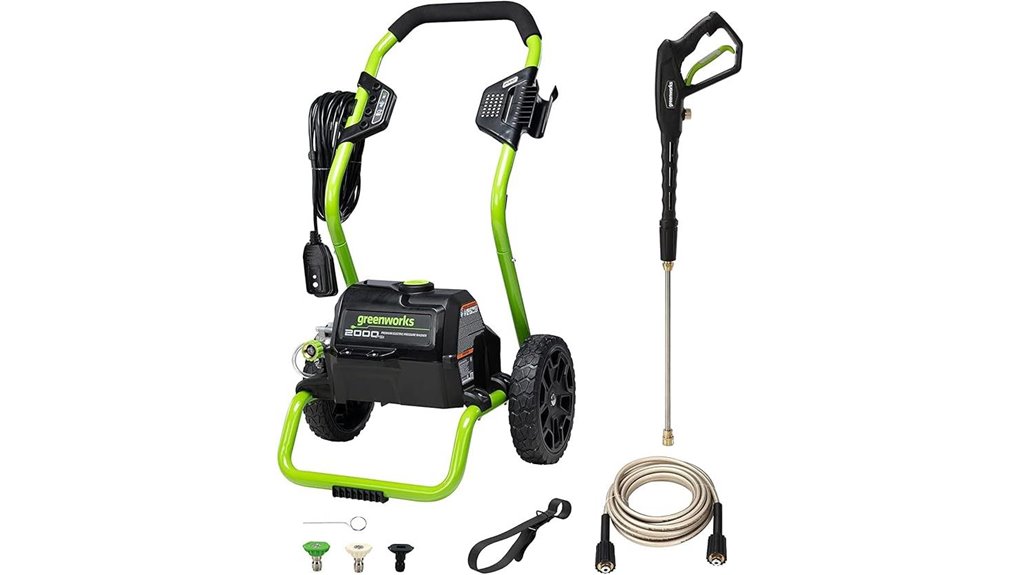
The Greenworks 2000 PSI electric power washer is a strong choice for car owners who want solid cleaning power without moving into heavy-duty equipment. With 1.1 GPM max output, it offers enough pressure to remove grime, road film, and dirt from vehicles and other medium-duty surfaces. A 25-foot pressure hose improves reach around the car, while the 35-foot power cord with inline GFCI supports exterior use. The soap siphon hose adds detergent capability for deeper washing. PWMA certification reinforces its reliability and performance.
Best For: Car owners and homeowners who want a reliable electric pressure washer for medium-duty cleaning tasks like washing vehicles, patios, and outdoor surfaces.
Pros:
- 2000 PSI with 1.1 GPM max provides solid cleaning power for grime and dirt removal
- 25-foot pressure hose and 35-foot power cord offer good reach for exterior use
- Soap siphon hose and PWMA certification add versatility and confidence in performance
Cons:
- Not ideal for heavy-duty cleaning jobs or large-scale projects
- Electric design limits mobility compared with gas-powered washers
- 1.1 GPM max may be less effective for very stubborn buildup compared with higher-flow models
Fanttik NB8 Ultra Cordless Pressure Washer with 4.0 Gal Tank
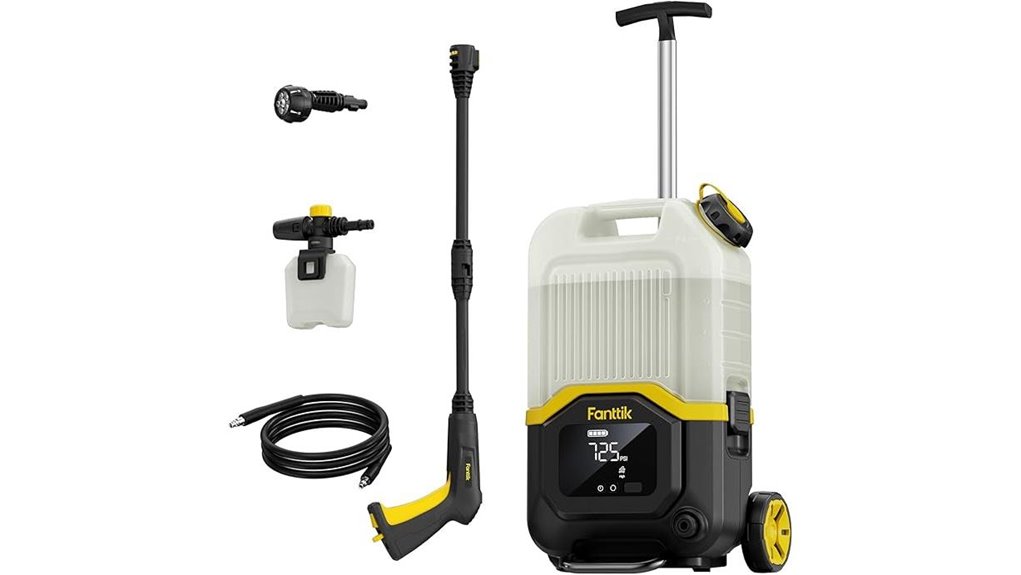
With 725 PSI and a 4-gallon tank, the Fanttik NB8 Ultra suits car owners needing cordless convenience. Its 58-minute battery life and wheeled pull-rod improve portability around driveways and garages. Three pressure modes—energy-saving, standard, and strong—provide useful control for different cleaning tasks. The 5-in-1 nozzle supports focused rinsing, stain removal, and wider coverage for wheels, panels, and surrounding areas. An LED display shows pressure, flow, power, and mode. The Total Stop System conserves energy, while 0-40°C water limits and no-detergent use keep operation straightforward and safe.
Best For: Car owners and homeowners who want a cordless, portable pressure washer for light to medium-duty cleaning around driveways, garages, vehicles, and outdoor spaces.
Pros:
- Cordless design with up to 58 minutes of battery life and a wheeled pull-rod for easy mobility
- Three pressure modes and a 5-in-1 nozzle offer flexible cleaning for different surfaces and tasks
- LED display and Total Stop System add convenience, control, and energy efficiency
Cons:
- 725 PSI may be limiting for heavy-duty or deeply embedded grime
- 4-gallon tank can require refilling during longer cleaning sessions
- No detergent use and water temperature limits reduce versatility for some cleaning jobs
Westinghouse ePX3500 Electric Pressure Washer with 5-Nozzle Set
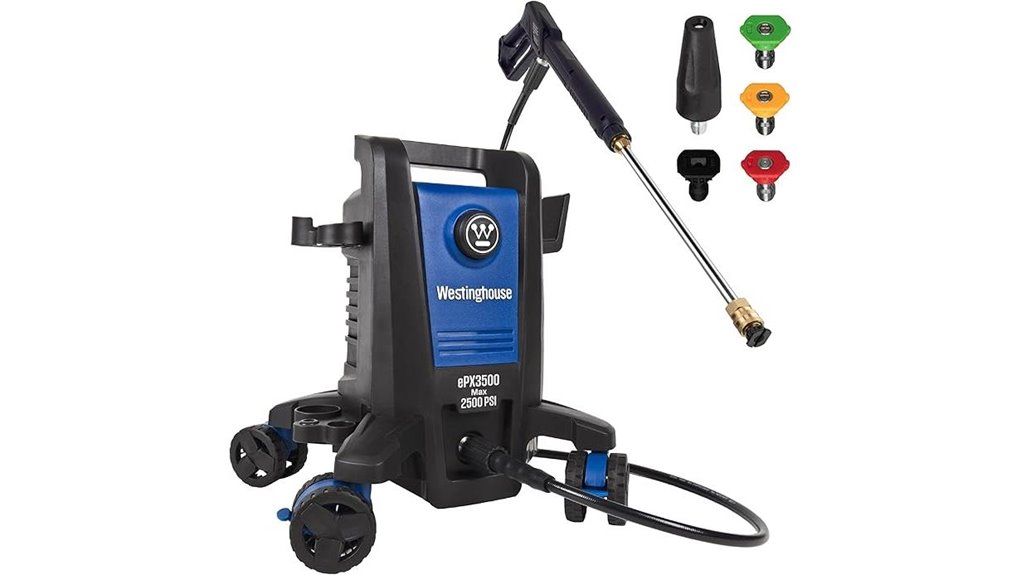
Westinghouse ePX3500 suits car owners wanting strong cleaning power in a compact, easy-to-move washer. It delivers up to 2500 PSI and 1.76 GPM, with 2000 rated PSI and 1.2 rated GPM for steady vehicle cleaning. The 16.5-inch-tall, 19-pound frame uses four quick-lock wheels, 360-degree steering, and a low center of gravity to reduce tipping. A 17.5-inch steel wand, five quick-connect nozzles, and 25-foot nylon-braided hose improve reach and control. The onboard 20-ounce soap tank and automatic shut-off add convenience, while the three-year warranty supports long-term use.
Best For: Car owners and homeowners who want a compact, easy-to-move pressure washer with strong cleaning power and convenient onboard features.
Pros:
- Up to 2500 max PSI and 1.76 max GPM provide strong cleaning performance.
- Compact 16.5-inch, 19-pound design with four quick-lock wheels and 360° steering makes it easy to maneuver.
- Includes a 17.5-inch steel wand, five nozzles, a 25-foot hose, and a soap tank for added convenience.
Cons:
- Electric models may not match the mobility or raw power of gas pressure washers for heavy-duty jobs.
- The 20-ounce soap tank may need refilling during larger cleaning tasks.
- Best suited for light to medium-duty cleaning rather than the toughest commercial use.
Chemical Guys ProFlow PM2000 Electric Pressure Washer
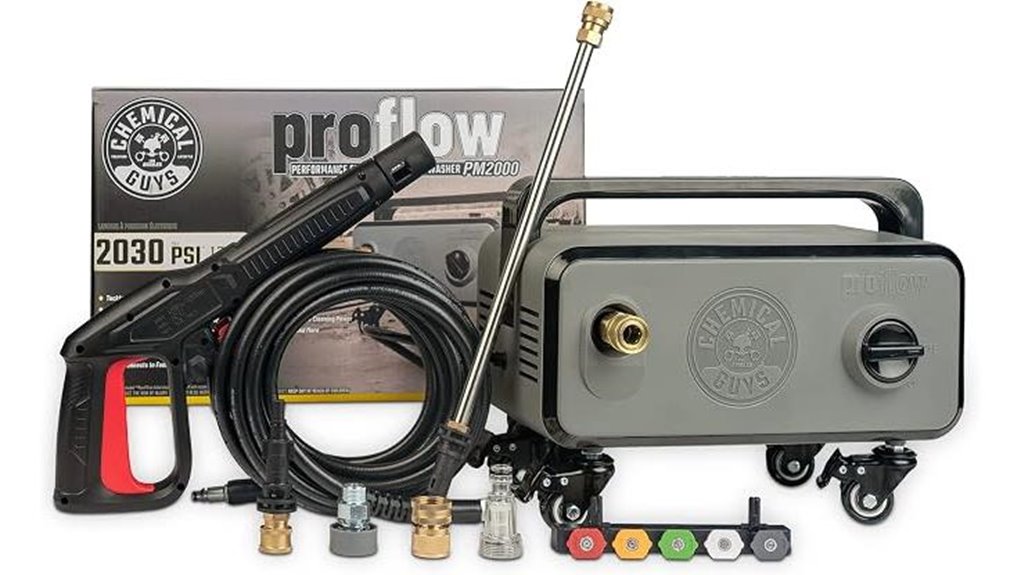
Chemical Guys ProFlow PM2000 delivers 2030 PSI in a compact, 13.5-pound frame, making it ideal for detailers and car enthusiasts. Its 14.5-amp motor produces 1.77 GPM, offering enough force for car washing, patios, driveways, and outdoor furniture. Five quick-connect tips, spanning 0° to soap application, add flexibility for different surfaces and cleaning needs. The 20-foot hose and easy-carry handle improve reach and portability, while the CSA-certified build supports dependable use. Included brass quick release fittings and simple setup help streamline operation and storage for frequent cleaning tasks.
Best For: Detailers, car enthusiasts, DIYers, and homeowners who want a compact electric pressure washer for cars, patios, driveways, and general outdoor cleaning.
Pros:
- Strong 2030 PSI output with 1.77 GPM flow for effective cleaning
- Lightweight 13.5-pound design with easy-carry handle for portability
- Includes 5 quick-connect tips and a 20-foot hose for versatile use
Cons:
- 30-day warranty is relatively short
- Electric model may not match the power of gas pressure washers
- 20-foot hose can feel limiting for larger cleaning areas
Chemical Guys, Sticky Snowball Ultra Snow Foam Wash Soap, Cherry, 16 oz
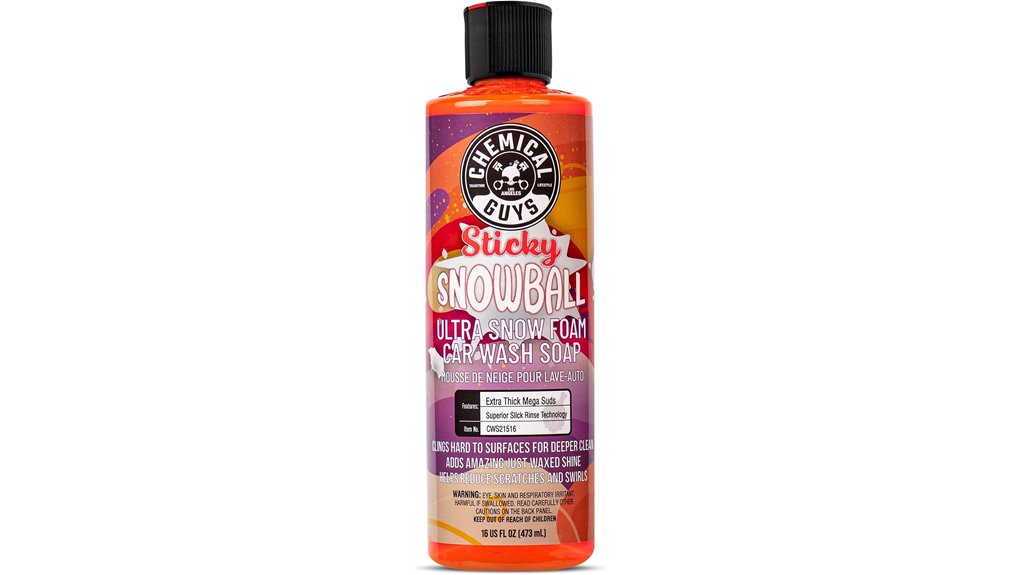
Sticky, clingy foam makes this soap ideal for drivers chasing a deeper prewash. Chemical Guys Sticky Snowball Ultra Snow Foam Wash Soap, Cherry, 16 oz, is built to generate exceptional suds, with a formula that ranks among the foamiest on the market. Its Stage 5 Clinger action helps suds hold to dirt and grime longer, improving lift during washing. The pH-balanced blend is gentle on wax, sealants, and ceramic coatings, while remaining safe on paint, glass, metal, and trim. It can be used in a bucket, foam cannon, or foam gun.
Best For: Car owners who want an extra-foamy, clingy prewash soap for use with a bucket, foam cannon, or foam gun, especially on waxed, sealed, or ceramic-coated surfaces.
Pros:
- Produces very thick, rich suds for strong dirt-lifting prewash action.
- pH-balanced and safe for paint, glass, metal, trim, waxes, sealants, and ceramic coatings.
- Versatile formula works in a wash bucket, foam gun, or foam cannon.
Cons:
- The strong foam focus may be more than needed for users who prefer a simple standard car wash soap.
- Smaller 16 oz size may run out quickly with frequent foam cannon use.
- Best performance depends on proper dilution, so it may require some experimentation.
Factors to Consider When Choosing Electric Pressure Washers for Cars 2026: Tested Picks
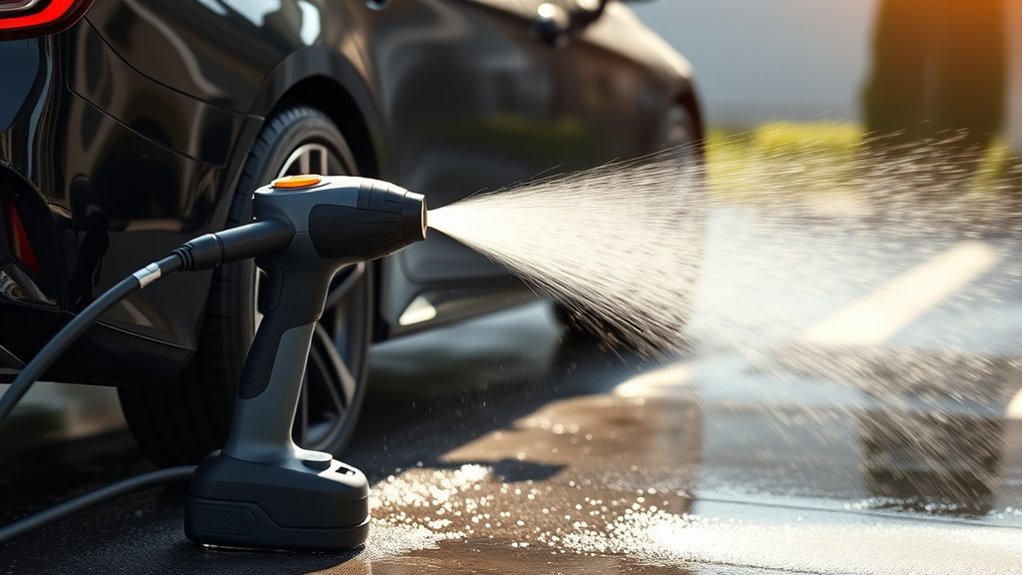
Selecting an electric pressure washer for car care in 2026 starts with balancing PSI and GPM so cleaning power stays effective without risking paint damage. Hose length, corded versus cordless design, and safe car washing practices also affect convenience and control during use. Nozzle choices and foam options further shape how well the washer handles dirt, soap coverage, and detailed vehicle cleaning.
PSI And GPM Balance
PSI and GPM work best as a balanced pair, not as isolated numbers, when choosing an electric pressure washer for car care. PSI determines how forcefully water lifts road film, caked mud, and other stubborn residue, while GPM controls how quickly debris is carried away and how evenly panels are rinsed. For most car washing, 1200 to 1900 PSI is a practical range because it provides enough cleaning power without being excessive. GPM matters just as much, and around 1.2 to 2.0 GPM is often ideal for efficient coverage and faster completion. In detailing, a modest PSI paired with stronger flow can outperform a very high PSI unit with limited volume, since cleaning quality depends on both impact and rinsing capacity.
Safe Car Washing
For safe car washing, the pressure washer should stay within a maximum range of 1500 to 2000 PSI to protect paint, trim, and delicate surfaces. Within that limit, adjustable nozzle settings add control by changing spray patterns for wheels, lower panels, and rinsing without excessive force. A gentle automotive foam soap supports cleaning while remaining compatible with wax and sealants, improving lift of grime with less abrasion. The two-bucket method, with one bucket for rinse water and one for suds, helps keep dirt particles off the wash mitt and reduces scratching. Water temperature should remain below 104°F (40°C) to avoid finish damage and preserve cleaning performance. Together, these safeguards define a safer car-washing setup.
Hose Length Matters
Hose length can make a noticeable difference in how practical an electric pressure washer is for car cleaning. A hose of 25 feet or more usually provides better reach, letting the user move around a vehicle without repeatedly shifting the machine. That added mobility is useful for larger cars, SUVs, and wider driveways. Shorter hoses, often about 20 feet, can be adequate for compact spaces, but they may force closer repositioning and limit access to far sides or lower panels. Longer hoses can also support steadier cleaning by reducing the need for awkward stretches and helping maintain water pressure. When selecting a model, the size of the garage or driveway should guide the choice, especially if attachments such as foam cannons will be used.
Corded Versus Cordless
Choosing between corded and cordless electric pressure washers comes down to the tradeoff between power and portability. Corded units usually deliver stronger output, with some reaching 2,500 PSI, so they handle stubborn grime more confidently. They also run continuously when plugged in, which suits longer wash sessions. Many include longer cords and hoses, helping users cover more ground without moving the machine often. Cordless models, by contrast, emphasize mobility. Built-in batteries let them work away from outlets, making them useful for driveways, curbside cleaning, and other remote spots. Their runtime can reach 58 minutes on a charge, though performance varies. Corded versions often add inline GFCI protection, while cordless models may use automatic shut-off to conserve energy when the trigger is released.
Nozzle And Foam Options
Nozzle selection shapes how effectively an electric pressure washer cleans a car. Models that include multiple spray angles, usually from 0° to 40°, let the user match force and coverage to the task. Narrow tips focus pressure on stubborn dirt, while wider patterns suit panels, glass, and rinse work. Interchangeable or adjustable nozzles improve convenience by making pattern changes quick and straightforward. A dedicated soap applicator nozzle can also matter, because it distributes detergent more evenly and helps loosen heavy grime. Foam cannons or foam guns add another layer of performance by laying down thick suds that cling longer, extending dwell time. When used with pH-balanced foam soaps, they clean effectively while helping preserve waxes and sealants on the paint.
Portability And Storage
Portability can make a pressure washer far more practical for car care, especially when lighter models around 13.5 pounds are easier to lift, carry, and tuck away. Compact dimensions matter as much as weight, since a slimmer unit fits better in a garage, trunk, or closet. Built-in handles and wheels improve movement between storage and wash area, reducing strain during setup. Hose length also affects convenience: a 20-foot hose is manageable for close work, while a 25-foot hose can extend reach without repositioning the machine. Storage-friendly features help keep parts orderly, including onboard soap tanks, quick-connect tips, and accessory compartments. Models that disassemble easily can be stowed faster and keep a workspace cleaner.
Related Reading
Frequently Asked Questions
How Often Should I Pressure Wash My Car?
It should be pressure washed every two to four weeks, depending on driving conditions and local weather. Frequent exposure to road salt, mud, pollen, or coastal air may justify washing more often. If the vehicle is mostly garaged and stays clean, monthly cleaning may be enough. High pressure should be kept at a safe distance to avoid paint damage, and a gentle soap setting is generally preferred for regular maintenance.
Can Electric Pressure Washers Damage Car Paint?
Can electric pressure washers damage car paint? Yes, if misused. They are generally safe when used with a wide fan nozzle, moderate pressure, and proper distance, but concentrated jets can strip wax, lift decals, or force water into trim. Why risk close-range blasting when gentle technique works better? A careful operator keeps the wand moving and avoids painted edges, preserving finish while still removing dirt effectively.
What PSI Is Safe for Washing Cars?
For car washing, 1200 to 1900 PSI is generally considered safe when used with a wide spray nozzle and proper distance. Lower pressure is often preferred for delicate paint, trim, and older finishes. The key is not just PSI but technique: keep the wand moving, avoid close-range blasting, and use soap first. Higher pressure can still be safe if controlled, but caution reduces the risk of paint damage.
Do I Need a Foam Cannon for Car Washing?
Like a soft curtain over paint, a foam cannon is not required, but it can make washing easier. It helps spread soap evenly, loosen grime, and add lubrication that reduces scratches. For simple maintenance washes, a bucket and wash mitt can suffice. For heavily soiled cars, a foam cannon can feel like a gentle prelude before the real cleaning begins, improving coverage and making the job more enjoyable overall.
Can I Use Tap Water With Electric Pressure Washers?
Yes, tap water can usually be used with electric pressure washers if it is reasonably clean and within the machine’s pressure specifications. The main concern is mineral content, which can leave spots or buildup over time, and sediment, which may clog filters or nozzles. A filter is often recommended. If the water is very hard, softened or filtered water may help protect the washer and improve results.
Conclusion
Overall, these five electric pressure washers show how car care in 2026 can balance power, portability, and precision. A useful statistic to include is that a quality electric washer can reduce water use by up to 80% compared with a standard garden hose, adding an environmental benefit to its practical appeal. Whether the priority is cordless convenience, compact storage, or strong cleaning performance, each option offers a different advantage for routine vehicle maintenance.